Italy ~ 2026!

Hello To, All My Readers Follower and My Blogging Friends ❤


Hope you all are keeping well. I am going to write about Italy to give more information about where about in Europe and about it.The capital is Rome, one of the oldest of the world’s great cities and a favorite of visitors, who go there to see its great monuments and works of art as well as to enjoy the city’s famed dolce vita, or “sweet life.” Other major cities include the industrial and fashion center of MilanGenoa, a handsome port on the Ligurian Gulf; the sprawling southern metropolis of Naples; and Venice, one of the world’s oldest tourist destinations. Surrounded by Rome is an independent state, Vatican City, which is the seat of the Roman Catholic Church and the spiritual home of Italy’s overwhelmingly Catholic population. Each of those cities, and countless smaller cities and towns, has retained its differences against the leveling effect of the mass media and standardized education. Thus, many Italians, particularly older ones, are inclined to think of themselves as belonging to families, then neighborhoods, then towns or cities, then regions, and then, last, as members of a nation.
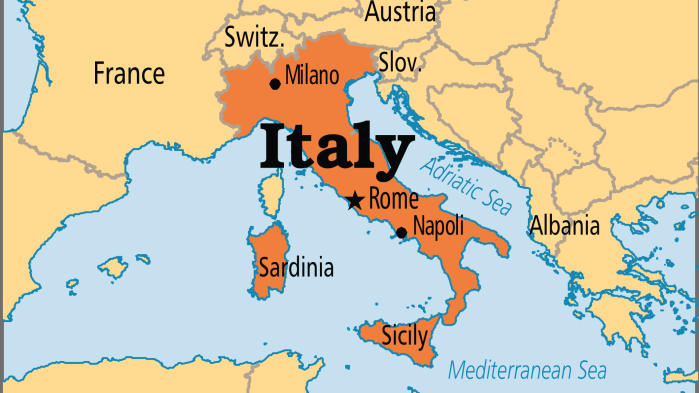
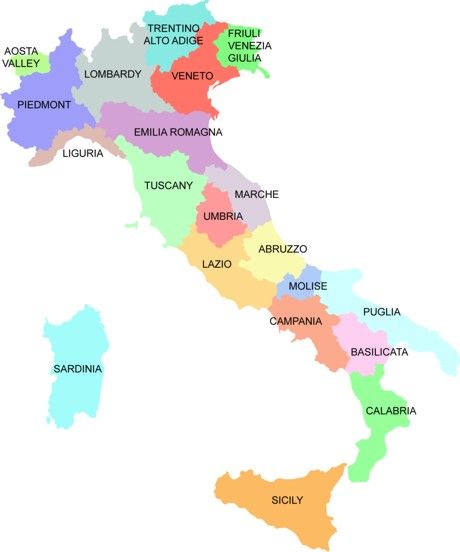
Italycountry of south-central Europe, occupying a peninsula that juts deep into the Mediterranean Sea. Italy comprises some of the most varied and scenic landscapes on Earth and is often described as a country shaped like a boot. At its broad top stand the Alps, which are among the world’s most rugged mountains. Italy’s highest points are along Monte Rosa, which peaks in Switzerland, and along Mont Blanc, which peaks in France. The western Alps overlook a landscape of Alpine lakes and glacier-carved valleys that stretch down to the Po River and the PiedmontTuscany, to the south of the cisalpine region, is perhaps the country’s best-known region. From the central Alps, running down the length of the country, radiates the tall Apennine Range, which widens near Rome to cover nearly the entire width of the Italian peninsula. South of Rome the Apennines narrow and are flanked by two wide coastal plains, one facing the Tyrrhenian Sea and the other the Adriatic Sea. Much of the lower Apennine chain is near-wilderness, hosting a wide range of species rarely seen elsewhere in western Europe, such as wild boars, wolves, asps, and bears. The southern Apennines are also tectonically unstable, with several active volcanoes, including Vesuvius, which from time to time belches ash and steam into the air above Naples and its island-strewn bay. At the bottom of the country, in the Mediterranean Sea, lie the islands of Sicily and Sardinia.
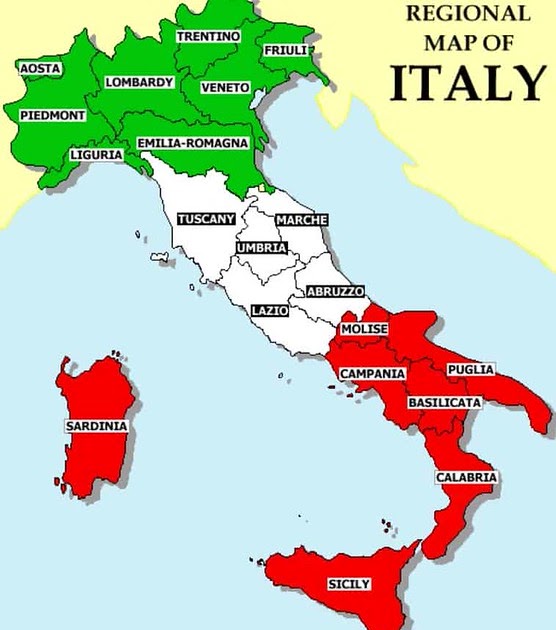
Italy’s political geography has been conditioned by this rugged landscape. With few direct roads between them, and with passage from one point to another traditionally difficult, Italy’s towns and cities have a history of self-sufficiency, independence, and mutual mistrust. Visitors today remark on how unlike one town is from the next, on the marked differences in cuisine and dialect, and on the many subtle divergences that make Italy seem less a single nation than a collection of culturally related points in an uncommonly pleasing setting.
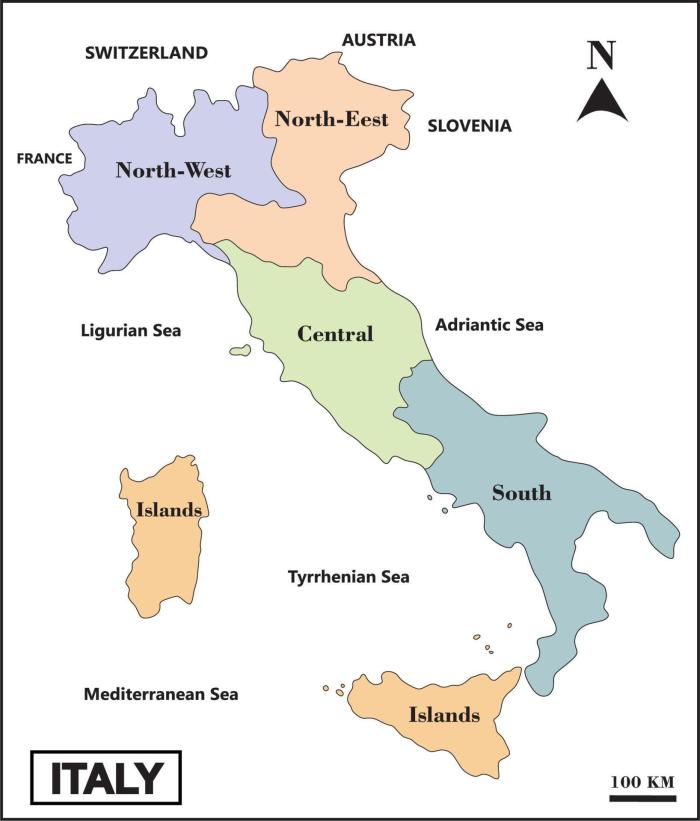
Land of Italy

To the north the Alps separate Italy from FranceSwitzerlandAustria, and Slovenia. Elsewhere Italy is surrounded by the Mediterranean Sea, in particular by the Adriatic Sea to the northeast, the Ionian Sea to the southeast, the Tyrrhenian Sea to the southwest, and the Ligurian Sea to the northwest. Areas of plain, which are practically limited to the great northern triangle of the Po valley, cover only about one-fifth of the total area of the country; the remainder is roughly evenly divided between hilly and mountainous land, providing variations to the generally temperate climate.

Across a span of more than 3,000 years, Italian history has been marked by episodes of temporary unification and long separation, of intercommunal strife and failed empires. At peace for more than half a century now, Italy’s inhabitants enjoy a high standard of living and a highly developed culture.
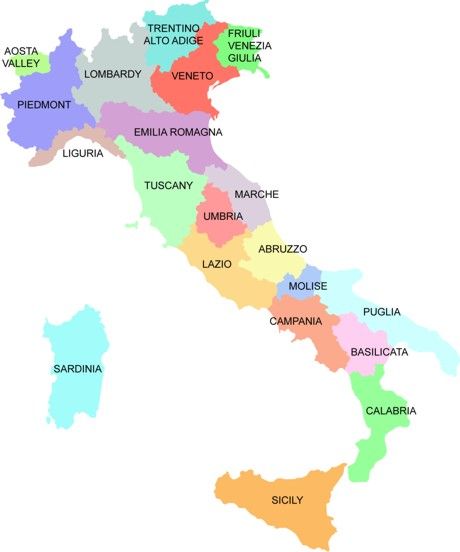
 I hope you have got good knowledge about Italy from what I have posted with pictures and written information

Take home message: When we focus our Energy towards constructing a meaningful life, we are tossing a pebble into the world Creating a beautiful Ripple effect of Inspiration. When one person follows a Dream tries something new or take a daring leap Everyone feels that Energy. And before too long They are making their own leaps and Inspiring yet another circle!

Date 5th August 2026: I am in Very Good Health. This is “The 362Post” and with the “Introductory Page this will be all in Total up to date, 363articles https://iammypath.com/who-i-am-why-i-am-writing/

As always, it is all free”. You can share and pass it on also for others who can benefit from this post. I hope All those who Read will be able to make the maximum use of all these facts and make, “Your Lives Healthier and More able to Lead Better lives in Happiness and Peace”. I wish it to be so as,” Peace which is our Ultimate Goal ❤

The coloured Topics in Green, if you “Click” on them “Will take you to other different posts of Mine which you will be able to find more information and even Pronunciation”. I have another website with “My own little Poems and Pictures of some of My Hobbies” if you are interested on seeing, “What else I am doing” you can have a look at: https://deepanilamani.com/

Sending Love, Light and Healing Energies to You ❤

May Gods Blessings Be Upon You ❤

Deepa Nilamani ❤
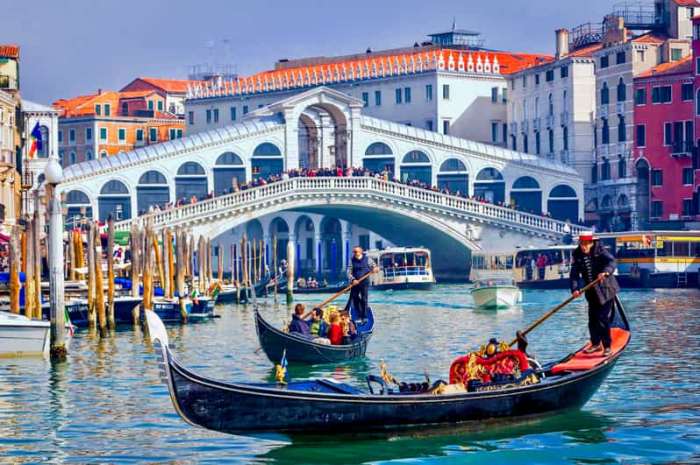
Gondolas ~ 2026!

Hello To, All My Readers Follower and My Blogging Friends ❤

Hope you all are keeping well. I am going to write about gondolas here in Aussie Its Freezing cold

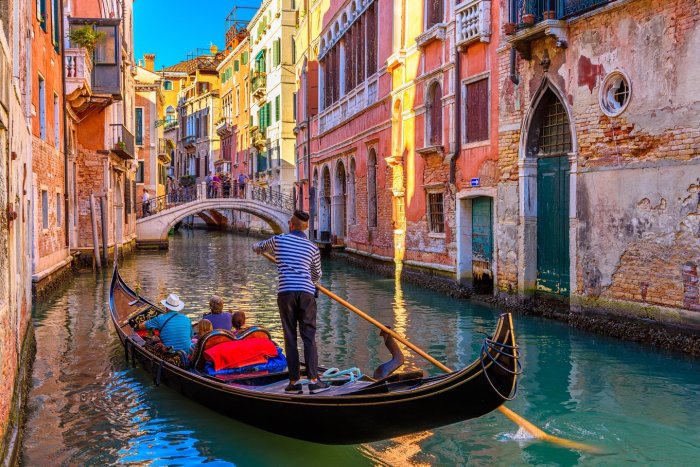
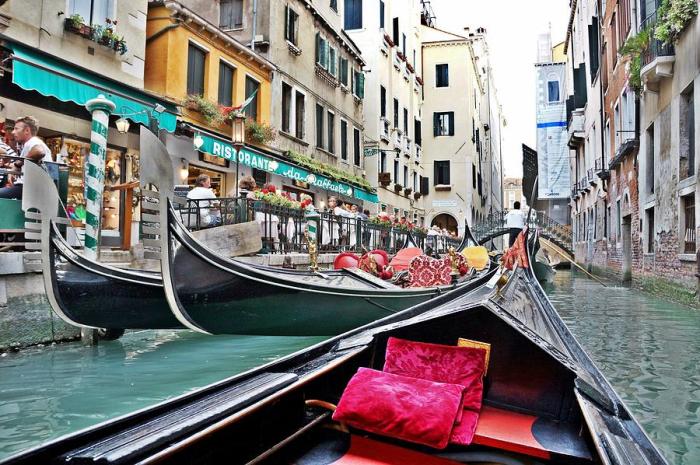
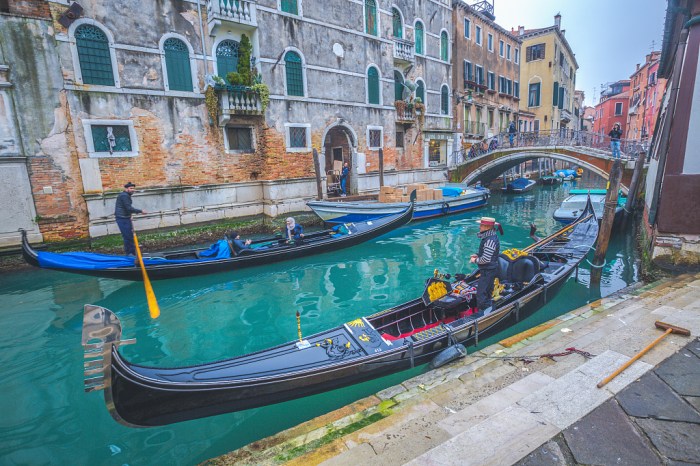
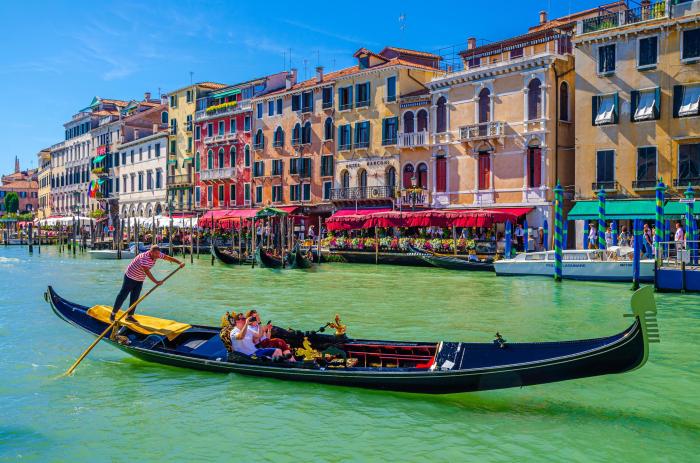
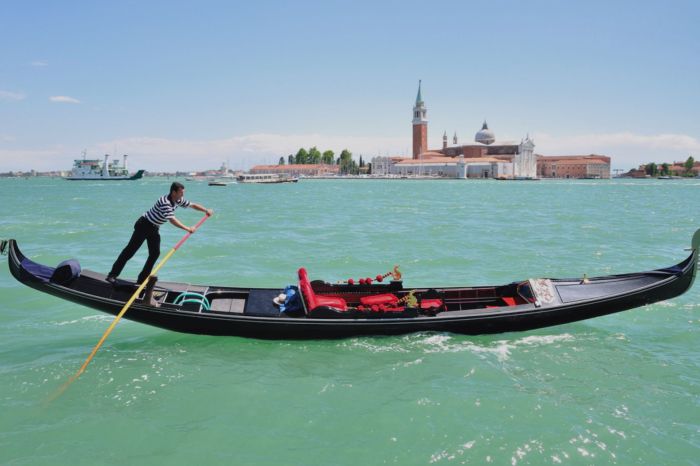
The gondola (English: /ˈɡɒndələ/, Italian: [ˈɡondola]Venetiangóndoła, Venetian: [ˈɡoŋdoɰa]) is a traditional, flat-bottomed Venetian rowing boat, well suited to the conditions of the Venetian lagoon. It is typically propelled by a gondolier, who uses a rowing oar, which is not fastened to the hull, in a sculling manner, and also acts as the rudder The uniqueness of the gondola includes its being asymmetrical along the length, making the single-oar propulsion more efficient.

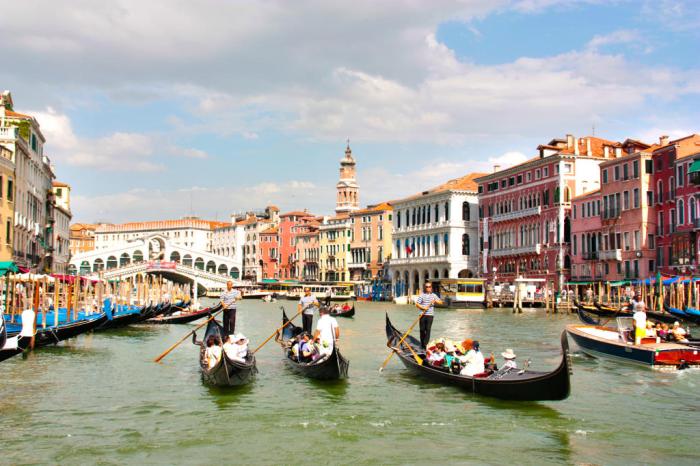
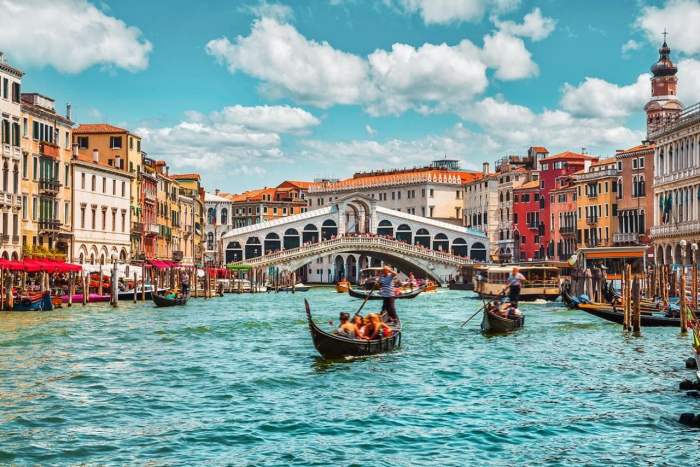
For centuries, the gondola was a major means of transportation and the most common watercraft within Venice. In modern times, the boats still do have a role in public transport in the city, serving as traghetti (small ferries) over the Grand Canal operated by two oarsmen.Various types of gondola boats are also used in special regattas (rowing races) held amongst gondoliers. Their primary role today, however, is to carry tourists on rides at fixed rates. There are approximately 400 licensed gondoliers in Venice and a similar number of boats, down from the thousands that travelled the canals centuries ago. However, they are now elegantly crafted, as opposed to the various types of homemade boats of the past.

After the elimination of the traditional felze—possibly in response to tourists’ complaining that it blocked the view—there survived for some decades a kind of vestigial summer awning, known as the “tendalin” (these can be seen on gondolas as late as the mid-1950s, in the film Summertime (1955)).While in previous centuries gondolas could be many different colors, a sumptuary law of Venice required that gondolas should be painted black, and they are customarily so painted now.

The gondola has existed in Venice since the 11th century, being first mentioned by name in 1094. It is estimated that there were eight to ten thousand gondolas during the 17th and 18th century, but there are only around four hundred in active service today, with virtually all of them used for hire by tourists. Those few that are in private ownership are either hired out to Venetians for weddings or used for racing. Even though the gondola, by now, has become a widely publicized icon of Venice, in the times of the Republic of Venice it was by no means the only means of transportation; on the map of Venice created by Jacopo de’ Barbari in 1500, only a fraction of the boats are gondolas, the majority of boats are batellas, caorlinas, galleys, and other boats. Now, only a handful of batellas survive, and caorlinas are used for racing only.

The historical gondola was quite different from its modern evolution; the paintings of Canaletto and others show a much lower prow, a higher “ferro”, and usually two rowers. The banana-shaped modern gondola was developed only in the 19th century by the boat-builder Tramontin, whose heirs still run the Tramontin boatyard. The construction of the gondola continued to evolve until the mid-20th century, when the city government prohibited any further modifications.In the 1500s an estimated 10,000 gondolas of all types were in Venice; in 1878 an estimated 4000 and now approximately 400.he origin of the word “gondola” has never been satisfactorily established, despite many

The gondola is propelled by a person (the gondolier) who stands on the stern facing the bow and rows with a forward stroke, followed by a compensating backward stroke. The oar rests in an elaborately carved wooden rest (forcola) shaped to project from the side of the craft so as to allow the slight drag of each return stroke to pull the bow back to its forward course.[7] Because of the vessel’s flat bottom it may also be “drifted” sideways when required. Contrary to popular belief, the gondola is never poled like a punt as the waters of Venice are too deep. Until the early 20th century, as many photographs attest, gondolas were often fitted with a “felze”, a small cabin, to protect the passengers from the weather or from onlookers. Its windows could be closed with louvered shutters—the original “Venetian blinds“.

The gondola has existed in Venice since the 11th century, being first mentioned by name in 1094.[11] It is estimated that there were eight to ten thousand gondolas during the 17th and 18th century, but there are only around four hundred in active service today, with virtually all of them used for hire by tourists. Those few that are in private ownership are either hired out to Venetians for weddings or used for racing.[12] Even though the gondola, by now, has become a widely publicized icon of Venice, in the times of the Republic of Venice it was by no means the only means of transportation; on the map of Venice created by Jacopo de’ Barbari in 1500, only a fraction of the boats are gondolas, the majority of boats are batellas, caorlinas, galleys, and other boats. Now, only a handful of batellas survive, and caorlinas are used for racing only.

According to a popular urban legend with no factual basis, every detail of the gondola has its own symbolism. The iron prow-head of the gondola, called “fero da prorà” or “dolfin”, is needed to balance the weight of the gondolier at the stern and has an “Ƨ” shape symbolic of the twists in the Canal Grande. Under the main blade there is a kind of comb with six teeth or prongs (“rebbi”) pointing forward standing for the six districts or “sestieri” of Venice A kind of tooth juts out backwards toward the centre of the gondola symbolises the island of Giudecca. The curved top signifies the Doge’s cap. The semi-circular break between the curved top and the six teeth is said to represent the Rialto Bridge. Sometimes three friezes can be seen in-between the six prongs, indicating the three main islands of the city: Murano, Burano and Torcello. This symbolism is likely influenced by the need to explain the shape to tourists, rather than the shape being influenced by those symbols, as they are not mentioned in any writings about the gondola prior to the current evolution of the shape of the Fero.

Gondolieri

During their heyday as a means of public transports, teams of four men would share ownership of a gondola – three oarsmen (gondoliers) and a fourth person, primarily shore-based and responsible for the booking and administration of the gondolas

However, as the gondolas became more of a tourist attraction than a mode of public transport all but one of these cooperatives and their offices have closed. The category is now protected by the Institution for the Protection and Conservation of Gondolas and Gondoliers, headquartered in the historical center of Venice.

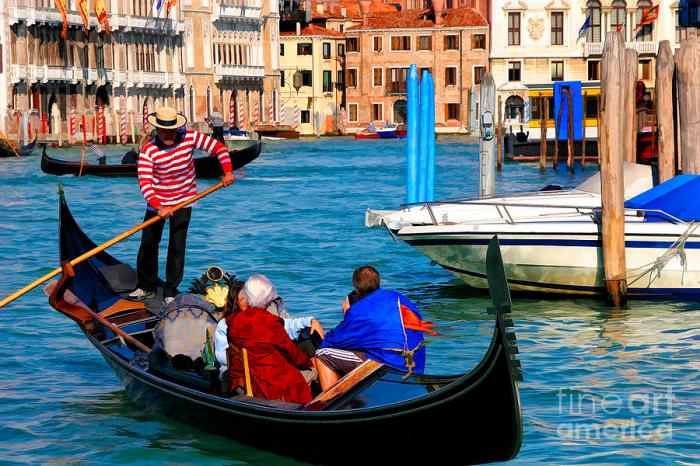
The profession of gondolier is controlled by a guild, which issues a limited number of licenses (approximately 400),[21] granted after periods of training (400 hours over six months) and apprenticeship, and a major comprehensive exam[22] which tests knowledge of Venetian history and landmarks, foreign language skills, and practical skills in handling the gondola.[23][24][25] Such skills are necessary in the tight spaces of Venetian canals. Gondoliers dress in a blue or red striped top, red neckerchief, wide-brimmed straw hat and dark pants. A gondolier can earn the equivalent of up to US$150,000 per year.

In August 2010, Giorgia Boscolo became Venice’s first fully licensed female gondolier.

I hope you have got good knowledge about what I have posted with pictures and written information 🙂

Take home message: When we focus our Energy towards constructing a meaningful life, we are tossing a pebble into the world Creating a beautiful Ripple effect of Inspiration. When one person follows a Dream tries something new or take a daring leap Everyone feels that Energy. And before too long They are making their own leaps and Inspiring yet another circle!

Date 28th July 2026: I am in Very Good Health. This is “The 361Post” and with the “Introductory Page this will be all in Total up to date, 362 articles https://iammypath.com/who-i-am-why-i-am-writing/

As always, it is all free”. You can share and pass it on also for others who can benefit from this post. I hope All those who Read will be able to make the maximum use of all these facts and make, “Your Lives Healthier and More able to Lead Better lives in Happiness and Peace”. I wish it to be so as,” Peace which is our Ultimate Goal ❤

The coloured Topics in Green, if you “Click” on them “Will take you to other different posts of Mine which you will be able to find more information and even Pronunciation”. I have another website with “My own little Poems and Pictures of some of My Hobbies” if you are interested on seeing, “What else I am doing” you can have a look at: https://deepanilamani.com/

Sending Love, Light and Healing Energies to You ❤

May Gods Blessing Be Upon You ❤

Deepa Nilamani ❤