
Hello to, All My Dear Readers, Followers and My Blogging Friends ❤
Hope all of you are keeping well. It’s very very cold but I am continuing to write, being on Ayurveda I thought of Enlightening on Values of Food for being in Good Health. As so many are not aware of the Values of Fruits and Vegetables and most importantly Herbs. Although this is a very popular nut where almost all like to eat, even me 🙂 very few know how they grow!
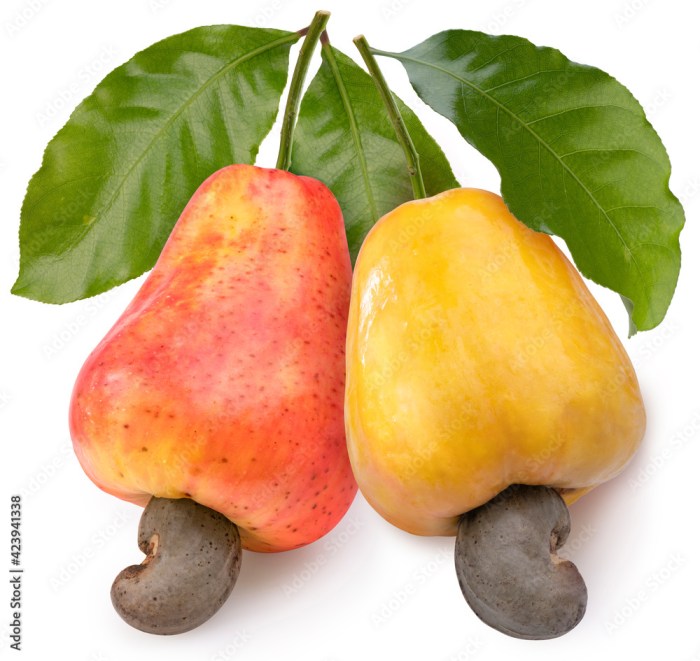
Cashew is the common name of a tropical evergreen tree. It is native to South America and is the source of the cashew nut and the cashew apple, an accessory fruit. The tree can grow as tall as 14 meters (46 feet), but the dwarf cultivars, growing up to 6 m (20 ft), prove more profitable, with earlier maturity and greater yields. The cashew nut is edible and is eaten on its own as a snack, used in recipes, or processed into cashew cheese or cashew butter. The nut is often simply called a ‘cashew’. The cashew apple is a light reddish to yellow fruit, whose pulp and juice can be processed into a sweet, fruit drink. In 2023, 3.9 million tons of cashew nuts were harvested globally, led by the Ivory Coast and India. In addition to the nut and fruit, the shell yields derivatives used in lubricants, waterproofing, and paints.
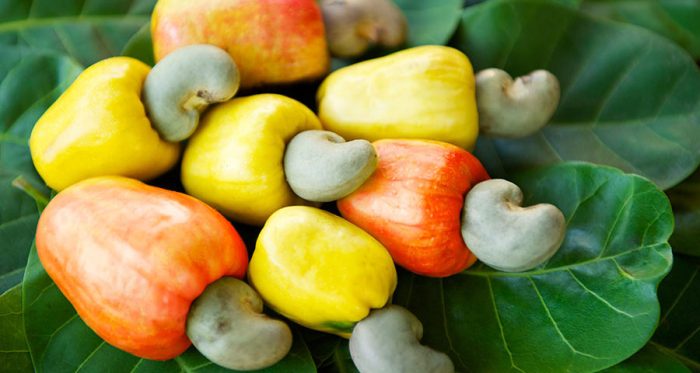
The English name derives from the Portuguese name for the fruit of the cashew tree: Caju (Portuguese pronunciation: also known as acaju, which itself is from the Tupi word acajú, literally meaning “nut that produces itself”. The generic name Anacardium is composed of the Greek prefix ana- (ἀνά-, aná, ‘up, upward’) It possibly refers to the heart shape of the fruit, to “the top of the fruit stem”. The plant has diverse common names in various languages among its wide distribution range,including anacardier (French) with the fruit referred to as pomme de cajou, caju (Portuguese pronunciation: [kaˈʒu]), or acaju (Portuguese).
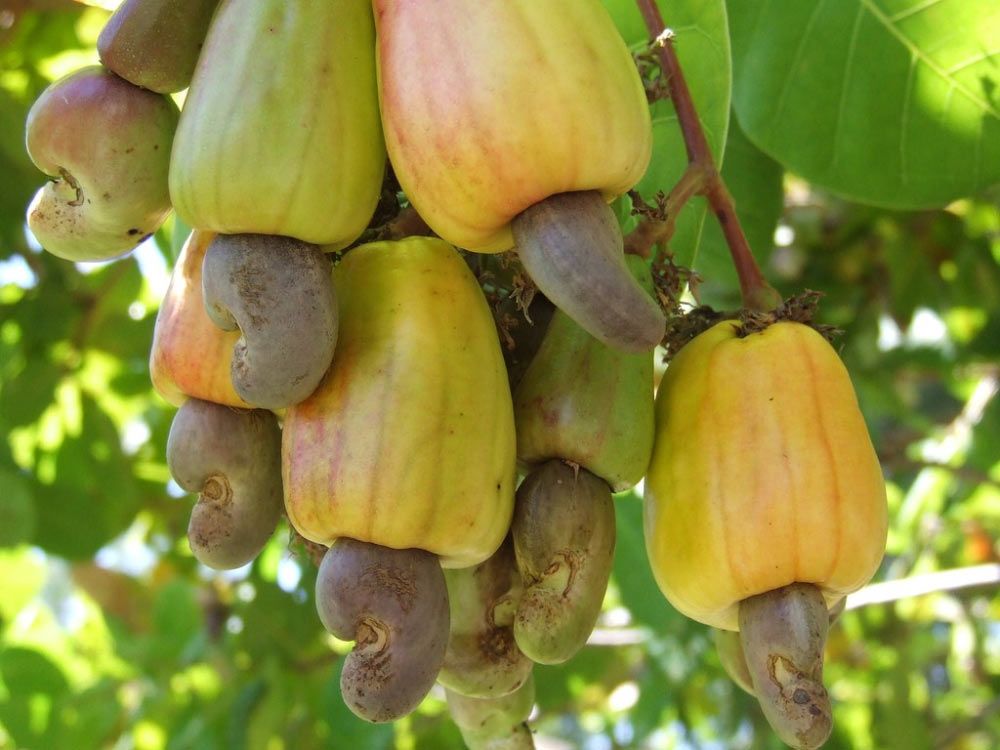
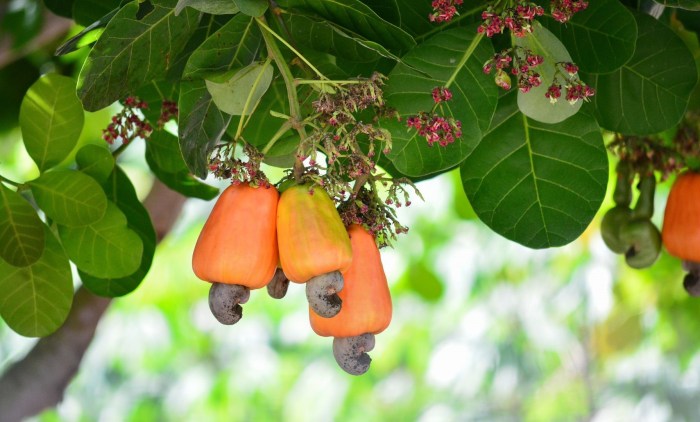
The true fruit of the cashew tree is a kidney-shaped or boxing glove-shaped drupe that grows at the end of the cashew apple. The drupe first develops on the tree and then the pedicel expands to become the cashew apple. The drupe becomes the true fruit, a single shell-encased seed, which is often considered a nut in the culinary sense.
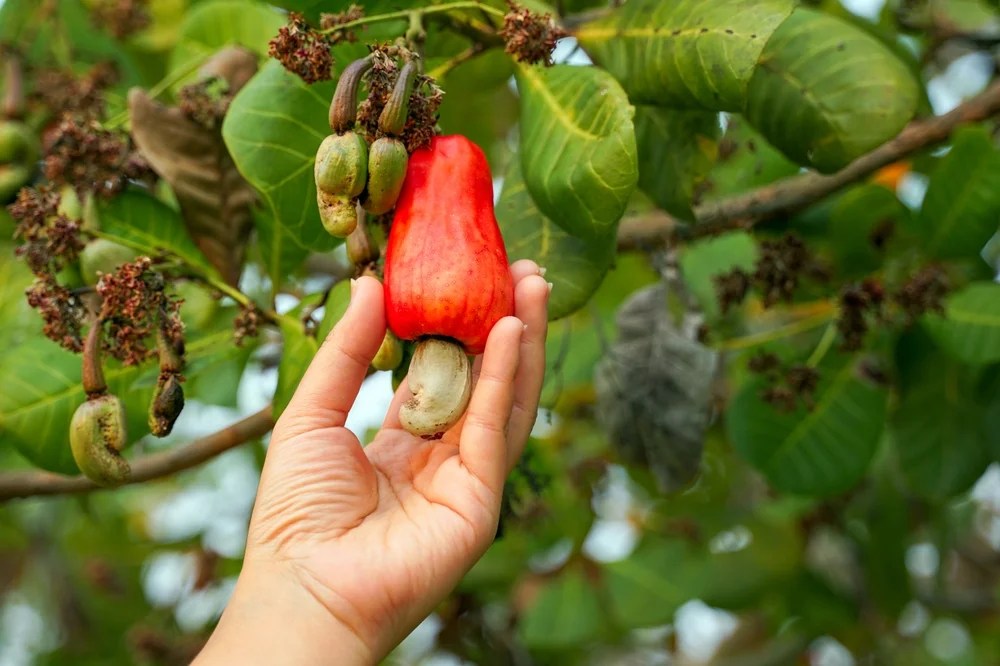
The cashew tree is large and evergreen, growing to 14 metres (46 feet) tall, with a short, often irregularly shaped trunk. The leaves are spirally arranged, leathery textured, the flowers are produced in a panicle or corymb long; each flower is small, pale green at first, then turning reddish, with five slender, acute petals The largest cashew tree in the world and is located in Natal, Brazil. The fruit of the cashew tree is an accessory fruit What appears to be the fruit is an oval or pear-shaped structure, that develops from the pedicel and the receptacle of the cashew flower. Called the cashew apple, better known in Central America as marañón, it ripens into a yellow or red.
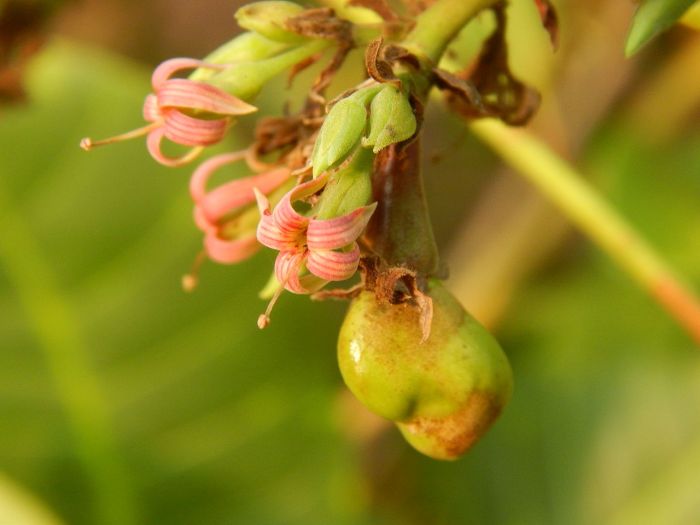
Below you can see how the cashew nuts are formed from the flowers.
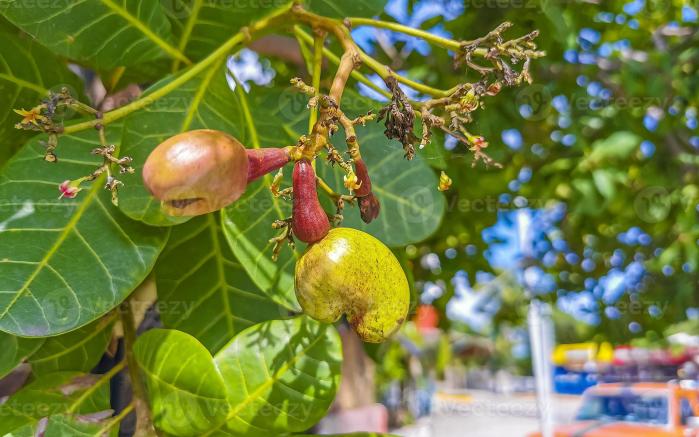
The next stage growing a little Bigger from the above small ones’.
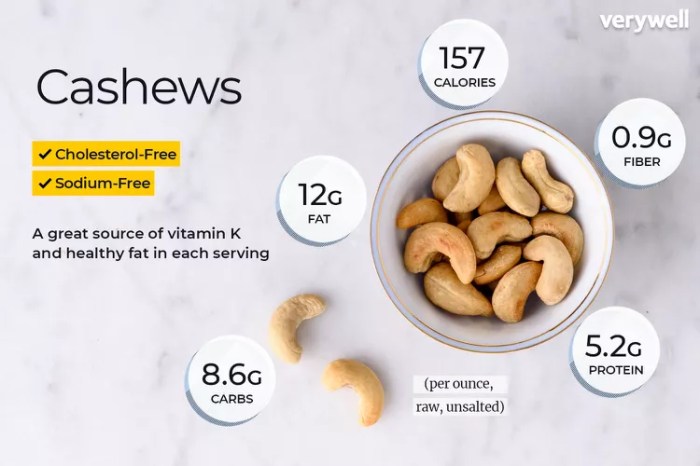
Raw cashew nuts are 5% water, 30% carbohydrates, 44% fat, and 18% protein In raw cashews provide 67% of the Daily Value in total fats, 36% DV of protein, 13% DV of dietary fiber, and carbohydrates. Cashew nuts are rich source of dietary minerals, including particularly copper, manganese, phosphorus, and magnesium and of thiamin, vitamin B6, and vitamin K Iron, potassium, zinc, and selenium are present in significant content.
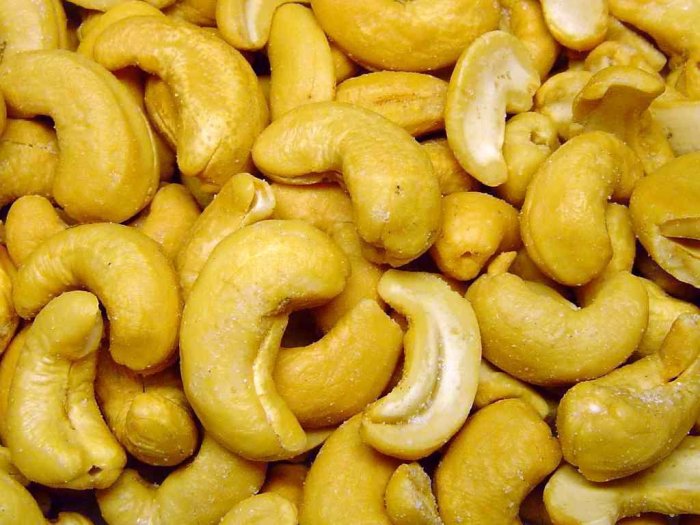
Nut and shell
Culinary uses for cashew seeds in snacking and cooking are similar to those for all tree seeds called nuts. Cashews are commonly used in Indian cuisine, whole for garnishing sweets or curries, or ground into a paste that forms a base of sauces for curries (e.g., korma), or some sweets It is also used in powdered form in the preparation of several Indian sweets and desserts. both roasted and raw kernels of Goa Kaju are used whole for making curries and sweets. Cashews are also used in Thai and Chinese cuisines, generally in whole form. The province of Pampanga also has a sweet dessert called turrones de casuy, which is cashew marzipan wrapped in white wafers. In Indonesia, roasted and salted cashews are called kacang mete or kacang mede, while the cashew apple is called jamb
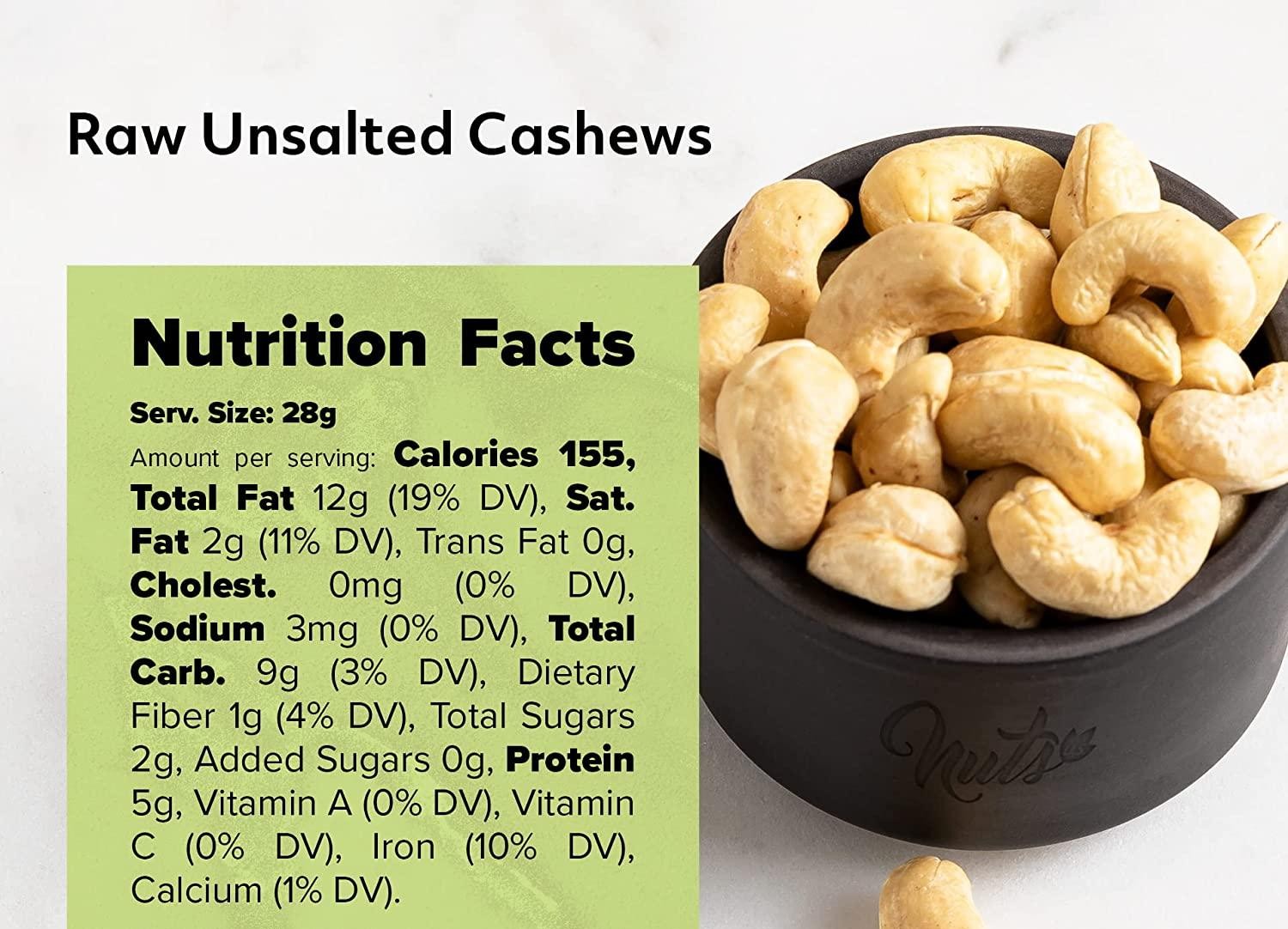
Above is the Nutri amounts just to know May be not over eat 🙂 which is very easy but don’t we all love to eat them 🙂
https://www.bing.com/videos/riverview/relatedvideo?
Cashew nuts are processed through several key steps:
- Cleaning: The raw cashew nuts are cleaned to remove impurities.
- Heating: The nuts are heated to facilitate shelling.
- Shelling: The shells are removed either by hand or using machines.
- Drying: The shelled nuts are dried to reduce moisture content.
- Peeling: The thin skin around the nuts is peeled off.
- Grading: The nuts are sorted based on size and quality.
- Packaging: Finally, the processed cashew nuts are packaged for sale.
When It’s Best
Cashews are harvested about two months after the fruit (the apple) has set. The nut forms below the apple. This usually happens in the winter. But cashews are available all year long in most stores.
Storage and Food Safety
The best way to store nuts is to keep them in an airtight container at room temperature. They should stay fresh for about three months. If you keep them in the refrigerator, you can prolong their lifespan to up to six months, and if you freeze them, you can use them for about one year.
How to Prepare
Cashews can be eaten raw or roasted. Many people describe them as having a creamy, sweet texture that pairs well with savory and salty foods. Sprinkle roasted or raw nuts on a salad for a boost of protein or add them to the top of a small serving of ice cream. Chop them up and use them as a coating for fish or even add them to oatmeal in the morning.
Promotes Better Heart Health
Cashews, like all nuts, are a high-fat food, but they provide both poly- and monounsaturated fats—a healthy form of fat that helps boost heart health and reduce cholesterol levels when consumed in moderation.2 Cashews also provide diet-friendly fiber, which is associated with a heart-healthy diet. Studies also show that plant-based diets that include healthy fats and protein from nuts and seeds (rather than meat products) can boost heart health.
I hope you found this post quite interesting and full of new knowledge as very few know how cashews come about 🙂
This site has been doing good, and I am so Happy. I have been getting,

Congrats! I am My Path is getting noticed.
Latest Update: 10th of July 2025. The website continues for the New and old Readers, Followers and Blogging Friends. Hope what I have written is useful that helps you to feel more Positive and Happier This is “The 280th Post” and with the “Introductory Page this will be all in Total up to date, 281 posts. On Top Right-Hand side, you are able to see: The word “Menu” when you click on it. You will see the word “Home” All the posts from “The Very Beginning comes ~ Under “Home”. Which is The Introductory Page about: Who I am & Why I am Writing!
The new Topics “On the Left-Hand side “Under the Recent Posts, with “The latest Topics adding up” Happy Reading ❤
As always, it is all free”. You can share and pass it on also for others who can benefit from this post. I hope All those who Read will be able to make the maximum use of all these facts and make, “Your Lives More Healthy and able to Lead Better lives in Happiness and Peace”. I wish it to be so as,” Peace which is our Ultimate Goal in Life ❤
Sending Many Blessings of Good Health and Healing Energies your way ❤
May God’s Blessings Be Upon You ❤
Deepa Nilamani ❤








 I am My Path!

You must be logged in to post a comment.