Art Therapy!

Hello to, All My Dear Readers, Followers and My Blogging Friends ❤

Hope All of You are keeping well and Happy. As usual I am keeping in Good Health and moving forward doing my usual, activities. I began Writing an article on Publishing as I am an Author and also a Publisher. That I decided to rewrite some of the old articles with added knowledge and the changes The world has gone through and I wrote about “Languages and that went on to quite a few posts on that and I came upon Speech Therapy Because of that I wrote about CBT Therapy. And now on lighter subjects after Music Therapy It is Art Therapy 🙂

When It’s Used

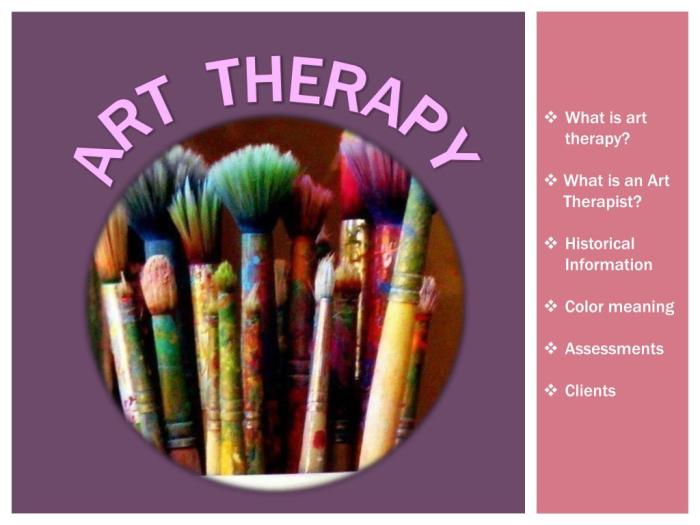
Art therapists work with individuals, couples, and groups in a variety of settings, including private counseling, wellness centers, correctional institutions, senior centers, and other community settings. No artistic talent is necessary for art therapy to succeed, because the therapeutic process is not about the artistic value of the work, but rather about finding associations between the creative choices made and a client’s inner life. The artwork can be used as a springboard for reawakening memories and telling stories that may reveal messages.

Art therapy can help with many conditions and experiences, including:

While art therapy is helpful for many people, the research is mixed; some studies have demonstrated its efficacy while others have found little benefit.

How It Works

Art therapy is founded on the belief that self-expression through artistic creation has therapeutic value for those who are healing or seeking a deeper understanding of themselves and their behaviors. According to the American Art Therapy Association, art therapists are trained to understand the roles that color, texture, and various art media can play in the therapeutic process and how these tools can help reveal one’s thoughts, feelings, and psychological disposition. Art therapy integrates psychotherapy and some form of visual arts as a specific, stand-alone form of therapy, but it is also used in combination with other types of therapy.

For example, researchers interviewed art therapy patients with personality disorders and identified five benefits:

  1. Perception and self-perception: Art helped the participants focus on the present moment, identify their emotional responses, and connect their emotions and body awareness.
  2. Personal integration: They strengthened their identity and self-image.
  3. Emotion and impulse regulation: They improved the ability to regulate and control emotions.
  4. Behavior change: They learned to change their behavioral responses to themselves and others, perhaps through the self-directed nature of art-making.
  5. Insight and comprehension: They verbalized their emotions and experiences

What to Expect

As with any form of therapy, your first session will consist of talking to the therapist about why you want to find help and learning what the therapist has to offer. Together, you will come up with a treatment plan that involves creating some form of artwork.

Once you begin creating, the therapist may, at times, simply observe your process as you work, without interference or judgment. When you have finished a piece of artwork—and sometimes while you are still working on it—the therapist will ask you questions along the lines of how you feel about the artistic process, what was easy or difficult about creating your artwork, and what thoughts or memories you may have had while you were working. Generally, the therapist will ask about your experience and feelings before providing any observations.

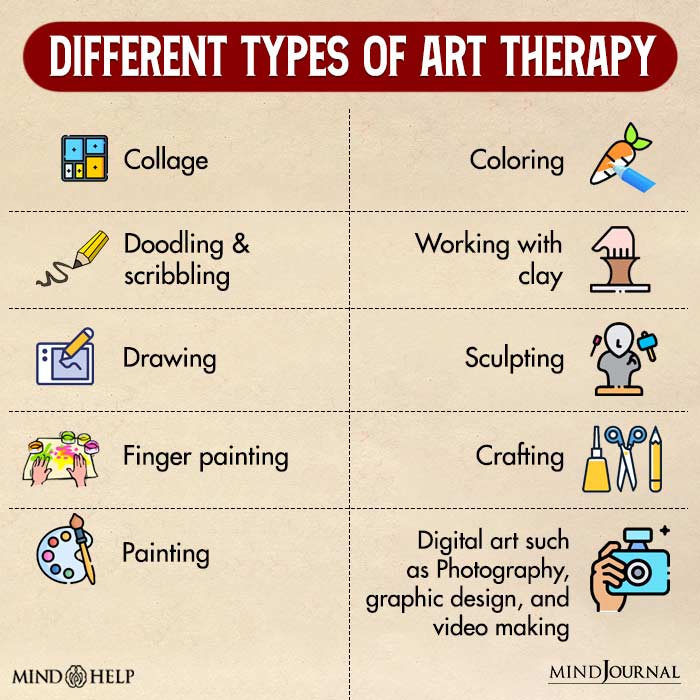
Art therapists use a variety of interventions; with creativity and innovation, they can tailor their techniques to each individual client. Art therapists leverage different mediums and modalities. For instance, an art therapist may guide patients to build clay structures of their family members, engage in free association about works of art, or tell a story through a photo collage.

What to Look for in an Art Therapist

An art therapist has the minimum of a master’s degree, generally from an integrated program in psychotherapy and visual arts at an educational institution accredited by the Council for Higher Education Accreditation (CHEA). The initials ATR after a therapist’s name means he or she is registered with the Art Therapy Credentials Board (ATCB). The initials ATR-BC means the therapist is not only registered but has passed an examination to become board-certified by the ATCB.

It’s also important to find a therapist with whom you feel comfortable. You may want to ask the therapist a few questions before committing to work with them. Questions may include:

  • How would they help with your particular concerns?
  • Have they dealt with this type of problem before?
  • What is their process?
  • What is their timeline for treatment?

Meanwhile from WordPress Your blog, I am My Path!, appears to be getting more traffic than usual! hourly views A spike in your stats Double Congratulations 🙂

Latest Update: Today is the 11th of October 2025: This is “The 327 Post” and with the “Introductory Page this will be all in Total up to date, 328 posts :).

Take Home Message
We all have the capacity to adapt and to achieve our personal expectations. we raise the bar in relation to our own potential and push ourselves to achieve Higher things. The therapeutic alliance has been shown to affect treatment outcomes across a range of conditions, therapeutic modalities, and contexts. In other words, a greater sense of social connectedness rooted in caring for others, connecting with the community, and finding a sense of purpose is linked to improved mental health and well-being. Lots of picture Quotes about lot of things you can do. Happy Reading 🙂

The coloured Topics in Green, if you “Click” on them “Will take you to other different posts of Mine which you will be able to find more information and even Pronunciation”. I have another website with “My own little Poems and Pictures of some of My Hobbies” if you are interested on seeing, “What else I am doing” you can have a look at: https://deepanilamani.com/

As always, it is all free”. You can share and pass it on also for others who can benefit from this post. I hope All those who Read will be able to make the maximum use of all these facts and make, “Your Lives More Healthy and able to Lead Better lives in Happiness and Peace”. I wish it to be so as,” Peace which is our Ultimate Goal ❤

May Gods Blessings Be Upon You ❤

Thanking The i net for the pictures ❤

Deepa Nilamani ❤

Flag Counter

Music Therapy!

Hello to, All My Dear Readers, Followers and My Blogging Friends ❤

Hope All of You are keeping well and Happy. As usual I am keeping in Good Health and moving forward doing my usual, activities. I began Writing an article on Publishing as I am an Author and also a Publisher. That I decided to rewrite some of the old articles with added knowledge and the changes The world has gone through and I wrote about “Languages and that went on to quite a few posts on that and I came upon Speech Therapy Because of that I wrote about CBT Therapy. And now a lighter subject “”Music Therapy!

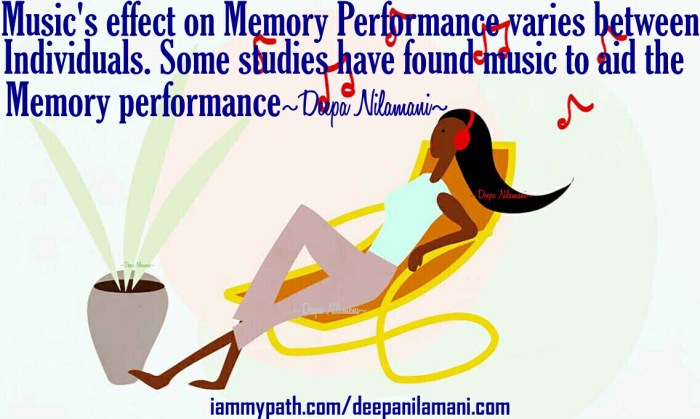
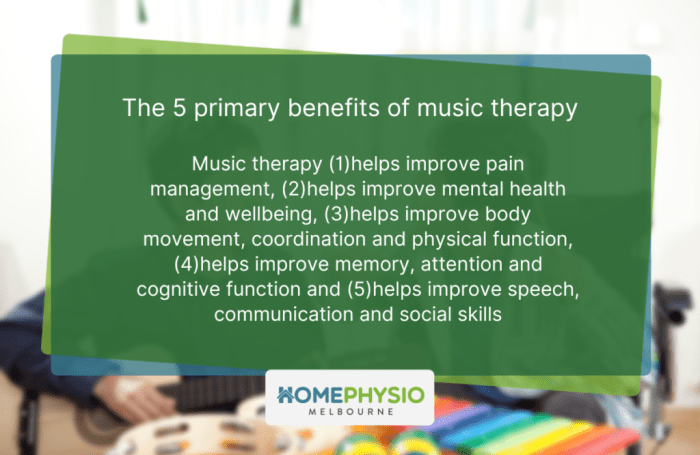
Music therapy is a form of treatment that uses music within the therapeutic relationship to help accomplish the patient’s individualized goals. This evidence-based approach involves techniques such as listening to, reflecting on, and creating music under the guidance of a trained music therapist. It’s not necessary to have a musical background to benefit from music therapy. People of all ages, from children to adults, may find it is a good fit for their therapeutic needs.


When It’s Used

Music therapy is often practiced one-on-one, but it can also be used in group settings, such as a correctional facility, It is generally most effective when used in combination with other therapies. Music therapy can help people manage variety of health conditions.

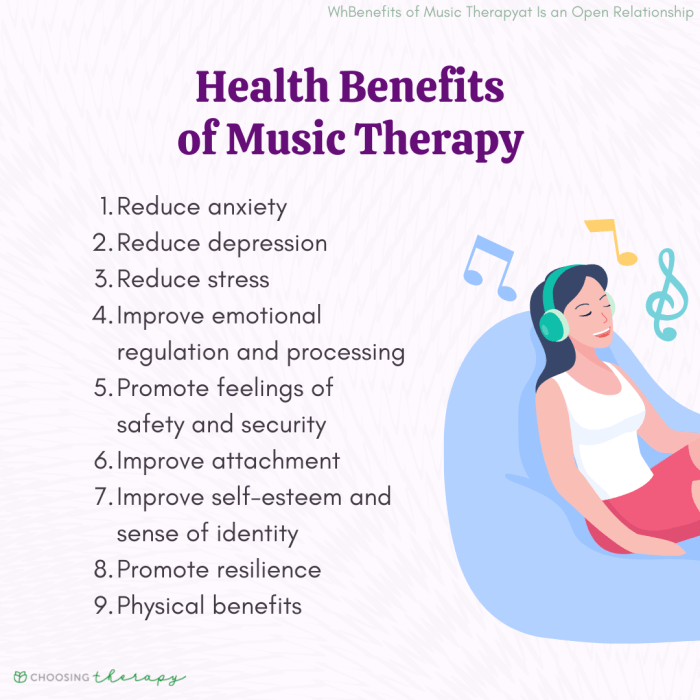
Music can also have powerful effects on a person’s psychological health. It can influence anyone’s mood, causing a range of effects from providing comfort to soothing to boosting energy. Studies have shown that music therapy can be particularly helpful for people who have stress.

Other psychological benefits of music therapy include:

  • Lifting one’s mood
  • Increasing joy
  • Reducing anxiety
  • Regulating emotions, particularly difficult ones
  • Facilitating self-reflection

How It Works

People have long appreciated the healing power of music. Music therapy continues to feel more confident, joyful, and connected. people can still enjoy these benefits, as music can stir emotion, prompt discussion, facilitate expression, and lower stress. Music is processed and produced through a different pathway than verbal speech; bypassing that pathway allows patients to express themselves, communicate with loved ones, and experience the world more vibrantly.


What to Expect

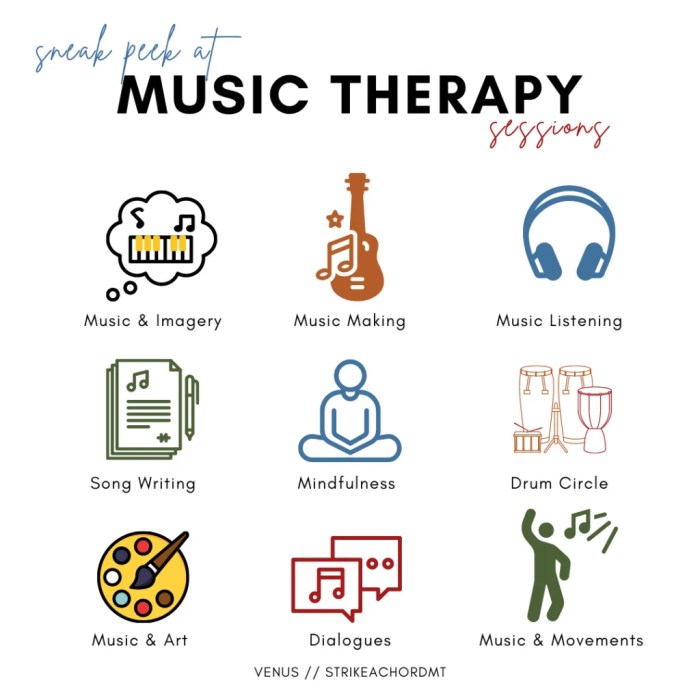
After an initial assessment, a therapist will tailor techniques to fit a client’s musical ability, interests, and specific needs. One approach is to create music—humming a nostalgic tune from one’s childhood, singing as part of a choir, or improvising on instruments such as the drums, piano, guitar, or chimes.

If the client is able to discuss the experience, a therapist might ask what memories the sounds provoke or what they’re feeling. The pair might listen to a song together and discuss the emotions and memories the song. Or the client might write a song, which can illuminate a character or issue in their lives. The therapist could engage the client in breathing exercises, with or without music, to release tension and calm anxiety.

All of these exercises allow the therapist and client to explore the psychological, familial, social, cultural, and spiritual components of the person’s inner world. And clients don’t need to have any musical training or talent; the practice doesn’t focus on technical skills but employs music as a tool for reflection and communication.

What to Look for in a Music Therapist

While music therapy may not be a helpful approach for everyone, many people have found it beneficial Seeking out a therapist with whom the client feels a connection is also valuable. Creating a strong foundation of trust and appreciation can help an individual embrace the process and find success in therapy.

You may want to ask the music therapist a few questions before getting started:

  • How would they help with your particular concerns?
  • Have they dealt with this type of problem before?
  • What is their process?
  • What is their timeline for treatment?

Meanwhile from WordPress: You’ve posted 3 days in a row on I am My Path!! Keep up the good work

Latest Update: Today is the 11th of October 2025: This is “The 326 Post” and with the “Introductory Page this will be all in Total up to date, 327 posts :).

Take Home Message
We all have the capacity to adapt and to achieve our personal expectations. we raise the bar in relation to our own potential and push ourselves to achieve Higher things. The therapeutic alliance has been shown to affect treatment outcomes across a range of conditions, therapeutic modalities, and contexts. In other words, a greater sense of social connectedness rooted in caring for others, connecting with the community, and finding a sense of purpose is linked to improved mental health and well-being. Lots of picture Quotes about lot of things you can do. Happy Reading 🙂

The coloured Topics in Green, if you “Click” on them “Will take you to other different posts of Mine which you will be able to find more information and even Pronunciation”. I have another website with “My own little Poems and Pictures of some of My Hobbies” if you are interested on seeing, “What else I am doing” you can have a look at: https://deepanilamani.com/

As always, it is all free”. You can share and pass it on also for others who can benefit from this post. I hope All those who Read will be able to make the maximum use of all these facts and make, “Your Lives More Healthy and able to Lead Better lives in Happiness and Peace”. I wish it to be so as,” Peace which is our Ultimate Goal ❤

May Gods Blessings Be Upon You ❤

Thanking The i net for the pictures ❤

Deepa Nilamani ❤

Flag Counter

Languages!

Hello To, All My Dear Readers, Followers and Blogging Friends ❤

Hope All of You are keeping well and Happy. As usual I am keeping in Good Health and moving forward doing my usual, activities. I thought of Writing an article on Publishing as I am an Author and also a Publisher. After writing from 2015 to 2025 I have written 389 posts up to now! That I decided to rewrite some of the old articles with added knowledge and the changes The world has gone through and now it is about “”Languages “I have not written before, so this is a new post 🙂

Languages are complex systems of communication that reflect the rich diversity of human culture, with over 7,000 languages spoken worldwide today.

Definition and Characteristics

Language is a structured system of communication that consists of grammar and vocabulary. It is the primary means by which people convey meaning, both in spoken and signed forms, and may also be conveyed through writing. language is characterized by its cultural and historical diversity, with significant variations observed between cultures and across time. languages possess the properties of productivity and displacement, which enable the creation of an infinite number of sentences, and the ability to refer to objects, events, and ideas that are not immediately present in the discourse. The use of language relies on social convention and is acquired through learning.

Estimates of the number of human languages in the world vary between 5,000 and 7,000. Precise estimates depend on languages and dialectsNatural languages are spoken, signed, or both; however, any language can be encoded into secondary media using auditory, visual. writing, whistling, signing, language but written or signed language is the way to inscribe or encode the natural speech or gestures.

Depending on philosophical perspectives regarding the definition of language and meaning, when used as a general concept, “language” may refer to the cognitive ability to learn and use systems of complex communication, or to describe the set of rules that makes up these systems, or the set of utterances that can be produced from those rules. All languages rely on the process of signs to particular meanings. manual and tactile languages contain a system that governs how symbols are used. to form sequences known as words.

Language is thought to have gradually diverged from earlier primate communication systems when early acquired the ability to form a theory of mind and shared intentionality. This development is sometimes thought to have coincided with an increase in brain volume, and many linguists see the structures of language as having evolved to serve specific communicative and social functions. Language is processed in many different locations. Humans acquire language through social interaction in early childhood, and children generally speak fluently by approximately three years old. Language and culture are codependent. Therefore, in addition to its strictly communicative uses, language has social uses such as signifying group identitysocial stratification, as well as use for social grooming and entertainment.

Languages evolve and diversify over time, and the history of their evolution can be reconstructed by comparing modern languages to determine which traits their ancestral languages must have had in order for the later developmental stages to occur. A group of languages that descend from a common ancestor is known as a language family; in contrast, a language that has been demonstrated not to have any living or non-living relationship with another language is called a language isolate. There are also many unclassified languages whose relationships have not been established, and may have not existed at all. Academic consensus holds that between 50% and 90% of languages spoken at the beginning of the 21st century will probably have become extinct by the year 2100.

When speaking of language as a general concept, definitions can be used which stress different aspects. These definitions also entail different approaches and understandings of language, and they also inform different and often incompatible schools of linguistic theory. Debates about the nature and origin of language go back to the ancient world. Greek philosophers such as Gorgias and Plato debated the relation between words, concepts and reality. Gorgias argued that language could represent neither the objective experience nor people experience, and that communication and truth were therefore impossible. Plato maintained that communication is possible because language represents ideas and concepts that exist independently of, and prior to, language.

Grammar is the study of how meaningful elements within a language can be combined into utterances. Morphemes can either be free or bound. If they are free to be moved around within an utterance, they are usually called words, and if they are bound to other words they are called affixes. The way in which meaningful elements can be combined within a language is governed by rules. The rules of the internal structure of phrases and sentences are called syntax.

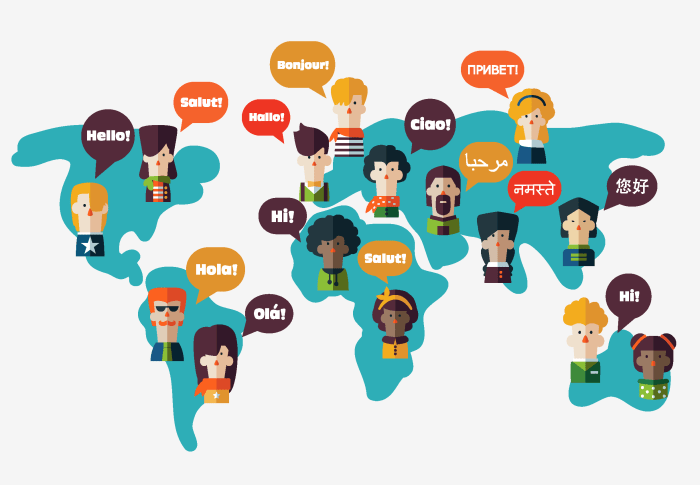
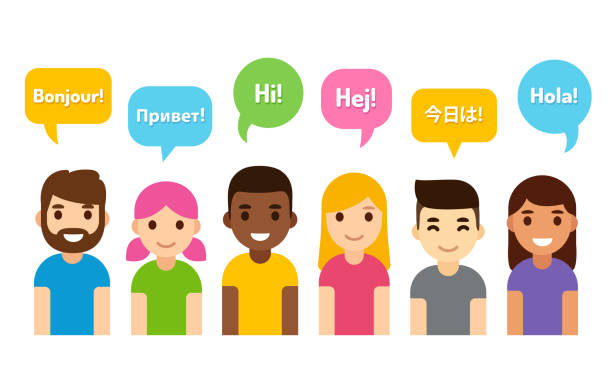
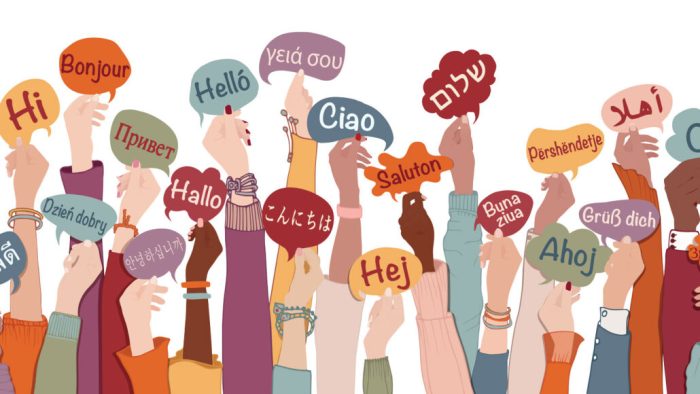
International group of people saying Hi in different languages. Diverse characters, Learning, education and communication design element.

Meanwhile I am Getting Congratulation from WordPress You’ve posted 3 days in a row on I am My Path!! You’ve posted 3 days in a row on I am My Path!! Keep up the good work 🙂

Latest Update: Today is the 4th of October 2025: This is “The 319 Post” and with the “Introductory Page this will be all in Total up to date, 320nposts.

Take Home Message
We all have the capacity to adapt and to achieve our personal expectations. we raise the bar in relation to our own potential and push ourselves to achieve Higher things. The therapeutic alliance has been shown to affect treatment outcomes across a range of conditions, therapeutic modalities, and contexts. In other words, a greater sense of social connectedness rooted in caring for others, connecting with the community, and finding a sense of purpose is linked to improved mental health and well-being. Lots of picture Quotes about lot of things you can do. Happy Reading ❤

The coloured Topics in Green, if you “Click” on them “Will take you to other different posts of Mine which you will be able to find more information and even Pronunciation”. I have another website with “My own little Poems and Pictures of some of My Hobbies” if you are interested on seeing, “What else I am doing” you can have a look at: https://deepanilamani.com/

As always, it is all free”. You can share and pass it on also for others who can benefit from this post. I hope All those who Read will be able to make the maximum use of all these facts and make, “Your Lives More Healthy and able to Lead Better lives in Happiness and Peace”. I wish it to be so as,” Peace which is our Ultimate Goal ❤

May God’s Blessings Be Upon You ❤

Deepa Nilamani ❤

Flag Counter

A Book Corner!

Hello to All My Dear Readers, Followers and Blogging Friends ❤

Hope All of You are keeping well and Happy. As usual I am keeping in Good Health and moving forward doing my usual, activities. Today I thought of Writing an article on Publishing as I am an Author and also a Publisher. And Now I have got this Topic “”A Book Corner””

reading corner is a space dedicated to developing and fostering love for books and the habit of reading. Reading plays a fundamental role in the cognitive, emotional, and social growth of young children, which is why it’s so important to provide spaces like these.

In this article, I will explore the importance of reading, provide guidance on reading to children, and share tips for creating a reading corner in the classroom. Discover how this environment can benefit children’s learning and development!

  1. Fostering a Love for Reading: Reading corners provide a sanctuary where the joy of reading can be discovered and nurtured. Away from the pressures of structured learning, these cosy areas, filled with a variety of books, invite students to explore different genres at their own pace. The comfort and tranquility of the space make reading a pleasurable activity, helping students develop a lifelong love for literature.
  2. Enhancing Literacy and Language Skills: Regular exposure to books in reading corners significantly boosts literacy. Children who spend time reading independently expand their vocabulary, improve their understanding of grammar, and develop better comprehension skills. This exposure is crucial in the early years when students are mastering the basics of reading and writing.
  3. Encouraging Independent Learning: Reading corners promote self-directed learning. In these spaces, students choose what they want to read, setting their own pace without direct supervision or rigid guidelines. This autonomy builds their confidence in making choices and fosters a sense of responsibility for their own learning.
  4. Supporting Emotional and Social Development: Books can be windows into different worlds and experiences, aiding in the emotional and social development of children. Reading stories about diverse cultures, situations, and characters helps students develop empathy and a broader understanding of the world around them. Furthermore, reading corners can be communal spaces where students share books and discuss ideas, enhancing their social skills.
  1. Providing a Haven for Struggling Readers: For students who find reading challenging, the non-judgmental and inviting atmosphere of a reading corner can be particularly beneficial. These students can practice reading in a relaxed environment, free from the anxiety of being judged or falling behind, which is crucial for building their confidence and skills.
  2. Enhancing Concentration and Focus: In our digital age, where attention spans are constantly challenged, reading corners offer a much-needed respite. The act of sitting down with a book requires concentration and focus, skills that are transferable to other areas of academic and personal life.
  3. Cultivating Imagination and Creativity: Books open up worlds of imagination, sparking creativity in young minds. Reading corners, often decorated to inspire and ignite curiosity, provide the perfect backdrop for students to explore and dream, nurturing creative thinking that is invaluable in their overall development.

In conclusion, reading corners are more than just a quiet spot to read; they are essential spaces that contribute significantly to the intellectual, emotional, and social development of students. They help cultivate a love for reading, build essential literacy skills, and support independent and imaginative thinking. In the dynamic world of education, reading corners stand as a testament to the timeless power of books and the endless possibilities they hold for young learners. Every school should consider them an integral part of their educational offering, a simple yet powerful tool in shaping the minds of future generations.

Latest Update: Today is 28th of September 2025: This is “The 314Post” and with the “Introductory Page this will be all in Total up to date, 315 posts.

Take Home Message
We all have the capacity to adapt and to achieve our personal expectations. we raise the bar in relation to our own potential and push ourselves to achieve Higher things. The therapeutic alliance has been shown to affect treatment outcomes across a range of conditions, therapeutic modalities, and contexts. In other words, a greater sense of social connectedness rooted in caring for others, connecting with the community, and finding a sense of purpose is linked to improved mental health and well-being. Lots of picture Quotes about lot of things you can do. Happy Reading 🙂

As always, it is all free”. You can share and pass it on also for others who can benefit from this post. I hope All those who Read will be able to make the maximum use of all these facts and make, “Your Lives More Healthy and able to Lead Better lives in Happiness and Peace”. I wish it to be so as,” Peace which is our Ultimate Goal ❤

The Topics in Green, if you “Click” on them “Will take you to My other different posts which you will be able to find more information and even Pronunciation”. I have another website with “My own little Poems and Pictures of some of My Hobbies” if you are interested on seeing, “What else I am doing” during my spare time you can have a look at: https://deepanilamani.com/

May God’s Blessings Be Upon You ❤

Deepa Nilamani ❤
Flag Counter