Happiness!

Hello to, All My Dear Readers, Followers and My Blogging Friends ❤

I started this blog in September 2015, mainly to spread the messages on Good Health. My main intention was to make You the reader feel “More Positive” and to have that “Faith and Hope” so that you can reach up and make ‘Yourselves Better and Happier”. I kept My Faith and succeeded in My Life. The Beautiful thing is” I have achieved what I wanted through Faith. And then next post was “Joy “Love” and now Happiness 🙂

happiness, in psychology, a state of emotional well-being that a person experiences either in a narrow sense, when good things happen in a specific moment, or more broadly, as a positive evaluation of one’s life and accomplishments overall—that is, subjective well-being. Happiness can be distinguished from other positive emotions (such as affection, excitement, and interest). This emotion often co-occurs with a specific facial expression: the smile.
Signs of Happiness

While perceptions of happiness may be different from one person to the next, there are some key signs that psychologists look for when measuring and assessing happiness.

Some key signs of happiness include:

  • Feeling like you are living the life you wanted
  • Going with the flow and a willingness to take life as it comes
  • Feeling that the conditions of your life are good
  • Enjoying positive, healthy relationships with other people
  • Feeling that you have accomplished (or will accomplish) what you want in life
  • Feeling satisfied with your life
  • Feeling positive more than negative
  • Being open to new ideas and experiences
  • Practicing self-care and treating yourself with kindness and compassion
  • Experiencing gratitude
  • Feeling that you are living life with a sense of meaning and purpose
  • Wanting to share your happiness and joy with others

People from around the world tend to have a similar concept of happiness and can recognize happiness in others. As a result, the specific emotion of happiness is often included as one of a small number of basic emotions that cannot be broken down into more fundamental emotions and that may combine to form other, more complex emotions (in fact, it is sometimes the only positive emotion that is considered to be basic). Thus, happiness is an important concept for researchers who study emotions. When happy people are asked to think back on the conditions and events in their lives, they tend to evaluate these conditions and events positively. Thus, happy people report being satisfied with their lives and the various domains in their lives.

Happiness word cloud collage, heart concept background

Psychologists are interested in happiness for two reasons. First, psychologists study happiness because laypeople are interested in happiness. When people from around the world are asked to list the things that are most important to them, happiness consistently tops the list. People rank attaining happiness as being more important than acquiring money, maintaining good health. Psychologists believe that they can help people achieve this goal of being happy by studying the factors that are associated with happiness.

A second reason why psychologists study happiness is because a person’s evaluative responses to the world may provide information about the basic characteristics of human nature. One of the most basic principles guiding psychological theory is that people and animals are motivated to approach things in the world that cause pleasure and to avoid things in the world that cause pain. Presumably, this behavior results from adaptive mechanisms that guide organisms toward resources and away from dangers. If so, the evaluative reactions of many people about the world should be useful and revealing. For instance, some psychologists have suggested that human beings have a basic need to experience strong and supportive social relationships. They point to evidence from the field of subjective well-being to support their claim—a person’s social relationships are reliably linked to his or her happiness. Thus, cataloging the correlates of happiness should provide important information about the features of human nature.

happiness is an overall sense of experiencing more positive emotions than negative ones.

Happy people still feel the whole range of human emotions they have an underlying sense of optimism that things will get better, that they can deal with what is happening, and that they will be able to feel happy again.How to Cultivate Happiness

While some people just tend to be naturally happier, there are things that you can do to cultivate your sense of happiness. 

Pursue Intrinsic Goals 

Achieving goals that you are intrinsically motivated to pursue, particularly ones that are focused on personal growth and community, can help boost happiness. Research suggests that pursuing these types of intrinsically-motivated goals can increase happiness more than pursuing extrinsic goals like gaining money or status.4

Enjoy the Moment

Studies have found that people tend to over earn—they become so focused on accumulating things that they lose track of actually enjoying what they are doing. So, rather than falling into the trap of mindlessly accumulating to the detriment of your own happiness, focus on practicing gratitude for the things you have and enjoying the process as you go. 

Reframe Negative Thoughts

When you find yourself stuck in a pessimistic outlook or experiencing negativity, look for ways that you can reframe your thoughts in a more positive way. Reframing these negative perceptions isn’t about ignoring the bad. Instead, it means trying to take a more balanced, realistic look at events. It allows you to notice patterns in your thinking and then challenge negative thoughts.

Psychologists have also shown that goals and aspirations influence happiness. Not surprisingly, people who are rapidly approaching a goal tend to experience higher levels of happiness than people who are approaching a goal more slowly. But research also shows that simply having important goals is associated with greater happiness. Presumably, the sense of purpose that these goals create may protect people from the negative effects of temporary setbacks. Interestingly, the specific goals that people choose may also affect their happiness. Research suggests that choosing goals that are a challenge but not unachievable is important.
Although people tend to think about happiness as an outcome that they desire rather than as a tool that can be used to achieve additional goals, psychologists have begun to ask what function happiness serves. One of the best known theories, developed by American psychologist Barbara Fredrickson in 1998, posits that the function of happiness (or more precisely, the function of positive emotions) is to broaden one’s thinking and to build one’s resources. According to this theory, positive emotions lead people to think creatively and to try new things. As a result, happy people can develop new ways to approach the world, new interests, new social relationships, and even new physical skills. All of these effects lead to positive outcomes in people’s lives.

Latest Update: 11th November 2024. The website continues for the New Reader and Followers. Hope what I have written is useful that helps you to feel more Positive and Happier This is “The 256th Post” and with the “Introductory Page this will be all in Total up to date, 257 posts. On Top Right-Hand side, you are able to see: The word “Menu” when you click on it. You will see the word “Home” All the posts from “The Very Beginning comes ~ Under “Home”. Which is The Introductory Page about: Who I am & Why I am Writing!

The older Topics “On the Left-Hand side “Under The Recent Posts, Archives and Categories” with “The New Topics adding up” Happy Reading ❤

What I am doing is, “Taken the Therapists Voices with me and have been Writing of My Journey in Good Health and Wellness in Helping Others to have “Faith, Hope and to Heal” and Lead a Life of Good Health, Happiness and Joy in this Post, and if You click on this Link in Green, you can read this Post: The Therapists Voice Forward!

The coloured Topics in Green, if you “Click” on them “Will take you to My other posts which you will be able to find more information”. I have another website with “My own little Poems and Pictures of some of My Hobbies” if you are interested on seeing, “What else I am doing” 🙂 you can have a look at :https://deepanilamani.com/ ❤

“It is all free”. You can “Download. Take print outs” “share and pass it on also” for others who can benefit from this article and all the other posts ❤

Thank You All again and Lots of Love, Light and Healing Energies from me ❤ ❤ ❤

Thanking for the picture taken from the I net ❤

May God’s Blessings Be Upon You ❤

Deepa 1Deepa Nilamani 🙂

Flag Counter

Love!

Hello to, All My Dear Readers, Followers and My Blogging Friends ❤

I started this blog in September 2015, mainly to spread the messages on Good Health. My main intention was to make You the reader feel “More Positive” and to have that “Faith and Hope” so that you can reach up and make ‘Yourselves Better and Happier”. I kept My Faith and succeeded in My Life. The Beautiful thing is” I have achieved what I wanted through Faith. And then next post was Joy and now “Love” ❤

When it comes to love, some people would say it is one of the most important human emotions. Love is a set of emotions and behaviors characterized by intimacy, passion, and commitment. It involves care, closeness, protectiveness, attraction, affection, and trust. Many say it’s not an emotion in the way we typically understand them, but an essential physiological drive. 

Love is a physiological motivation such as hunger, thirst, sleep. There are countless songs, books, poems, and other works of art about love (you probably have one in mind as we speak!). Yet despite being one of the most studied behaviors, it is still the least understood. For example, researchers debate whether love is a biological or cultural phenomenon. How Do You Know You’re Feeling Love for Someone? What are some of the signs of love? Researchers have made distinctions between feelings of liking and loving another person.

It is said Romantic love is made up of three elements:

  • Attachment: Needing to be with another person and desiring physical contact and approval
  • Caring: Valuing the other person’s happiness and needs as much as your own
  • Intimacy: Sharing private thoughts, feelings, and desires with the other person
    While people tend to view people they like as pleasant, love is marked by being devoted, possessive, and confiding in one another. 

Are There Different Types of Love?

Yup—not all forms of love are the same, and psychologists have identified a number of different types of love that people may experience.

These types of love include:

  • Friendship: This type of love involves liking someone and sharing a certain degree of intimacy.
  • Infatuation: This form of love often involves intense feelings of attraction without a sense of commitment; it often takes place early in a relationship and may deepen into a more lasting love.
  • Passionate love: This type of love is marked by intense feelings of longing and attraction; it often involves an idealization of the other person and a need to maintain constant physical closeness.
  • Compassionate/companionate love: This form of love is marked by trust, affection, intimacy, and commitment.

Is Love Influenced By Biology or Culture?

Love is most likely influenced by both biology and culture. Although hormones and biology are important, the way we express and experience love is also influenced by our own conceptions of love.

Some researchers suggest that love is a basic human emotion just like happiness or anger, while others believe that it is a cultural phenomenon that arises partly due to social pressures and expectations. Research has found that romantic love exists in all cultures, which suggests that love has a strong biological component. It is a part of human nature to seek out and find love. However, culture can significantly affect how individuals think about, experience, and display romantic love.

Is Love an Emotion?

Many say it’s not an emotion in the way we typically understand them, but an essential physiological drive. On the other hand, the American Psychological Association defines it as “a complex emotion.” Still, others draw a distinction between primary and secondary emotions and put love in the latter category, maintaining that it derives from a mix of primary emotions.

Type of LoveComponents
 Friendship Intimacy
 Infatuation Passion
 Empty Commitment
 Romantic Intimacy, passion
 Companionate Intimacy
 Fatuous Commitment, passion
 Consummate Intimacy, compassion, commitment

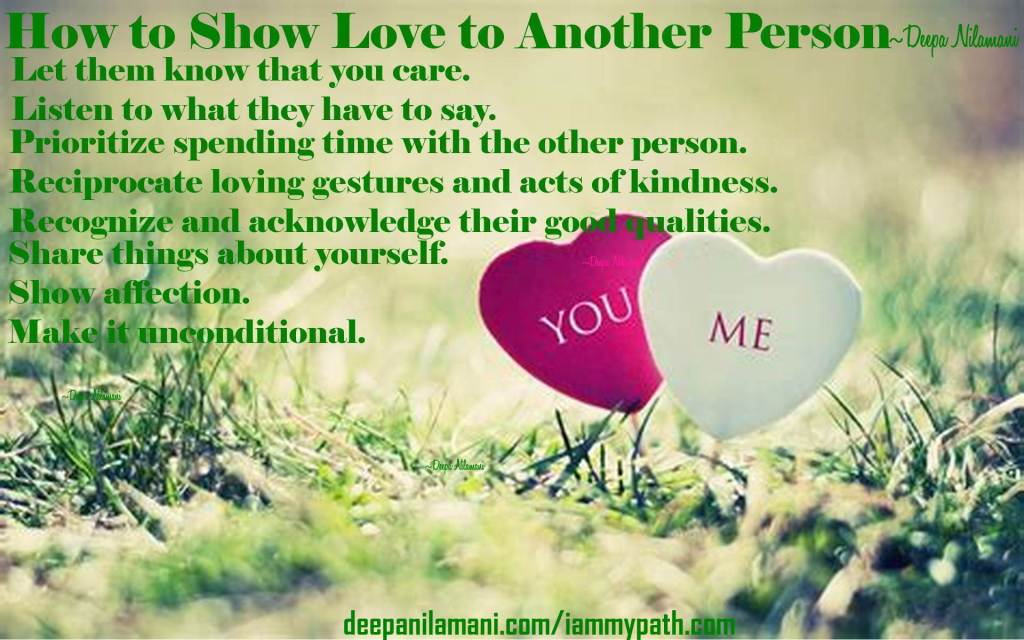
How to Show Love to Another Person

There is no single way to practice love. Every relationship is unique, and each person brings their own history and needs. Some things that you can do to show love to the people you care about include:

  • Be willing to be vulnerable.
  • Be willing to forgive.
  • Do your best and be willing to apologize when you make mistakes.
  • Let them know that you care.
  • Listen to what they have to say.
  • Prioritize spending time with the other person.
  • Reciprocate loving gestures and acts of kindness.
  • Recognize and acknowledge their good qualities.
  • Share things about yourself.
  • Show affection.
  • Make it unconditional.

How Love Impacts Your Mental Health

Love, attachment, and affection have an important impact on well-being and quality of life. Loving relationships have been linked to:

  • Lower risk of heart disease
  • Decreased risk of dying after a heart attack7
  • Better health habits
  • Increased longevity
  • Lower stress levels
  • Less depression

Tips for Cultivating Love

Lasting relationships are marked by deep levels of trust, commitment, and intimacy. Some things that you can do to help cultivate loving relationships include:

  • Try loving-kindness meditation. Loving-kindness meditation is a technique often used to promote self-acceptance and reduce stress, but it has also been shown to promote a variety of positive emotions and improve interpersonal relationships. involves meditating while thinking about a person you love or care about, concentrating on warm feelings and your desire for their well-being and happiness.
  • Communicate. Everyone’s needs are different. The best way to ensure that your needs and your loved one’s needs are met is to talk about them. Helping another person feel loved involves communicating that love to them through words and deeds. Some ways to do this include showing that you care, making them feel special, telling them they are loved, and doing things for them.
  • Tackle conflict in a healthy way. Never arguing is not necessarily a sign of a healthy relationship—more often than not, it means that people are avoiding an issue rather than discussing it. Rather than avoid conflict, focus on hashing out issues in ways that are healthy

History of Love

Only fairly recently has love to become the subject of science. In the past, the study of love was left to “the creative writer to depict for us the necessary conditions for loving,” according to Sigmund Freud. “In consequence, it becomes inevitable that science should concern herself with the same materials whose treatment by artists has given enjoyment to mankind for thousands of years, Research on love has grown tremendously since Freud’s remarks.

Latest Update: 7th November 2024. The website continues for the New Reader and Followers. Hope what I have written is useful that helps you to feel more Positive and Happier This is “The 255th Post” and with the “Introductory Page this will be all in Total up to date, 256 posts. On Top Right-Hand side, you are able to see: The word “Menu” when you click on it. You will see the word “Home” All the posts from “The Very Beginning comes ~ Under “Home”. Which is The Introductory Page about: Who I am & Why I am Writing!

The older Topics “On the Left-Hand side “Under The Recent Posts, Archives and Categories” with “The New Topics adding up” Happy Reading ❤

What I am doing is, “Taken the Therapists Voices with me and have been Writing of My Journey in Good Health and Wellness in Helping Others to have “Faith, Hope and to Heal” and Lead a Life of Good Health, Happiness and Joy in this Post, and if You click on this Link in Green, you can read this Post: The Therapists Voice Forward!

The coloured Topics in Green, if you “Click” on them “Will take you to My other posts which you will be able to find more information”. I have another website with “My own little Poems and Pictures of some of My Hobbies” if you are interested on seeing, “What else I am doing” 🙂 you can have a look at :https://deepanilamani.com/ ❤

“It is all free”. You can “Download. Take print outs” “share and pass it on also” for others who can benefit from this article and all the other posts ❤

Thank You All again and Lots of Love, Light and Healing Energies from me ❤ ❤ ❤

Thanking for the picture taken from the I net ❤

May God’s Blessings Be Upon You ❤

Deepa 1Deepa Nilamani 🙂

Flag Counter

Joy!

Hello to, All My Dear Readers, Followers and My Blogging Friends ❤

I started this blog in September 2015, mainly to spread the messages on Good Health. My main intention was to make You the reader feel “More Positive” and to have that “Faith and Hope” so that you can reach up and make ‘Yourselves Better and Happier”. I kept My Faith and succeeded in My Life. The Beautiful thing is” I have achieved what I wanted through Faith. And then next post will be Joy 🙂

Joy Joy ❤

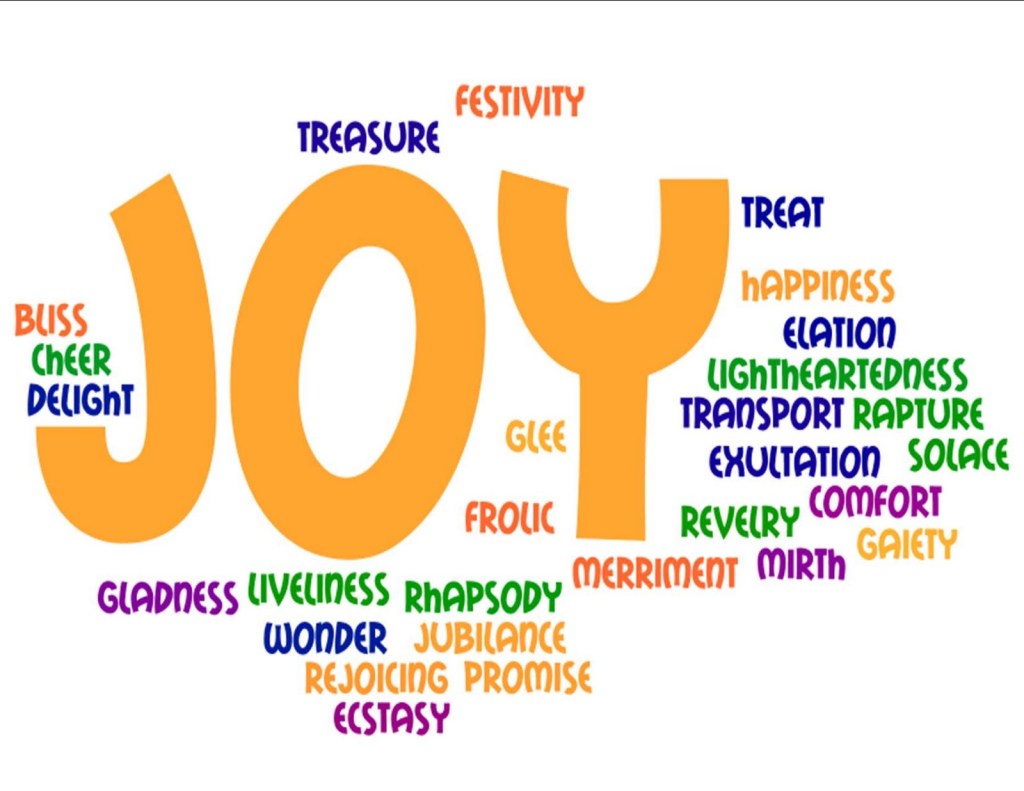
Joy is a feeling of great pleasure or happiness It is closely related to well-being, success, good fortune, and inward spiritual reflectionJoy is not identical to happiness, pleasure, or gratitude. What is joy? It is not mere happiness. Joy is a core human experience.

We have all experienced joy—both the overwhelming and animating experiences of joy that may surprise and overtake us and the calm, and the enduring joy, which sustains us. Generally, we want more of it. We’ve all yelped, shouted, or smiled in delight upon hearing good news, finding a lost, precious object, or accomplishing something meaningful. These experiences bring life meaning and continue to motivate and direct us. That said, there have been no real clear theories or research that explain what prompts this kind of deep joy, nor have we had a framework for distinguishing joy from delight, fun, happiness, or thrill. Most people associate joy with goodness—good experiences, relationships, or objects. But what qualifies as the kind of “good” that produces life-altering, enduring joy?

A helpful way of thinking about joy is understanding what matters most in human life. Reviewing philosophical, theological, and psychological approaches, I identified three areas that deeply inform joy. They are (1) growing in authenticity and living more into one’s strengths, (2) growing in depth of relationships and contributing to others, and (3) living more aligned with one’s ethical and spiritual ideals. I have understood that the more one is able to live a strength-based life, have good relationships with others, and live with moral coherency, the more joy one will experience in life. This suggests that joy is not just an individual pursuit, but one that deeply involves our connections with others. We can discover and experience joy in a variety of ways—doing those things we love to do, growing in intimacy or providing for others, and clarifying and coherently pursuing our values. When these domains of the self, others, and values overlap, that is perhaps when we experience the most joy 🙂

Joy is really complex! This work helped me realize how joy and sorrow are deeply connected. Both are a response to those things that matter most. Joy is our delight when we experience, celebrate, and anticipate the manifestation of those things we hold with the most significance—like a birth or graduation time, how true joy that is tied to our potential to grow as an individual and relate and give to others, The trick is to stay connected to those things that deeply matter. I hope you Like what I have written about Joy. Share with others Good Things when you are able to and try to make them Joyful whenever you can ❤

I hope you Like what I have written about Joy. Share with others Good Things when you are able to and try to make them Joyful whenever you can ❤

Latest Update: 31st October 2024. The website continues for the New Reader and Followers. Hope what I have written is useful that helps you to feel more Positive and Happier This is “The 254th Post” and with the “Introductory Page this will be all in Total up to date, 255 posts. On Top Right-Hand side, you are able to see: The word “Menu” when you click on it. You will see the word “Home” All the posts from “The Very Beginning comes ~ Under “Home”. Which is The Introductory Page about: Who I am & Why I am Writing!


As always, it is all free”. You can share and pass it on also for others who can benefit from this post. I hope All those who Read will be able to make the maximum use of all these facts and make, “Your Lives More Healthy and able to Lead Better lives in Happiness and Peace”. I wish it to be so as,” Peace which is our Ultimate Goal in Life ❤

The Topics in Green, if you “Click” on them “Will take you to My other different posts which you will be able to find more information and even Pronunciation”. I have another website with “My own little Poems and Pictures of some of My Hobbies” if you are interested on seeing, “What else I am doing” during my spare time you can have a look at: https://deepanilamani.com/

Thanking the I net for the pictures I have shared from the I net ❤

May God’s Blessings Be Upon You ❤

Deepa Nilamani ❤

Flag Counter

Hope!

Hello to, All My Dear Readers, Followers and My Blogging Friends ❤

Hope You are all keeping in Good Health. As I said the next post will be on Hope and here it is. Hope is an optimistic state of mind that is based on an expectation of positive outcomes with respect to events and circumstances in one’s life or the world at large. As a verb, its definitions include: “expect with confidence” and “to cherish a desire with anticipation. 🙂

In psychology

Hope comes into its own when crisis looms, opening us to new creative possibilities, that with great need comes an unusually wide range of ideas, as well as such positive emotions as happiness and joy, courage, and empowerment, drawn from four different areas of oneself: from a cognitive, psychological, social, or physical perspective. Such positive thinking bears fruit when based on a realistic sense of optimism, not on a naive “false hope”. In psychology linked hope to the existence of a goal, combined with a determined plan for reaching that goal. and for the centrality of goal-seeking in human psychology,

This is about Hope link between hope and mental willpower as well as the need for realistic perception of goals (problem orientation), arguing that the difference between hope and optimism was that the former can look like wishful thinking, but the latter provides the energy to find practical pathways for an improved future. meaning an unspoken desire for a positive outcome for those who are in control in the wider society.

Hope and wishing. Those that are hopeful are actively trying to investigate the best path of action while taking into consideration the obstacles. Research has shown though that many of those who have “hope” are wishfully thinking.

Hope Theory

In positive psychology, hope can impact several aspects of life such as health, work, education, and personal meaning. There are three main things that make up hopeful thinking:

  • Goals – Approaching life in a goal-oriented way.
  • Pathways – Finding different ways to achieve your goals.
  • Agency – Believing that you can instigate change and achieve these goals.
    In other words, hope was defined as the perceived capability to derive pathways to desired goals and motivate oneself via agency thinking to use those pathways.
  • Individuals who are able to realize these three components and develop a belief in their ability are hopeful people who can establish clear goals, imagine multiple workable pathways toward those goals, and persevere, even when obstacles get in their way.
    Hope and wishing. Those that are hopeful are actively trying to investigate the best path of action while taking into consideration the obstacles. Research has shown though that many of those who have “hope” are wishfully thinking ❤

Latest Update: 29th October 2024. The website continues for the New Reader and Followers. Hope what I have written is useful that helps you to feel more Positive and Happier This is “The 251th Post” and with the “Introductory Page this will be all in Total up to date, 252nposts. On Top Right-Hand side, you are able to see: The word “Menu” when you click on it. You will see the word “Home” All the posts from “The Very Beginning comes ~ Under “Home”. Which is The Introductory Page about: Who I am & Why I am Writing!

As always, it is all free”. You can share and pass it on also for others who can benefit from this post. I hope All those who Read will be able to make the maximum use of all these facts and make, “Your Lives More Healthy and able to Lead Better lives in Happiness and Peace”. I wish it to be so as,” Peace which is our Ultimate Goal in Life ❤

The Topics in Green, if you “Click” on them “Will take you to My other different posts which you will be able to find more information and even Pronunciation”. I have another website with “My own little Poems and Pictures of some of My Hobbies” if you are interested on seeing, “What else I am doing” during my spare time you can have a look at: https://deepanilamani.com/

Thanking the I net for the pictures I have shared from the I net ❤

May God’s Blessings Be Upon You ❤

Deepa Nilamani ❤

Flag Counter