Gestalt Therapy!

Hello to, All My Dear Readers, Followers and My Blogging Friends ❤

Hope All of You are keeping in Good Health as much as possible. And “Keeping yourself Positive and Motivated as Best as possible. I have been writing about Various ways of Therapies to Become Well” And today I am writing about The Gestalt Therapy! writing with more Positive feelings at this time of my Life with Healing Energies I am receiving  writing with more Positive feelings at this time of my Life with Healing Energies I am receiving 🙂
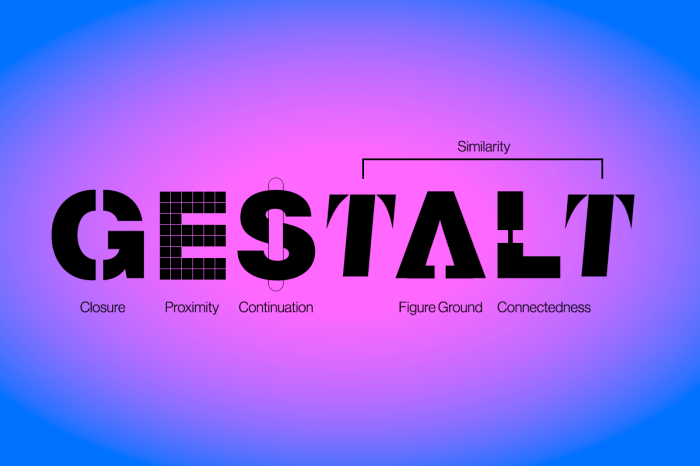
Gestalt therapy, developed by Fritz Perls in the 1940s, emphasizes personal responsibility and focuses on the present moment, helping individuals gain awareness of their experiences and interactions.

Phenomenological Method (the “how”)

Phenomenology in Gestalt therapy is not just a theory—it’s a way of being with the client. It means setting aside assumptions, deeply observing what is happening in the present moment, and exploring the client’s experience without trying to interpret or fix it. This approach invites clients to become curious observers of their own inner world.
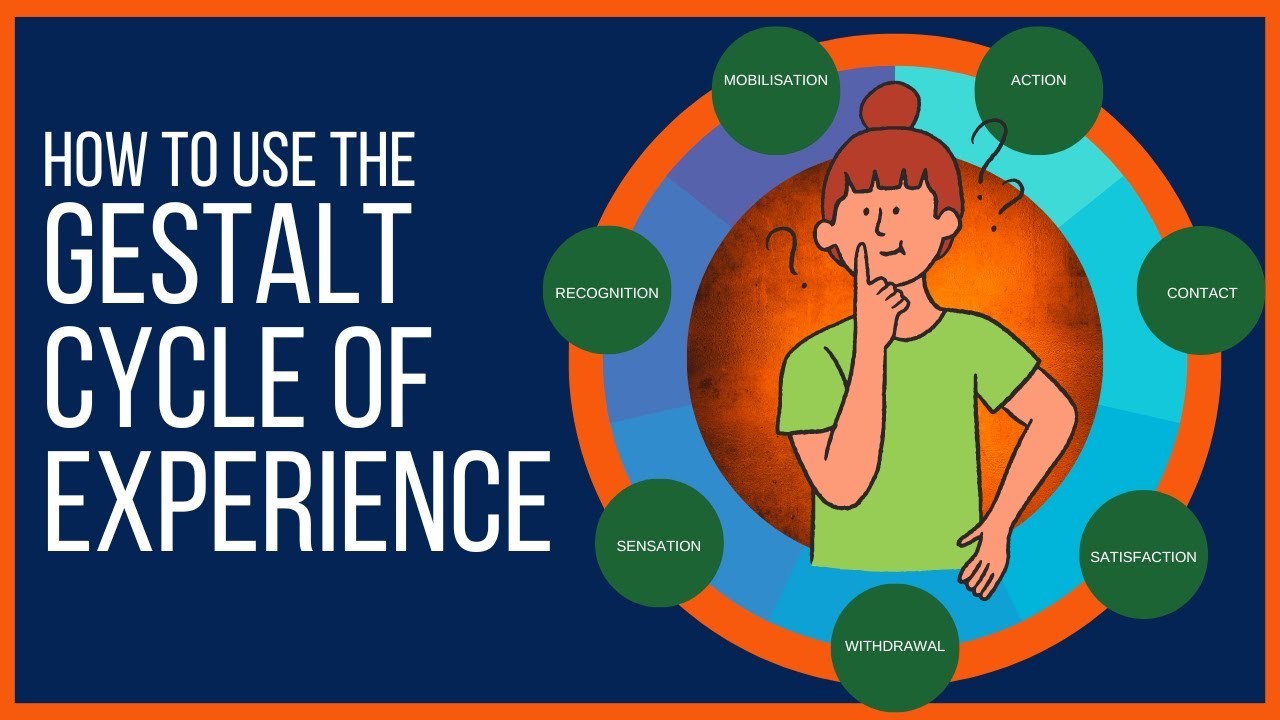
Gestalt therapy is a form of psychotherapy that emphasizes personal responsibility and focuses on the individual’s experience in the present moment, the therapist–client relationship, the environmental and social contexts of a person’s life, and the self-regulating adjustments people make as a result of their overall situation. It was developed by Fritz PerlsLaura Perls and Paul Goodman in the 1940s and 1950s, and was first described in the 1951 book Gestalt Therapy.

Historical Context

Gestalt therapy emerged in the mid-20th century as a reaction against traditional psychoanalysis. Fritz Perls, along with his wife Laura Perls and Paul Goodman, sought to create a more humanistic approach to psychotherapy that emphasized the whole person rather than dissecting their experiences into parts. Influenced by existentialism, phenomenology, and Gestalt psychology, this therapy focuses on how individuals perceive and make sense of their experiences in the present. 

Self-Awareness

Fritz Perls believed many psychological symptoms arise from a lack of awareness—of bodily sensations, emotions, and environmental cues. Gestalt therapy helps clients tune into their present experience through exercises that deepen awareness of how their choices impact health and relationships. By recognizing the connection between emotional and physical states, clients build self-trust, confidence, and the ability to face life’s challenges more fully.
Gestalt therapy is a humanistic and person-centered form of psychotherapy that focuses on a person’s present life and current challenges rather than on past experiences that many other therapies delve into.

Gestalt therapy emphasizes personal responsibility and focuses on the individual’s experience in the present moment, the therapist-client relationship, and the environmental and social contexts of a person’s life. It prioritizes holistic understanding and integration of thoughts, feelings, and actions.

There is an emphasis on perception in this therapy, specifically aiming to increase a person’s awareness of themselves at the moment, and through this awareness, personal growth becomes possible.

Here and Now

Rather than analyzing the past or future, Gestalt therapy centers on what the client is experiencing in the present. This doesn’t deny the past but invites clients to explore memories and emotions as they arise in the moment—especially unfinished conflicts or “incomplete Gestalts.” Working in the present tense allows clients to access insight and resolution where it’s most available: the here and now.
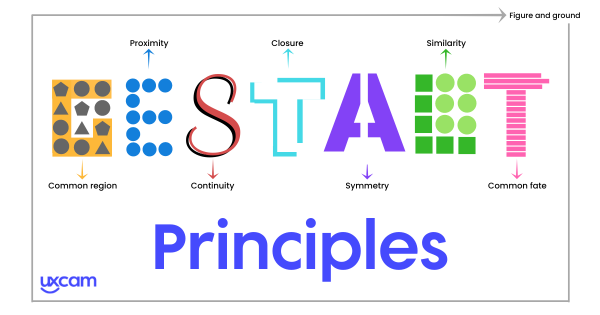
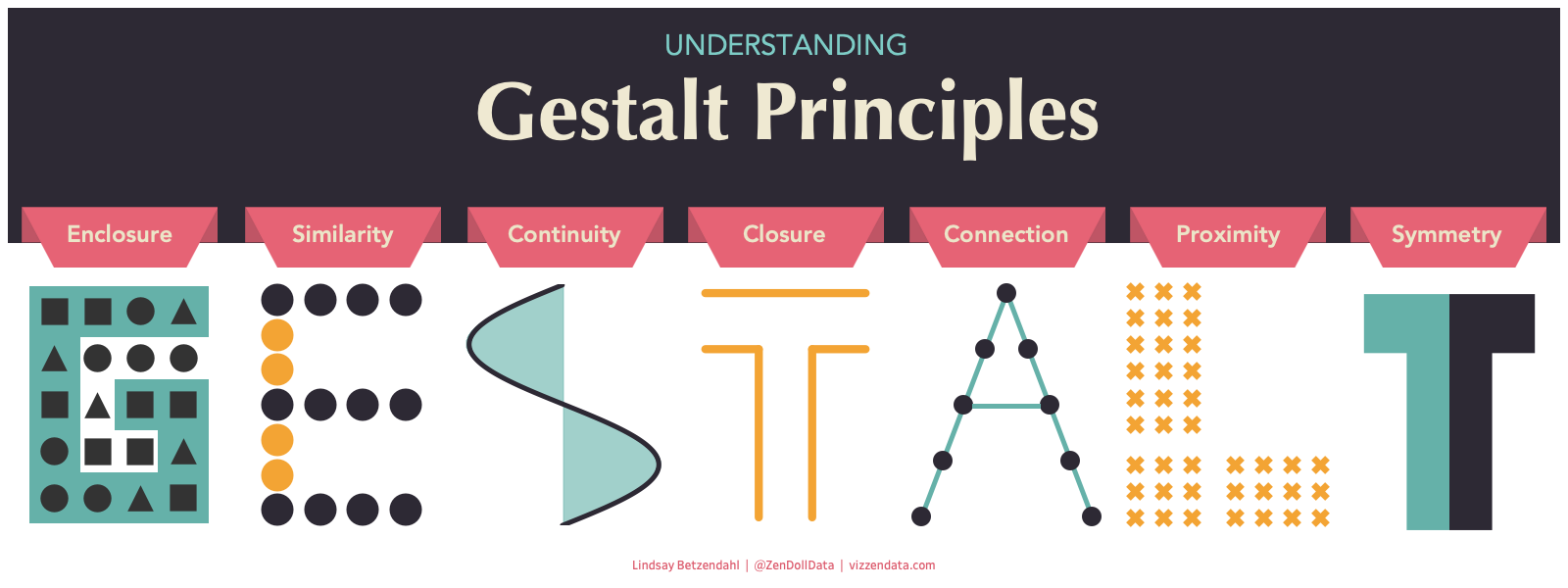
What does Gestalt mean?

The word ‘Gestalt’ does not have a direct translation to English, but it is often interpreted in psychology as ‘pattern’ or ‘configuration.’ Gestalt psychology is a school of thought that looks at the human mind and behavior as a whole rather than as separate entities. When trying to make sense of the world around us, Gestalt psychology suggests that we do not simply focus on every small component; rather, we perceive the small pieces as elements of more complex systems. Essentially, Gestalt psychology suggests that the whole is greater than the sum of its parts.

Gestalt Therapy vs Other Major Therapies

  • Psychodynamic Therapy: Emphasizes exploring past experiences and unconscious conflicts, whereas Gestalt therapy stays in the here-and-now. Psychodynamic techniques are talk-based (free association and interpretation), in contrast to Gestalt’s experiential exercises in session. The therapist is less directive, acting as an interpreter rather than actively engaging the client as in Gestalt.

A Take-Home Message
We all have the capacity to adapt and to achieve our personal expectations. we raise the bar in relation to our own potential and push ourselves to achieve Higher things. Effectiveness of Adlerian Theory Recent studies have also supported Adler’s belief in the importance of the therapeutic relationship. The therapeutic alliance has been shown to affect treatment outcomes across a range of conditions, therapeutic modalities, and contexts. In other words, a greater sense of social connectedness rooted in caring for others, connecting with the community, and finding a sense of purpose is linked to improved mental health and well-being. Lots of picture Quotes about lot of things you can do. Happy Reading 🙂

Meanwhile from WordPress I am being Congratulated: You’ve posted 3 days in a row on I am My Path!! Keep up the good work. 🙂

Latest Update: 5th of September 2025. The website continues for the New and old Readers, Followers and Blogging Friends. This is “The 293 Post” and with the “Introductory Page this will be all in Total up to date, 294 posts. On Top Right-Hand side, you are able to see: The word “Menu” when you click on it. You will see the word “Home” All the posts from “The Very Beginning comes ~ Under “Home”. Which is The Introductory Page about: Who I am & Why I am Writing!

The new Topics “On the Left-Hand side “Under the Recent Posts, with “The latest Topics adding up”

The “COLOURED TOPICS IN GREEN”, if you “Click” on them “Will take you to other different posts of Mine which you will be able to find more information and even Pronunciation”. I have another website with “My own little Poems and Pictures of some of My Hobbies” if you are interested on seeing, “What else I am doing” you can have a look at: https://deepanilamani.com/

Sending Many Blessings of Good Health and Healing Energies your way ❤

Thanking the I Net for the pictures I have Shared ❤

May Gods Blessings Be Upon You ❤

Deepa Nilamani ❤
Flag Counter

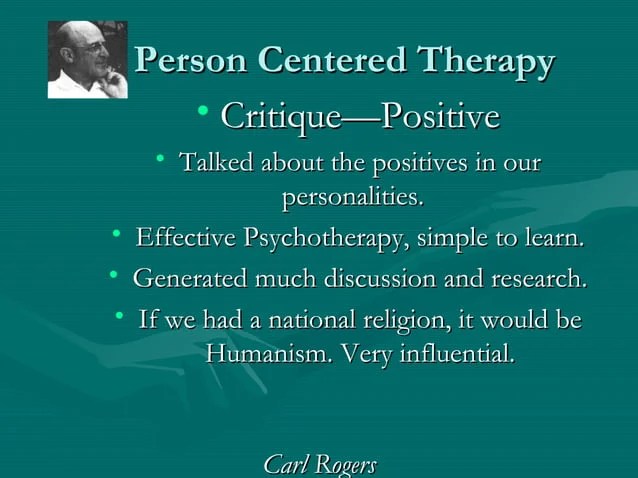
 Person Centered Therapy!

Hello To, All My Readers Followers and Blogging Friends ❤

Hope All of You are keeping in Good Health as much as possible. And “Keeping yourself Positive and Motivated as Best as possible. I have been writing about Various ways of Therapies to Become Well” And today I am writing about The Existential Therapy: writing with more Positive feelings at this time of my Life with Healing Energies I am receiving 🙂


Person-centered therapy was developed by Carl Rogers in the 1940s and 1950s, and was brought to public awareness largely through his book Client-centered Therapy, published in 1951 It has been recognized as one of the major types of psychotherapy (theoretical orientations), along with psychodynamic psychotherapypsychoanalysisclassical Adlerian psychologycognitive behavioral therapyexistential therapy,, “the facts are always friendly”.

Person-centered therapy is often described as a humanistic therapy, but its main principles appear to have been established before those of humanistic psychology but, by the mid-1960s, Rogers accepted being categorized with other psychologists in contrast to behavioral and psychoanalytic psychologists. Despite the importance of the self to person-centered theory, the theory is fundamentally organismic and holistic in nature.

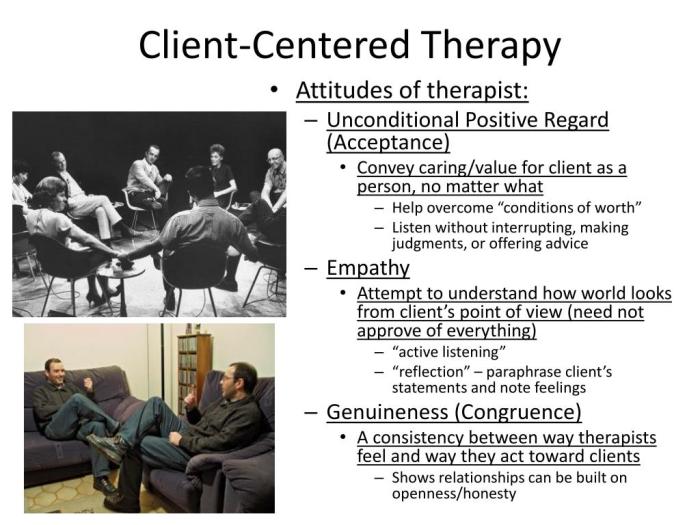
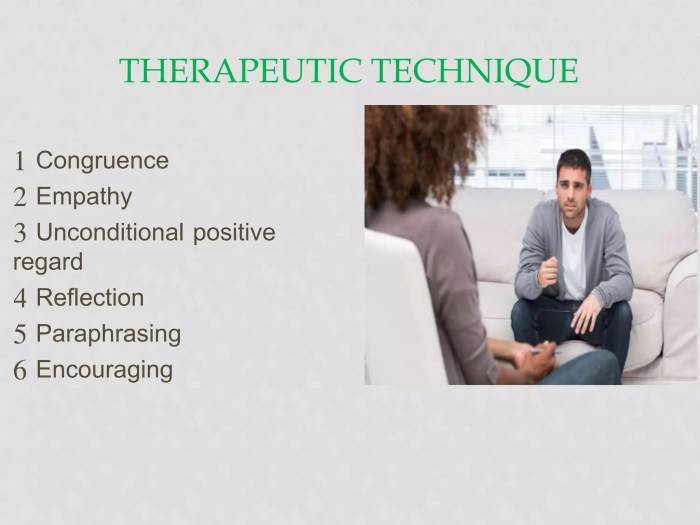
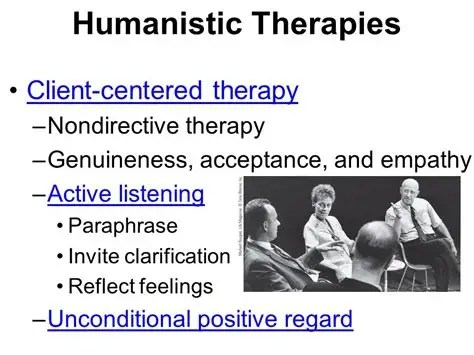
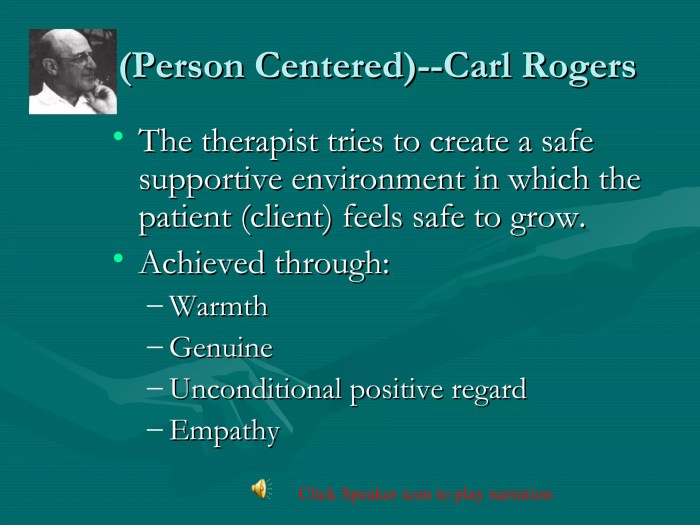
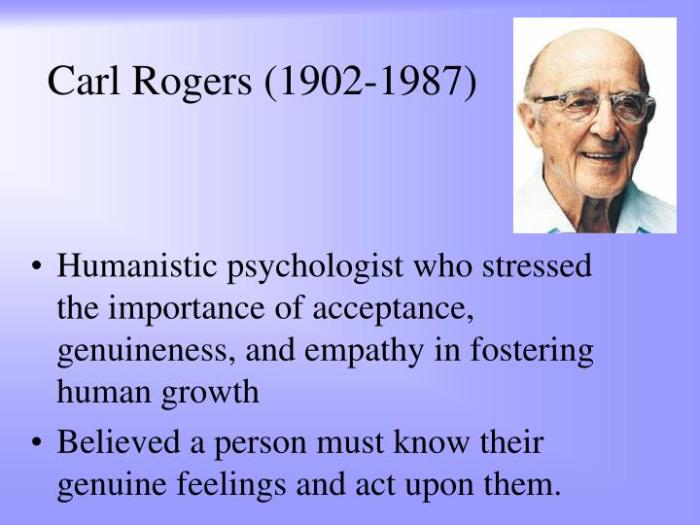
The Person-Centered Approach was developed from the work of the psychologist Dr. Carl Rogers (1902–1987). He advanced an approach to psychotherapy and counseling that, at the time (the 1940s–1960s), was considered extremely radical. The psychological environment described by Rogers was one where a person felt free from threat, both physically and psychologically. This environment could be achieved when being in a relationship with a person who was deeply understanding (empathic), accepting (having unconditional positive regard) and genuine (congruent).

Originally described as non-directive, this therapy moved away from the idea that the therapist was the expert and towards a theory that trusted the innate tendency (known as the actualizing tendency) of human beings to find fulfilment of their personal potentials. An important part of this theory is that in a particular psychological environment, the fulfilment of personal potentials includes sociability, the need to be with other human beings and a desire to know and be known by other people. It also includes being open to experience, being trusting and trustworthy, being curious about the world, being creative and compassionate.

The psychological environment described by Rogers was one where a person felt free from threat, both physically and psychologically. This environment could be achieved when being in a relationship with a person who was deeply understanding (empathic), accepting (having unconditional positive regard) and genuine (congruent).

Applications

Person-centered therapy has been adapted for a variety of populations and settings. For example, a randomized controlled trial in Portugal demonstrated that PCT significantly improved self-esteem in older adults by reducing the gap between their real and ideal selves. These improvements were maintained at a 12-month follow-up, suggesting long-term effectiveness in aging populations.[27]

PCT has also been applied in educational and youth counseling settings. Its emphasis on empathy, acceptance, and authentic communication makes it particularly effective for adolescents and young adults who are navigating identity development, interpersonal challenges, and emotional regulation. Additionally, the non-directive nature of PCT allows it to be used across cultural contexts where traditional therapist-led approaches may not align with community values or client expectations.

The adaptability of person-centered therapy stems from its core belief that the client is the expert in their own experience. This principle enables therapists to work effectively with diverse populations while maintaining a strong respect for individual autonomy and cultural differences.

Although initially developed as an approach to psychotherapy (eventually becoming known as client/person-centred therapy/counselling), Rogers and his colleagues came to believe that their ideas could be transferred to other areas where people were in relationships. For example teaching, management, childcare, patient care, conflict resolution. Today there are many people who, although not working as psychotherapists and counsellors, use the work of Rogers as guiding principles in their day-to-day work and relationships.

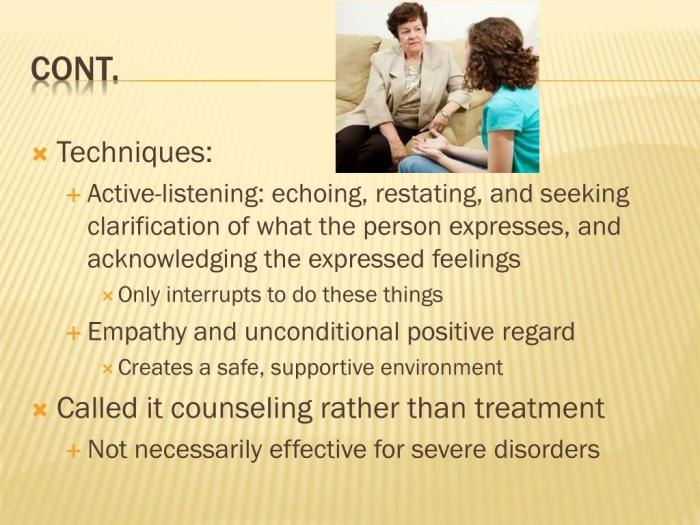
At one level, Rogers’ theory and work is very simple to describe. As many people would attest, both those using the approach and those working as person-therapists/counsellors, it can be very difficult to put into practice because the approach does not use techniques but relies on the personal qualities of the therapist/person to build a non-judgmental and empathic relationship.

Effectiveness

Research on the effectiveness of person-centered therapy (PCT) across various clinical conditions has produced mixed but encouraging results. While PCT has generally been found to yield positive outcomes for anxiety and depression, some studies suggest it may be less effective than structured approaches like cognitive-behavioral therapy (CBT) in certain contexts. For example, a 2013 meta-analysis found that experiential therapies, including PCT, showed improvement in clients with anxiety from pre- to post-treatment, although they often performed below CBT in direct comparisons.[25]

Even so, PCT offers distinct advantages. Its focus on emotional depth, client autonomy, and a non-directive therapeutic environment can be particularly helpful for individuals who prefer a more supportive and less structured approach to therapy.[25] These qualities may also make PCT a good fit for clients who have had negative experiences with more prescriptive or diagnosis-driven models.

Recent findings suggest that outcomes improve when therapy is matched to individual client needs. Their results showed that clients who received the therapy most aligned with their predicted treatment response experienced significantly better outcomes than those who received a non-matching therapy.] This supports the idea that while PCT may not be ideal for every individual, it can be highly effective when personalized to the client. PCT has also shown promise with specific populations. In a older adults who received person-centered therapy reported significant improvements in self-esteem. These gains were maintained for at least 12 months after the intervention, highlighting PCT’s potential for long-term impact and its adaptability across age groups.

A Take-Home Message
We all have the capacity to adapt and to achieve our personal expectations. we raise the bar in relation to our own potential and push ourselves to achieve Higher things. Effectiveness of Adlerian Theory Recent studies have also supported Adler’s belief in the importance of the therapeutic relationship. The therapeutic alliance has been shown to affect treatment outcomes across a range of conditions, therapeutic modalities, and contexts. In other words, a greater sense of social connectedness rooted in caring for others, connecting with the community, and finding a sense of purpose is linked to improved mental health and well-being. Lots of picture Quotes about lot of things you can do. Happy Reading

Latest Update: 3nd of September 2025. The website continues for the New and old Readers, Followers and Blogging Friends. This is “The 292 Post” and with the “Introductory Page this will be all in Total up to date, 293 posts. On Top Right-Hand side, you are able to see: The word “Menu” when you click on it. You will see the word “Home” All the posts from “The Very Beginning comes ~ Under “Home”. Which is The Introductory Page about: Who I am & Why I am Writing!

The new Topics “On the Left-Hand side “Under the Recent Posts, with “The latest Topics adding up”

The “COLOURED TOPICS IN GREEN”, if you “Click” on them “Will take you to other different posts of Mine which you will be able to find more information and even Pronunciation”. I have another website with “My own little Poems and Pictures of some of My Hobbies” if you are interested on seeing, “What else I am doing” you can have a look at: https://deepanilamani.com/

Sending Many Blessings of Good Health and Healing Energies your way ❤

Thanking the I Net for the pictures I have Shared<3

May Gods Blessings Be Upon You ❤

Deepa Nilamani ❤

Flag Counter

Adlerian Therapy!

Hello to, All My Dear Readers, Followers and My Blogging Friends ❤

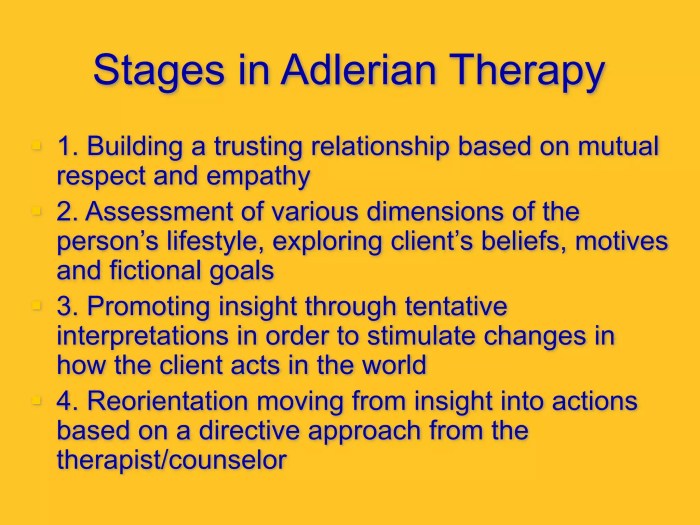
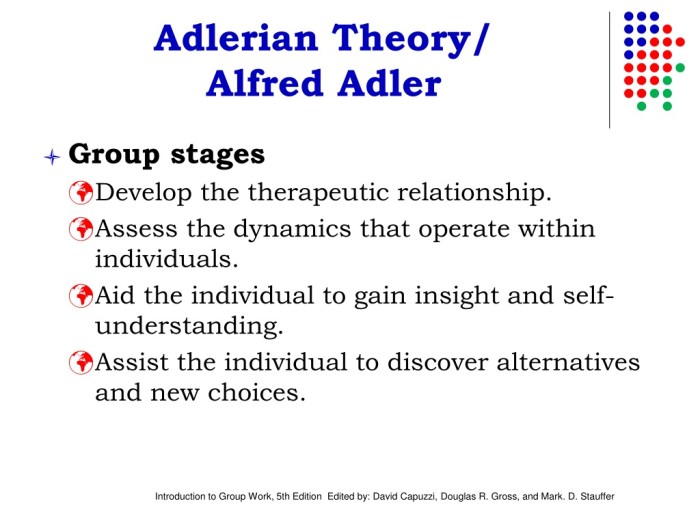
I want to continue writing under Professional Counselling have thought of writing on Adlerian Therapy. Adlerian therapy consists of four stages: engagement, assessment, insight, and reorientation, each playing a crucial role in the therapeutic process.

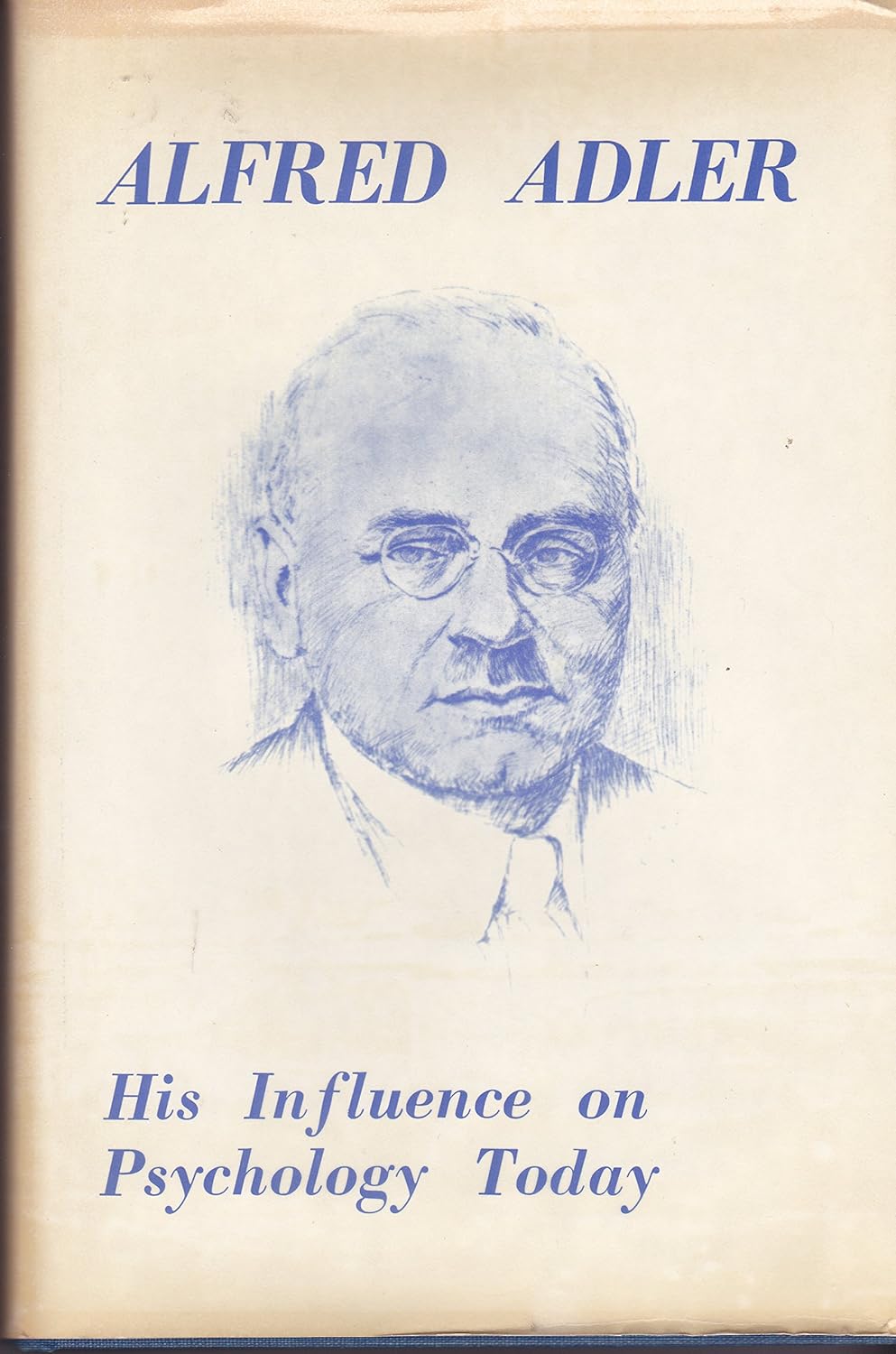
Alfred Adler

Alfred Adler was born near Vienna on February 7, 1870. His father was a grain merchant, and his mother was a housewife. He had an older brother and sister and four younger siblings. This unremarkable family, in the indirect ways Adler later posited, led Adler to formulate important theories. Destined to become one of the century’s leading social scientists, the founder of He was influenced by the internist who told his students, “If you want to be a good doctor, you have to be a kind person.” Even more, Adler took to heart Nothnagel’s dictum, “the physician must always look at the patient as a whole, . . the emotional influence of the physician on the patient must be taken into account.” a provocative and widely accepted school of psychology, he drew on his family to illustrate the concept of social interest and the significance of birth order. He recognized the justness of equality for women. Above all, he himself had been the key to his theory: an individual strives toward a personal goal; in primarily Gentile neighborhoods. During the period, his family enjoyed peace,

Adlerian therapy consists of four stages: engagement, assessment, insight, and reorientation, each playing a crucial role in the therapeutic process.

In the engagement stage, the therapist and client work to establish a strong therapeutic alliance. This involves building trust and rapport, which is essential for effective therapy. The therapist adopts a supportive and empathetic approach, encouraging open communication and collaboration to address the client’s issues. 

1. Engagement

In the engagement stage, the therapist and client work to establish a strong therapeutic alliance. This involves building trust and rapport, which is essential for effective therapy. The therapist adopts a supportive and empathetic approach, encouraging open communication and collaboration to address the client’s issues. 

2. Assessment

The assessment stage focuses on understanding the client’s background, including their early childhood experiences, family dynamics, and significant life events. This helps the therapist identify patterns of thought and behavior that may be contributing to the client’s current challenges. The assessment may also explore the client’s feelings of inferiority and their social interests, which are central to Adlerian theory. 

3. Insight

During the insight stage, clients gain a deeper understanding of their behaviors, motivations, and the underlying beliefs that influence their lives. The therapist provides feedback and interpretations that help clients recognize maladaptive patterns and develop new perspectives. This stage is crucial for fostering self-awareness and encouraging clients to challenge their limiting beliefs. 

4. Reorientation

The final stage, reorientation, involves helping clients implement the insights gained during therapy into their daily lives. This may include setting goals, developing new coping strategies, and encouraging behaviors that align with their social interests. The therapist supports clients in making positive changes and reinforces their progress towards a more fulfilling life. 

These four stages work together to facilitate personal growth and help clients overcome feelings of sadness, ultimately leading to a more connected and meaningful existence within their communities.

Upon graduation, Adler established a medical practice in Vienna in 1895, near the Prater, a large amusement park Among his patients were many who worked at the Prater restaurants, as well as waiters, acrobats and artists whose livelihood depended on bodily skills. Adler developed his theory of overcompensation. His practice was successful, in part because of his disarming manner. “He administered science to his patients.” When there was a popular term to describe a technical condition, he chose to use it.. As he searched for the reasons for his patients ’troubles he was steered away from medical practice and into the fields of psychiatry, psychology, and eventually a philosophical position which spanned the social sciences.

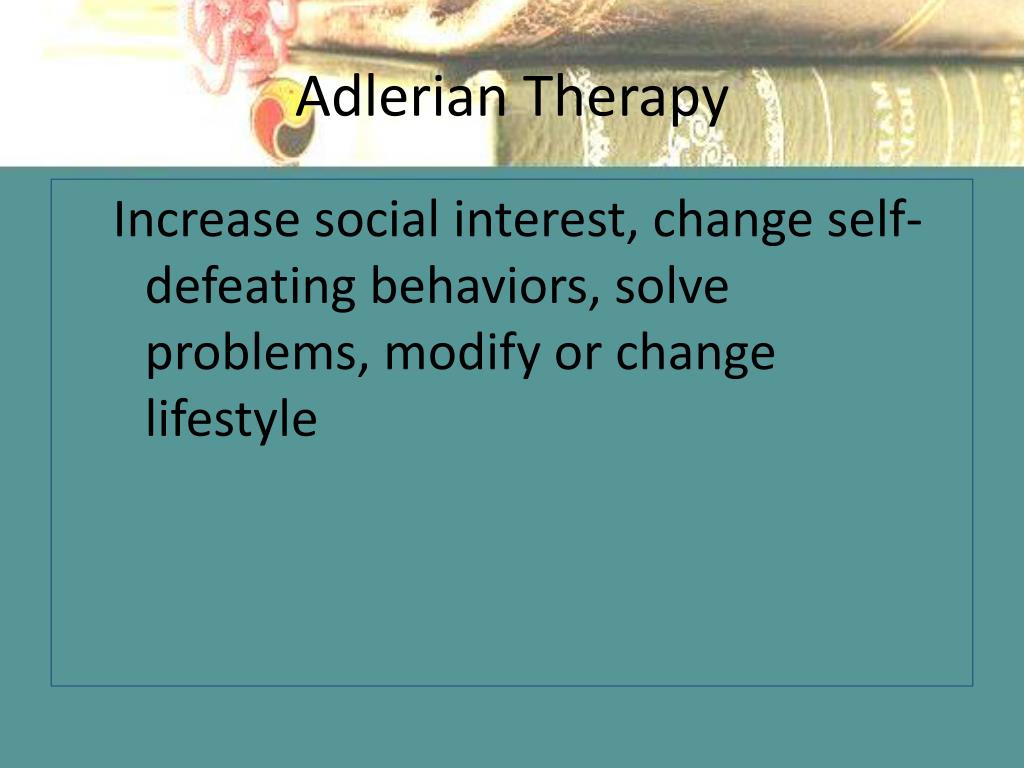
Adlerian theory is a holistic approach to psychology that emphasizes the importance of overcoming feelings of inferiority and gaining a sense of belonging in order to achieve success and happiness. This theory also focuses on the importance of social interactions and community involvement in order to promote individual growth. It is also important to remember that being open to change is essential for success. In order to overcome problems, you have to be willing to critically assess how your current behaviors are playing a role in keeping you from reaching your goals. Just identifying them isn’t enough, however. You have to be ready to actively work to change those behavior patterns. 

Benefits of Adlerian Theory

People often find treatments based on Adlerian theory helpful because it emphasizes the importance of community involvement and social interactions in order to promote individual growth. Because it is a holistic approach that takes both the inner and outer world of the client into account, people are able to gain a greater awareness of different aspects of themselves as well as a greater understanding of how they fit in within their social world. 

Another benefit of the Adlerian approach is that it avoids pathologizing people. Instead, it emphasizes how people can experience difficulties and discouragement during life, which then contributes to psychological problems. This approach to therapy is based on the theories of Alfred Adler, an Austrian psychiatrist and one-time colleague of the psychoanalyst Sigmund Freud. Adler eventually established his own theory of psychology, which he referred to as individual psychology.

A Take-Home Message
We all have the capacity to adapt and to achieve our personal expectations. we raise the bar in relation to our own potential and push ourselves to achieve Higher things. Effectiveness of Adlerian Theory Recent studies have also supported Adler’s belief in the importance of the therapeutic relationship. The therapeutic alliance has been shown to affect treatment outcomes across a range of conditions, therapeutic modalities, and contexts. In other words, a greater sense of social connectedness rooted in caring for others, connecting with the community, and finding a sense of purpose is linked to improved mental health and well-being.


I hope what I have written, and The Knowledge will be Useful and You have learnt new facts. And also, you will be able to Enjoy going through The Picture Quotes as I have done quite bit of Making them more colourful and Attractive I am in Good Health and as, “I have been able to, “Receive Healing Energy into My Hands” since “Beginning of 2016” All my Hard work and Praying has been rewarded. Healing Energy can go to others too, and wherever it is needed to be received with a Clear Mind and Lot of Loving Kindness ❤

Have you incorporated any new techniques to help you on your way to success? Or maybe you are tempted to make a start on your own plan? How are you going to turn your new ideas? Let Me know in the comments below.

Latest Update: 2nd of September 2025. The website continues for the New and old Readers, Followers and Blogging Friends. This is “The 288h Post” and with the “Introductory Page this will be all in Total up to date, 289 posts. On Top Right-Hand side, you are able to see: The word “Menu” when you click on it. You will see the word “Home” All the posts from “The Very Beginning comes ~ Under “Home”. Which is The Introductory Page about: Who I am & Why I am Writing!

The new Topics “On the Left-Hand side “Under the Recent Posts, with “The latest Topics adding up”

The “COLOURED TOPICS IN GREEN”, if you “Click” on them “Will take you to other different posts of Mine which you will be able to find more information and even Pronunciation”. I have another website with “My own little Poems and Pictures of some of My Hobbies” if you are interested on seeing, “What else I am doing” you can have a look at: https://deepanilamani.com/

As always, it is all free”. You can share and pass it on also for others who can benefit from this post. I hope All those who Read will be able to make the maximum use of all these facts and make, “Your Lives More Healthy and able to Lead Better lives in Happiness and Peace”. I wish it to be so as,” Peace which is our Ultimate Goal in Life ❤

Sending Many Blessings of Good Health and Healing Energies your way ❤

Thanking the I Net for the pictures I have Shared ❤

May Gods Blessings Be Upon You ❤

Deepa Nilamani ❤
Flag Counter

Professional counselling ~1!

Hello to, All My Dear Readers, Followers and My Blogging Friends ❤

Hope as usual all of you are keeping well some of you must be having Summer or warm weather. But here in Aussie it is still winter and Brrrrrr it is almost freezing and very cold. Still, I wanted to post new posts have thought of writing on Professional Counselling from what I have studied and my present experiences and more advanced Knowledge up to now. One of the most important instruments you have to work with as a counselor is yourself as a person.

The counselor as a Therapeutic person.
Counselling is an intimate form of learning. it has to be someone who is Authentic person in the Therapeutic relationship. if we hide ourselves in the Professional role our clients also will not open up and keep themselves hidden from us. our own genuineness can have a significant role with our clients, They can be encouraged us being open and Honest with them.

Personal Characteristics of Effective Counselors:
1.Effective Therapists have an identity. They know who they are and their capabilities.
2.Effective Therapists Respect and appreciate themselves. They can Give and Receive out of their own self-worth strength.
3.Effective Therapists are open to change.
4.Effective Therapists Make choices that are life oriented.
5. Effective Therapists are Authentic Sinceres and Honest.
6.Effective Therapists generally live in the present.
7.Effective Therapists appreciate the influence of different Culture
Effective Therapists have sincere interest of welfare of others
8.Effective Therapists have [interpersonal skills
9.Effective Therapists have sense of Humor
10.Effective Therapists become deeply involved in their work
11.Effective Therapists are passionate
12.Effective Therapists are able to maintain Healthy Boundaries.

I have written and posted the pictures as a starting point of Basic knowledge and will be posting next posts following and keeping to the ‘Professions Counselling and Psychotherapy.

Male patient in the office of a psychologist. Psychological counseling. Coping with stress

A Take-Home Message
We all have the capacity to adapt and to achieve our personal expectations. we raise the bar in relation to our own potential and push ourselves to achieve Higher things. Effectiveness of Adlerian Theory Recent studies have also supported Adler’s belief in the importance of the therapeutic relationship. The therapeutic alliance has been shown to affect treatment outcomes across a range of conditions, therapeutic modalities, and contexts. In other words, a greater sense of social connectedness rooted in caring for others, connecting with the community, and finding a sense of purpose is linked to improved mental health and well-being.

Hope you have a better understanding than before and also questions and comments are always welcome Happy reading 🙂

Latest Update: 23rd of August 2025. The website continues for the New and old Readers, Followers and Blogging Friends. This is “The 285th Post” and with the “Introductory Page this will be all in Total up to date, 286 posts. On Top Right-Hand side, you are able to see: The word “Menu” when you click on it. You will see the word “Home” All the posts from “The Very Beginning comes ~ Under “Home”. Which is The Introductory Page about: Who I am & Why I am Writing!

The new Topics “On the Left-Hand side “Under the Recent Posts, with “The latest Topics adding up”

The coloured Topics in Green, if you “Click” on them “Will take you to other different posts of Mine which you will be able to find more information and even Pronunciation”. I have another website with “My own little Poems and Pictures of some of My Hobbies” if you are interested on seeing, “What else I am doing” you can have a look at: https://deepanilamani.com/

As always, it is all free”. You can share and pass it on also for others who can benefit from this post. I hope All those who Read will be able to make the maximum use of all these facts and make, “Your Lives More Healthy and able to Lead Better lives in Happiness and Peace”. I wish it to be so as,” Peace which is our Ultimate Goal in Life ❤

Sending Many Blessings of Good Health and Healing Energies your way ❤

May Gods Blessings Be Upon You ❤

Deepa Nilamani ❤

Flag Counter