Adlerian Therapy!

Hello to, All My Dear Readers, Followers and My Blogging Friends ❤

I want to continue writing under Professional Counselling have thought of writing on Adlerian Therapy. Adlerian therapy consists of four stages: engagement, assessment, insight, and reorientation, each playing a crucial role in the therapeutic process.

Alfred Adler

Alfred Adler was born near Vienna on February 7, 1870. His father was a grain merchant, and his mother was a housewife. He had an older brother and sister and four younger siblings. This unremarkable family, in the indirect ways Adler later posited, led Adler to formulate important theories. Destined to become one of the century’s leading social scientists, the founder of He was influenced by the internist who told his students, “If you want to be a good doctor, you have to be a kind person.” Even more, Adler took to heart Nothnagel’s dictum, “the physician must always look at the patient as a whole, . . the emotional influence of the physician on the patient must be taken into account.” a provocative and widely accepted school of psychology, he drew on his family to illustrate the concept of social interest and the significance of birth order. He recognized the justness of equality for women. Above all, he himself had been the key to his theory: an individual strives toward a personal goal; in primarily Gentile neighborhoods. During the period, his family enjoyed peace,

Adlerian therapy consists of four stages: engagement, assessment, insight, and reorientation, each playing a crucial role in the therapeutic process.
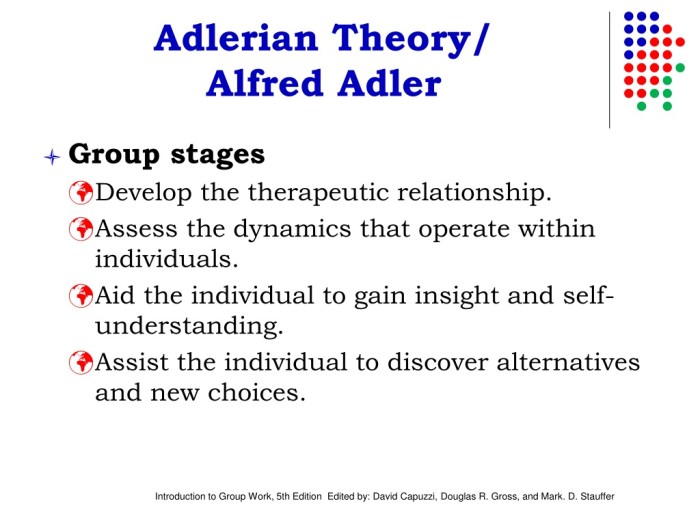
In the engagement stage, the therapist and client work to establish a strong therapeutic alliance. This involves building trust and rapport, which is essential for effective therapy. The therapist adopts a supportive and empathetic approach, encouraging open communication and collaboration to address the client’s issues. 

1. Engagement

In the engagement stage, the therapist and client work to establish a strong therapeutic alliance. This involves building trust and rapport, which is essential for effective therapy. The therapist adopts a supportive and empathetic approach, encouraging open communication and collaboration to address the client’s issues. 

2. Assessment

The assessment stage focuses on understanding the client’s background, including their early childhood experiences, family dynamics, and significant life events. This helps the therapist identify patterns of thought and behavior that may be contributing to the client’s current challenges. The assessment may also explore the client’s feelings of inferiority and their social interests, which are central to Adlerian theory. 

3. Insight

During the insight stage, clients gain a deeper understanding of their behaviors, motivations, and the underlying beliefs that influence their lives. The therapist provides feedback and interpretations that help clients recognize maladaptive patterns and develop new perspectives. This stage is crucial for fostering self-awareness and encouraging clients to challenge their limiting beliefs. 

4. Reorientation

The final stage, reorientation, involves helping clients implement the insights gained during therapy into their daily lives. This may include setting goals, developing new coping strategies, and encouraging behaviors that align with their social interests. The therapist supports clients in making positive changes and reinforces their progress towards a more fulfilling life. 

These four stages work together to facilitate personal growth and help clients overcome feelings of sadness, ultimately leading to a more connected and meaningful existence within their communities.

Upon graduation, Adler established a medical practice in Vienna in 1895, near the Prater, a large amusement park Among his patients were many who worked at the Prater restaurants, as well as waiters, acrobats and artists whose livelihood depended on bodily skills. Adler developed his theory of overcompensation. His practice was successful, in part because of his disarming manner. “He administered science to his patients.” When there was a popular term to describe a technical condition, he chose to use it.. As he searched for the reasons for his patients ’troubles he was steered away from medical practice and into the fields of psychiatry, psychology, and eventually a philosophical position which spanned the social sciences.
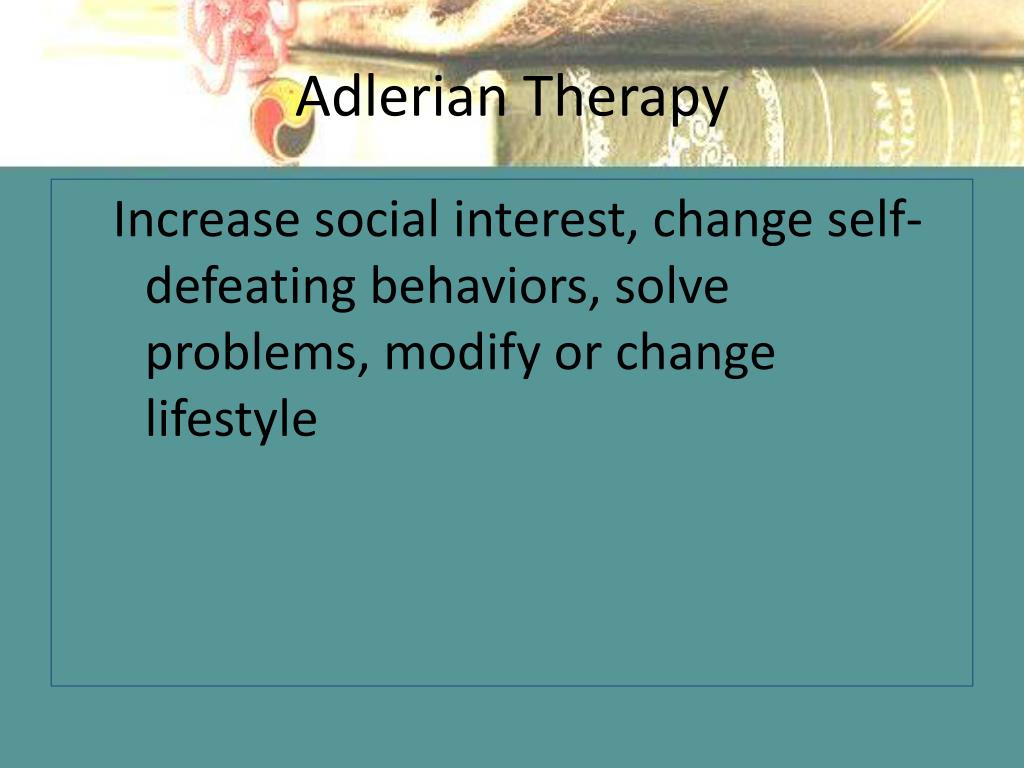
Adlerian theory is a holistic approach to psychology that emphasizes the importance of overcoming feelings of inferiority and gaining a sense of belonging in order to achieve success and happiness. This theory also focuses on the importance of social interactions and community involvement in order to promote individual growth. It is also important to remember that being open to change is essential for success. In order to overcome problems, you have to be willing to critically assess how your current behaviors are playing a role in keeping you from reaching your goals. Just identifying them isn’t enough, however. You have to be ready to actively work to change those behavior patterns. 

Benefits of Adlerian Theory

People often find treatments based on Adlerian theory helpful because it emphasizes the importance of community involvement and social interactions in order to promote individual growth. Because it is a holistic approach that takes both the inner and outer world of the client into account, people are able to gain a greater awareness of different aspects of themselves as well as a greater understanding of how they fit in within their social world. 

Another benefit of the Adlerian approach is that it avoids pathologizing people. Instead, it emphasizes how people can experience difficulties and discouragement during life, which then contributes to psychological problems. This approach to therapy is based on the theories of Alfred Adler, an Austrian psychiatrist and one-time colleague of the psychoanalyst Sigmund Freud. Adler eventually established his own theory of psychology, which he referred to as individual psychology.

A Take-Home Message
We all have the capacity to adapt and to achieve our personal expectations. we raise the bar in relation to our own potential and push ourselves to achieve Higher things. Effectiveness of Adlerian Theory Recent studies have also supported Adler’s belief in the importance of the therapeutic relationship. The therapeutic alliance has been shown to affect treatment outcomes across a range of conditions, therapeutic modalities, and contexts. In other words, a greater sense of social connectedness rooted in caring for others, connecting with the community, and finding a sense of purpose is linked to improved mental health and well-being.


I hope what I have written, and The Knowledge will be Useful and You have learnt new facts. And also, you will be able to Enjoy going through The Picture Quotes as I have done quite bit of Making them more colourful and Attractive I am in Good Health and as, “I have been able to, “Receive Healing Energy into My Hands” since “Beginning of 2016” All my Hard work and Praying has been rewarded. Healing Energy can go to others too, and wherever it is needed to be received with a Clear Mind and Lot of Loving Kindness ❤

Have you incorporated any new techniques to help you on your way to success? Or maybe you are tempted to make a start on your own plan? How are you going to turn your new ideas? Let Me know in the comments below.

Latest Update: 2nd of September 2025. The website continues for the New and old Readers, Followers and Blogging Friends. This is “The 288h Post” and with the “Introductory Page this will be all in Total up to date, 289 posts. On Top Right-Hand side, you are able to see: The word “Menu” when you click on it. You will see the word “Home” All the posts from “The Very Beginning comes ~ Under “Home”. Which is The Introductory Page about: Who I am & Why I am Writing!

The new Topics “On the Left-Hand side “Under the Recent Posts, with “The latest Topics adding up”

The “COLOURED TOPICS IN GREEN”, if you “Click” on them “Will take you to other different posts of Mine which you will be able to find more information and even Pronunciation”. I have another website with “My own little Poems and Pictures of some of My Hobbies” if you are interested on seeing, “What else I am doing” you can have a look at: https://deepanilamani.com/

As always, it is all free”. You can share and pass it on also for others who can benefit from this post. I hope All those who Read will be able to make the maximum use of all these facts and make, “Your Lives More Healthy and able to Lead Better lives in Happiness and Peace”. I wish it to be so as,” Peace which is our Ultimate Goal in Life ❤

Sending Many Blessings of Good Health and Healing Energies your way ❤

Thanking the I Net for the pictures I have Shared ❤

May Gods Blessings Be Upon You ❤

Deepa Nilamani ❤
Flag Counter

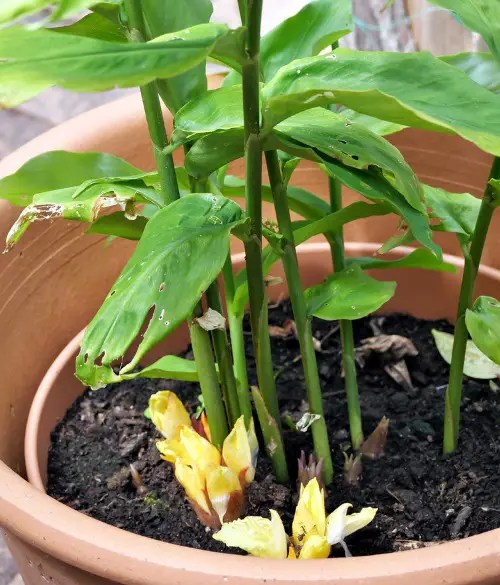
Ayurveda ~ Values of Ginger!

Hello to, All My Dear Readers, Followers and My Blogging Friends ❤

Hope all of you are keeping well. It’s very very cold but I am continuing to write, being on Ayurveda I thought of Enlightening on Values of Food for being in Good Health. As so many are not aware of the Values of Fruits and Vegetables and most importantly Herbs 🙂


Botanical Name: Zingiber Officinale

Other Names: True Ginger, Jengibre, Jenjibre Dulce, Ginger, Adrak, and Kion

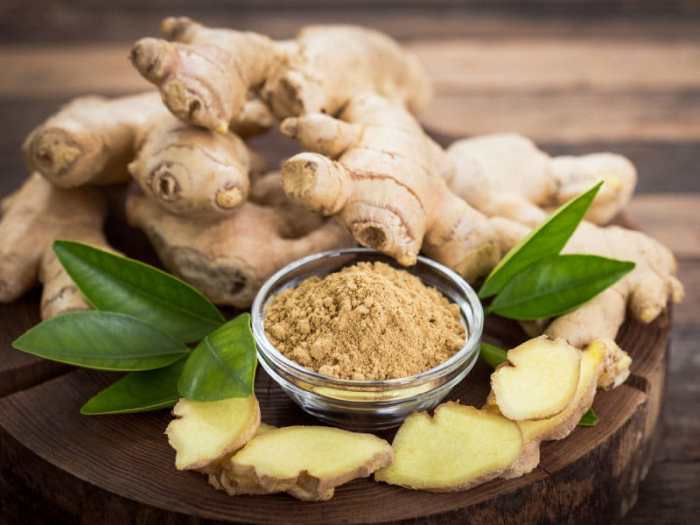
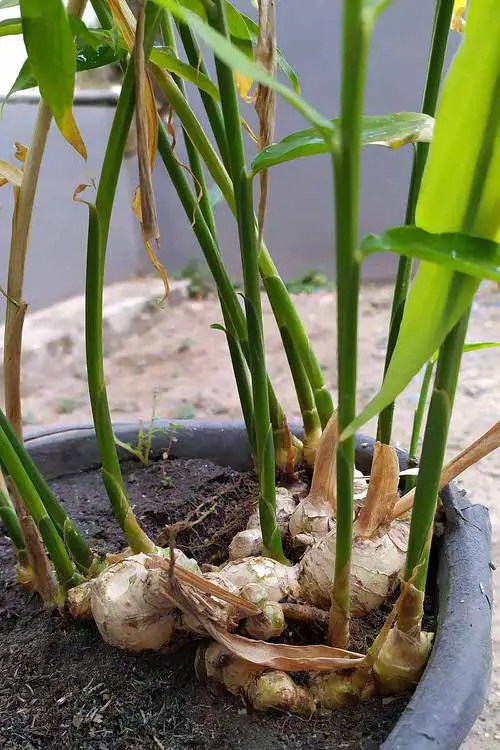
Common ginger is a world-famous herb, popular for its aromatic and pungent rhizomes. It has significant medicinal and culinary uses and needs.

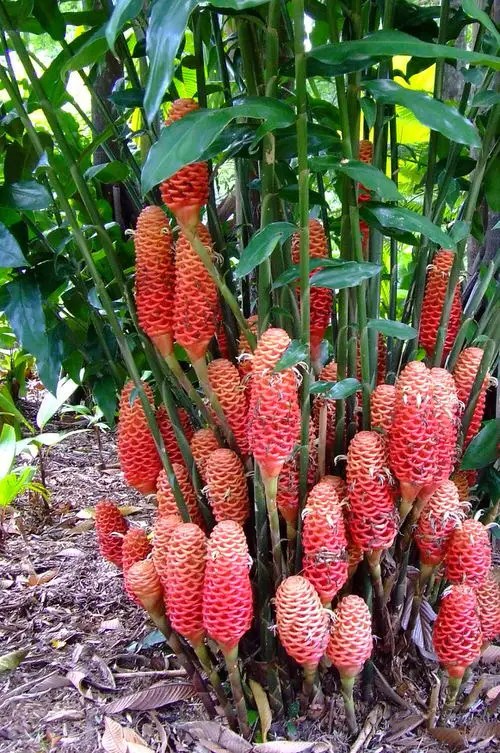
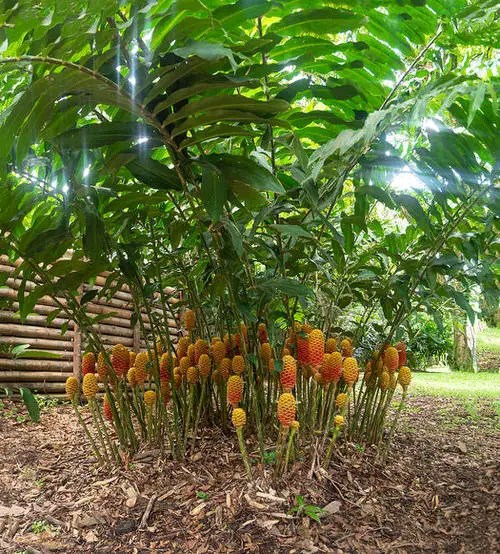
2. Beehive Ginger

Botanical Name: Zingiber spectabile

Other Names: Ginger Wort, Malaysian Ginger

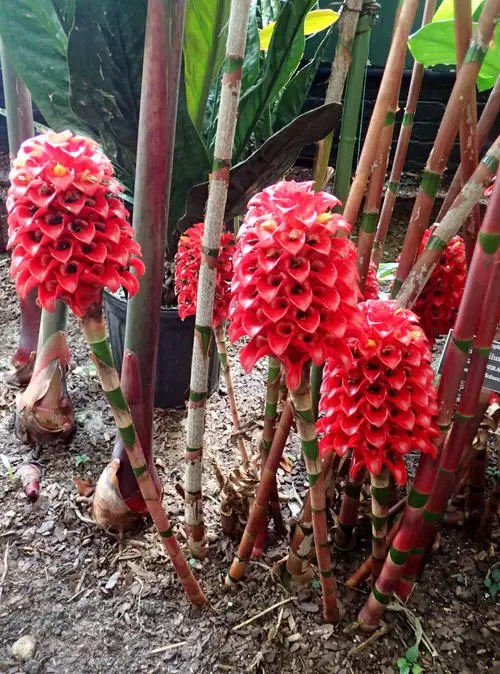
Beehive Ginger is famous as an ornamental plant due to its unique beehive-like yellow inflorescences that become red once mature. All parts have a strong gingery fragrance, making local dishes and appetizers.

Growing Tips

  • Avoid placing it in full sun, as direct sunlight can burn this plant.
  • It grows best in a humid climate.

3. Bitter Ginger

Botanical Name: Zingiber zerumbet

Other Names: Pinecone Ginger, Itter Ginger, Broad-leaved Ginger, Martinique Ginger, Pinecone Lily, Lempoyang, and Wild Ginger

Also known as shampoo ginger, it tastes bitter compared to the common ginger and is added to food flavoring and appetizers. It’s used primarily in herbal medicines and making shampoos.

Growing Tips

Grow it in bright and filtered light in warm soil.

Feed the plant with 8-4-6 fertilizer every three months.

4. Myoga Ginger

Botanical Name: Zingiber mioga

Other Name: Japanese Ginger

In Japan, Myoga Ginger’s flowers and young shoots are used as a tasty garnish on various food. It has a zesty and spicy flavor with a strong, pungent aroma.

  • It is better to grow it in partial shade.
  • It thrives in moist soil.

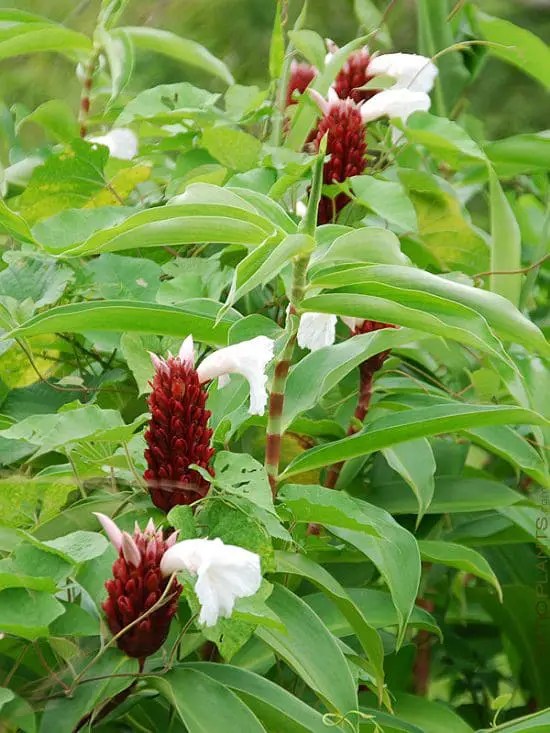
5. Crepe Ginger

Botanical Name: Cheilocostus speciosus

Other Names: Crape Ginger, Malay Ginger, and Cane Reed

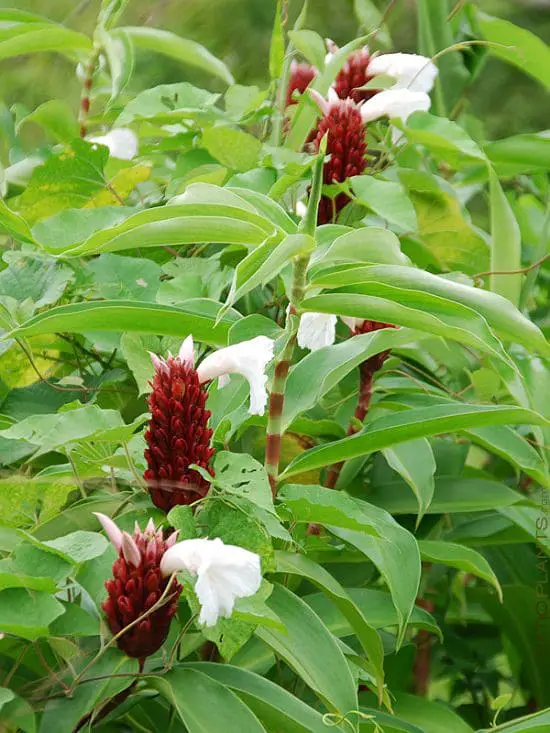
Known for its crepe-paper-like showy white flowers that emerge from reddish-burgundy spiraled inflorescences. It has a pungent taste with edible flowers and buds.

Growing Tips

  • It grows under the canopy of trees.
  • Warm and humid climates are best for its growth.

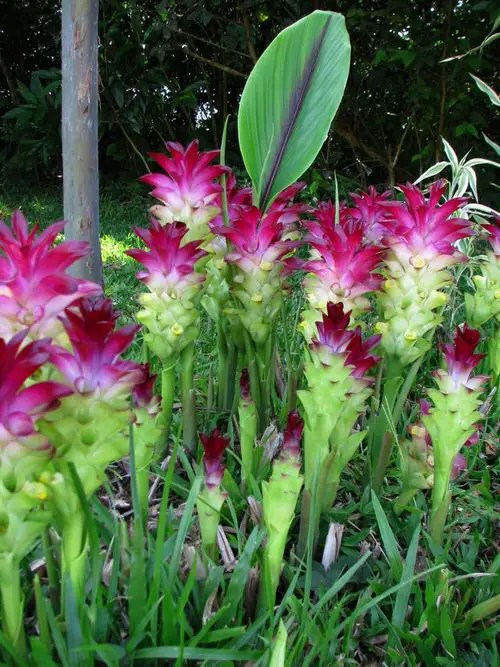
    6. Hidden Ginger

Botanical Name: Curcuma petiolata

Other Names: Queen Lily, Siam Tulip, Hidden Lily

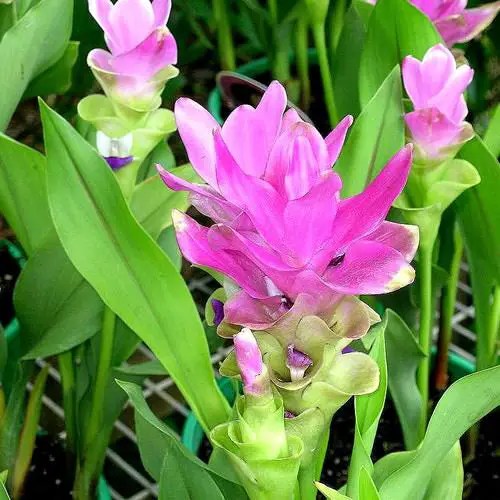
Hidden Ginger is a Malaysian native with a spicy scent and a bitter taste. It produces beautiful flowers of bright purple, pink, or orange colors.

Growing Tips

  • This 2-3 feet tall plant becomes an excellent container specimen.
  • Growing it is similar to canna lilies.

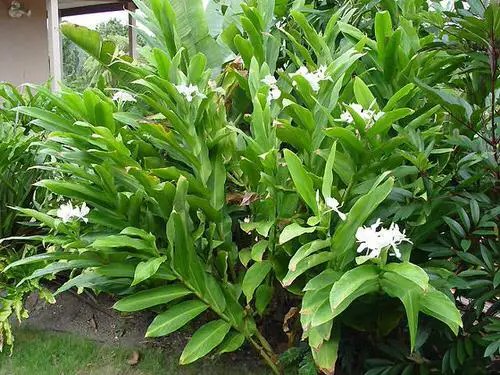
7. Butterfly Lily Ginger

Botanical Name: Hedychium coronarium

Other Name: White Ginger, Flor De Mariposa, Mariposa Blanca, Dolan Champa

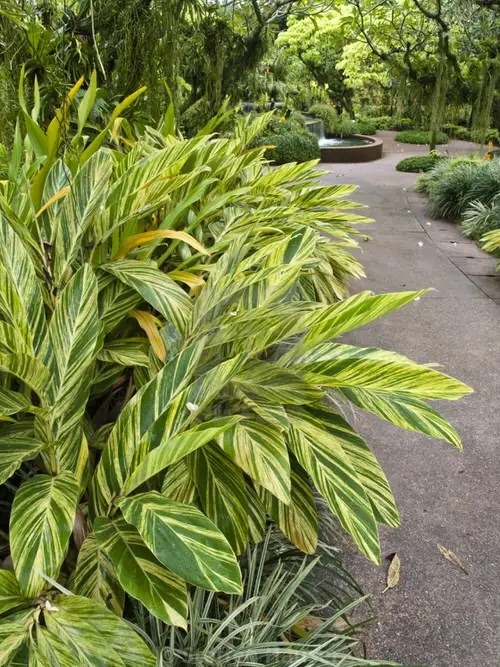
8. Shell Ginger

Botanical Name: Alpinia zerumbet

Other Name: Variegated Ginger, Sannin, Getto Plant

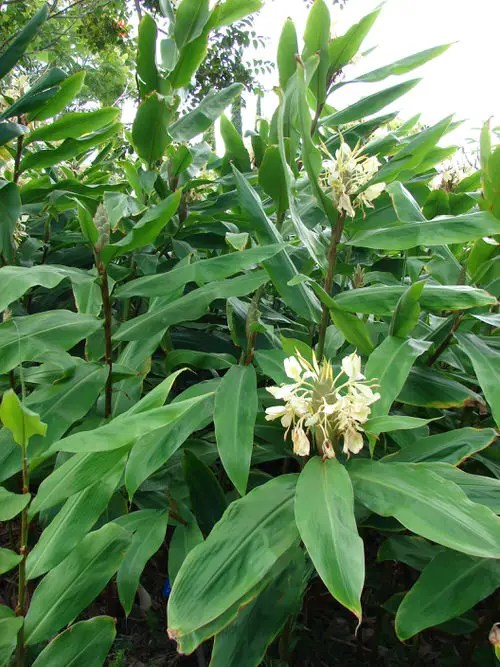
Shell ginger has ovate leaves with green stripes, making it an ornamental plant. It blooms clusters of pink buds, emitting a luscious aroma.

With a clove-like flavor, its edible leaves are the primary agents in noodles and teas in Okinawan cuisines.

  • While it can grow up to 8-10 feet tall, it doesn’t exceed above 3-4 feet in pots.
  • It can be a beautiful houseplant.

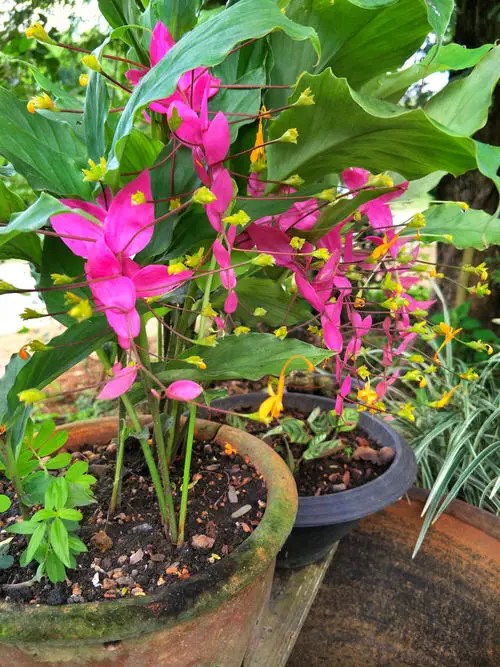
9. Dancing Ladies Ginger

Botanical Name: Globba winitii

Other Name: White Dragon Flower

This showy ginger family plant is rare to find. It has unique flowers that emit a sweet honeysuckle-like fragrance and resembles dancing ladies when they move in the wind.

Growing Tips

  • It can be grown in USDA zones 8-11.
  • A spot that receives part sun is best. You can also grow it in the shade.

10. Yellow Ginger

Botanical Name: Hedychium flavescens

Other Name: Cream Garland-Lily, Yellow Ginger Lily, Wild Ginger

Growing up to 5-6 feet tall, the fleshy rhizomes of yellow ginger are edible but not as flavorful as common ginger. Gardeners usually grow it for its highly fragrant flowers.

Growing Tips

  • Grow it in well-drained and moderately fertile soil.
  • It’s a shade-tolerant plant.

    11. Red Ginger

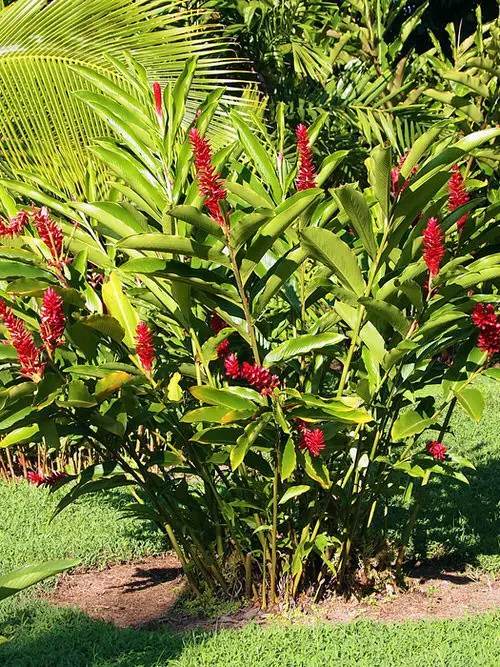
Rhizomes and stalks of this plant have a strong spicy scent. But what it’s famous for is the bright red or pink bracts that look stunning.

Growing Tips

  • The national flower of Samoa prefers warm and moist soil to thrive.
  • Grow it under diffused light, avoiding full sun.

12. Torch Ginger

Botanical Name: Etlingera elatior

Other Names: Wild ginger, Combrang, Bunga Kantan, Philippine Waxflower, and Red Ginger Lily, Indonesian Tall Ginger, Boca De Dragón, Rose De Porcelaine

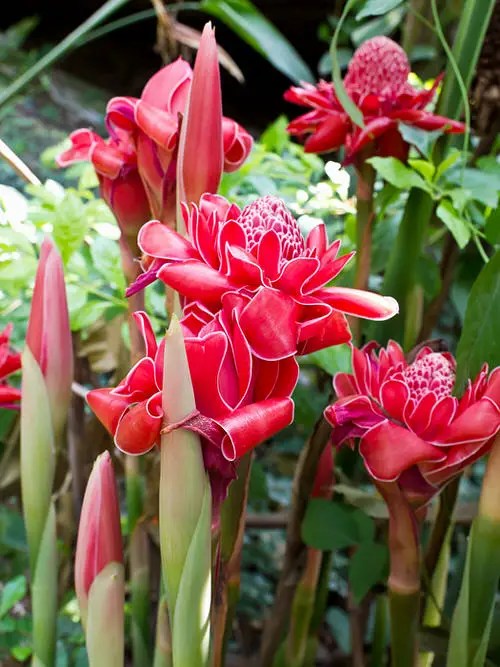
This tropical plant looks glorious with its big and vibrant flowers that appear in red, pink, or orange colors.

The whole plant is edible, and fruits, seed pods, seeds, and flowers stems are eaten in many countries. Flower buds taste piquant and are used in traditional Indonesian and Thai dishes.

Growing Tips

  • You can also grow it in a large pot.
  • Protect it from intense afternoon sunlight.

13. Mango Ginger

Botanical Name: Curcuma amada

Other Names: Mavina Shunti

Mango ginger is something between turmeric and ginger. The ginger-like rhizomes have a fragrant, spicy taste like common ginger with a hint of raw mango.

It is primarily used in Indian cooking in preparing pickles, chutneys, and soups.

Growing it is similar to common ginger.

In cold climates, you can grow it in warmer months.

14. Kahili Ginger

Botanical Name: Hedychium gardnerianum

Other Name: Fragrant Ginger Lily, Kahila Garland-Lily

This plant is native to Himalayan regions and grown primarily for ornamental purpose. Large dramatic foliage and showy, fragrant flowers make it a truly exotic tropical plant.

Growing Tips

  • It can be up to 8 feet tall. In containers, it doesn’t exceed above 3-4 feet.
  • You can grow it indoors, as well.

15. Thai Ginger

Botanical Name: Alpinia galanga

Other Names: Thai Ginseng Ginger, Krachai Dum Ginger, Lengkuas, Blue Ginger, and Greater Galangal

Rhizomes of Thai ginger have a pungent aroma with a flavor of pine needles and black pepper. Its rhizomes, flowers, and shoots have extensive uses in Thai curry, chili paste, and pickles.

  • Unlike other types of ginger plants, galanga can tolerate more sun and grows best in partial sunlight.
  • Grow it in rich and moist soil.

16. Pineapple Ginger

Botanical Name: Tapeinochilos ananassae

Other Names: Indonesian Wax Ginger, Lipstick Ginger

Pineapple ginger has inconspicuous orange-yellow flowers and deep red bracts that grow on long cone-shaped inflorescences that resemble pineapples.

It’s grown for ornamental purposes and used popularly in tropical cut flower arrangements.

Growing Tips

  • It grows well in filtered sunlight.
  • You can also place it indoors in a spot that receives several hours of morning sunlight.

Latest Update: 7th of July 2025. The website continues for the New and old Readers, Followers and Blogging Friends. Hope what I have written is useful that helps you to feel more Positive and Happier This is “The 279th Post” and with the “Introductory Page this will be all in Total up to date, 280 posts. On Top Right-Hand side, you are able to see: The word “Menu” when you click on it. You will see the word “Home” All the posts from “The Very Beginning comes ~ Under “Home”. Which is The Introductory Page about: Who I am & Why I am Writing!

The new Topics “On the Left-Hand side “Under the Recent Posts, with “The latest Topics adding up” Happy Reading ❤

The coloured Topics in Green, if you “Click” on them “Will take you to My other posts which you will be able to find more information”. I have another website with “My own little Poems and Pictures of some of My Hobbies” if you are interested on seeing, “What else I am doing” you can have a look at :https://deepanilamani.com/

As always, it is all free”. You can share and pass it on also for others who can benefit from this post. I hope All those who Read will be able to make the maximum use of all these facts and make, “Your Lives More Healthy and able to Lead Better lives in Happiness and Peace”. I wish it to be so as,” Peace which is our Ultimate Goal in Life ❤

This site has been doing good, and I am so Happy. I have been getting, 🎉 Congrats! I am My Path is getting noticed. Thanking the I net for the Picture Quotes I have shared from the I net ❤

Many Blessings for Good Health, Happiness and Prosperity! ❤

May God’s Blessings Be Upon You ❤

Deepa Nilamani 🙂

Flag Counter

Ayurveda ~ Values of Garlic!

Hello to, All My Dear Readers, Followers and My Blogging Friends ❤

Hope all of you are keeping well. It’s very very cold but I am continuing to write, being on Ayurveda I thought of Enlightening on Values of Food for being in Good Health. As so many are not aware of the Values of Fruits and Vegetables and most importantly Herbs 🙂

From Seed to Bulb: Understanding 10 Garlic Growth Stages

Curious about how garlic grows? This guide will show you the different garlic growth stages, from when it starts sprouting to when it’s ready to be harvested. You’ll also learn some cool facts about how garlic grows.

Whether you like cooking, gardening, or learning new things, this guide is perfect for you!

Garlic Growth Stages

Garlic belongs to the Allium family, which includes onions, leeks, shallots, and chives. Garlic is a perennial plant, meaning that it can live for more than two years. However, it is usually grown as an annual crop, meaning it is harvested in one growing season.

Garlic has a complex life cycle that involves 10 stages of growth and development. Understanding these stages can help you plan your planting, care, and harvesting of garlic.

Here are the main stages of garlic growth:

Stage 1. Planting

Stage 2. Germination

Stage 3. Vegetative Growth

Stage 4. Bulb Development

Stage 5. Harvesting Leaves

Stage 6. Flowering

Stage 7. Pollination

Stage 8. Seed Formation

Stage 9. Garlic Harvest

Stage 10. Next Year Growth

Let us discuss each stage in more detail.

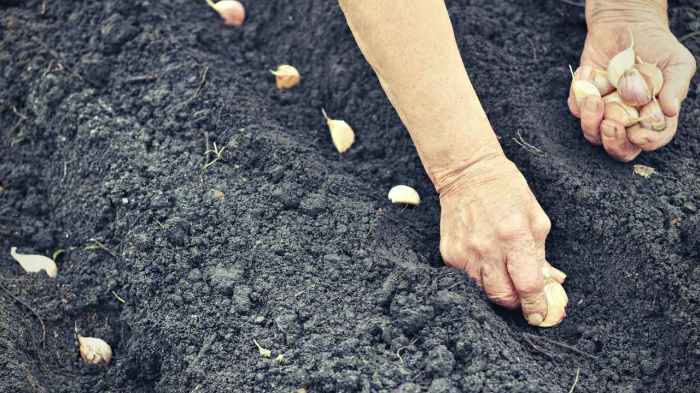
The first stage of garlic growth is planting. Garlic is usually planted in the fall, about 4 to 6 weeks before the first frost date in your area. This allows the garlic to establish roots and shoots before the winter. Garlic can also be planted in the spring, as soon as the soil can be worked, but the bulbs may be smaller and less flavorful than fall-planted garlic.

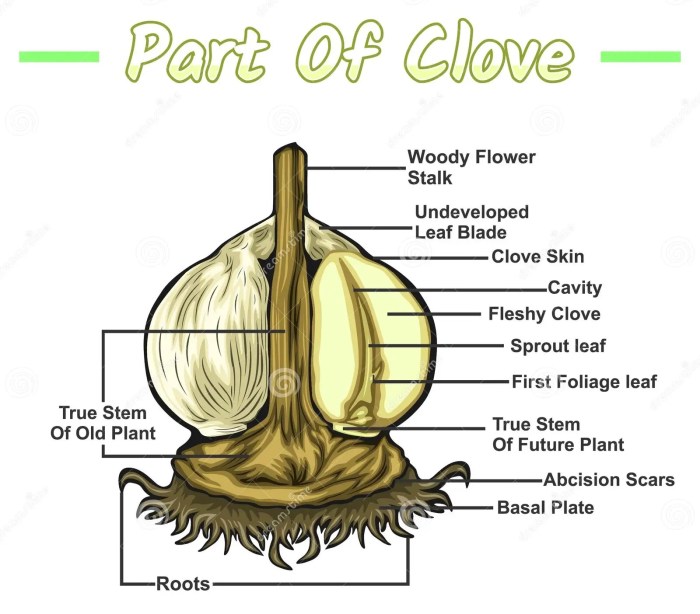
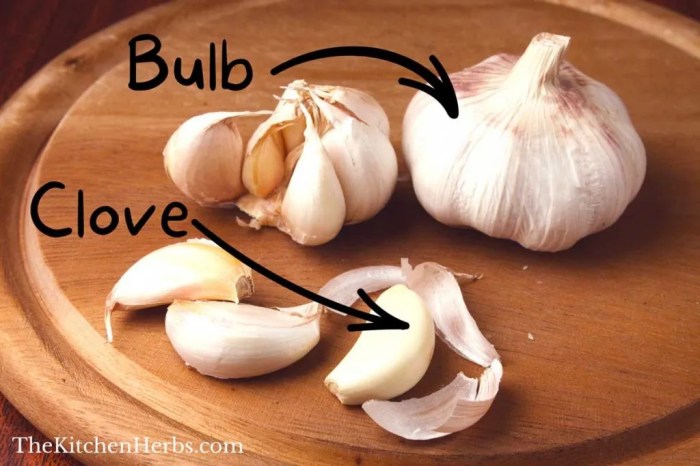
To plant garlic, you need to break apart the garlic bulb into individual cloves. Each clove will grow into a new bulb. Choose large, healthy cloves from disease-free bulbs.

Discard any cloves that are soft, shriveled, or damaged. You can plant the cloves directly into the soil or pre-sprout them in a moist paper towel for a few days to speed up germination.

Plant cloves about 2 inches (5 cm) deep and 4 to 6 inches (10 to 15 cm) apart in rows that are 12 to 18 inches (30 to 46 cm) apart.

Make sure the cloves pointed end faces up and the flat end faces down. Cover the cloves with soil and water them well. Also, add mulch, such as straw, leaves, or woodchips, to keep the water from evaporating from the soil and to protect the garlic from weeds.

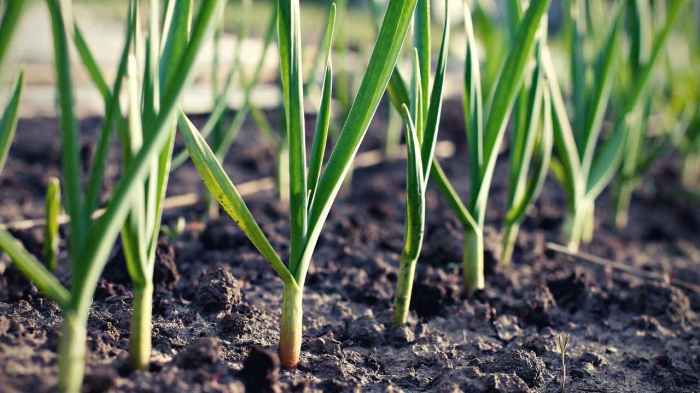
The second stage of garlic growth is germination. This is when the garlic clove starts to sprout roots and shoots. When planted in the fall, the shoots will only be visible above the ground in mid-spring.

The roots will grow downward into the soil, anchoring the garlic plant and absorbing water and nutrients. The shoots will grow upward through the soil, forming green leaves that will photosynthesize and produce energy for the plant.

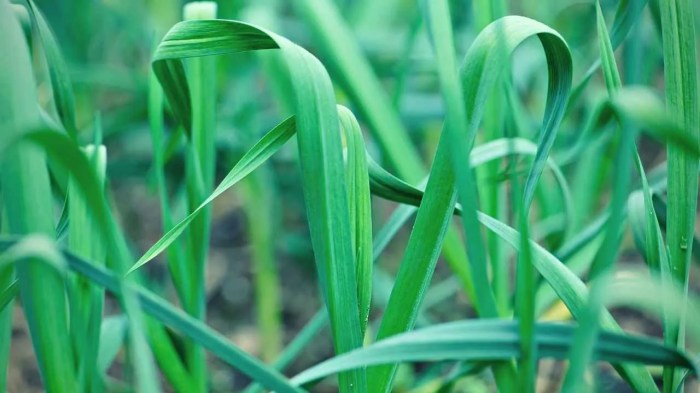
The third stage of garlic growth is vegetative growth. This is when the garlic plant grows taller and produces more leaves. The number of leaves a garlic plant produces will determine the size and shape of its bulb. Each leaf corresponds to a layer of bulb wrapper that will protect the cloves inside. [1]

Vegetative growth usually lasts from spring to late summer. The garlic plant needs plenty of sunlight, water, and nutrient-rich soil to grow well during this stage.

Pro Tip 1: Weed your garlic bed frequently to prevent competition for resources. Mulch will significantly reduce the amount of weeds that can sprout.

Pro Tip 2: If your soil is not nutrient-rich, apply an organic fertilizer in later.

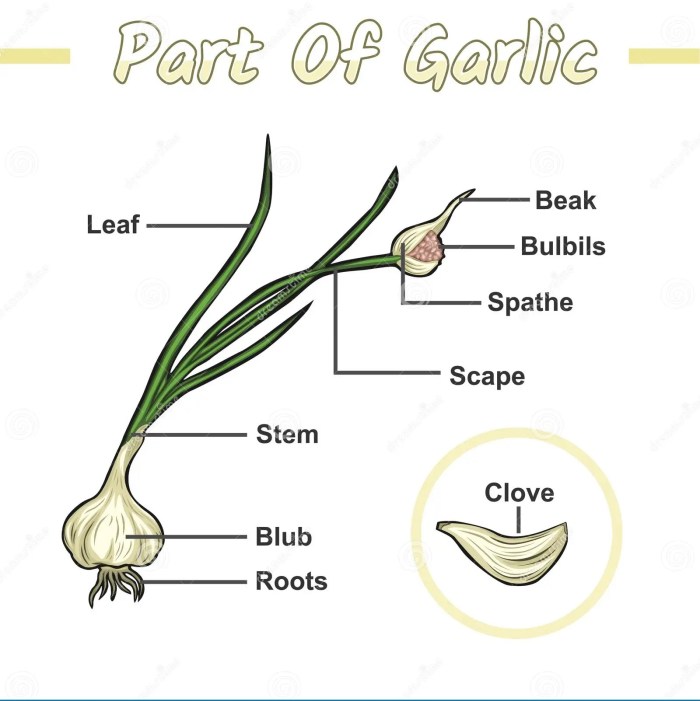
The fourth stage of garlic growth is bulb development. This is when the garlic plant starts to form its bulb underground by swelling its stem base and dividing it into cloves. Bulb development usually begins in early summer.There are two main types of garlic: hardneck and softneck. Hardneck garlic produces a hard stem or scape that grows from the center of the bulb and curls into a loop or coil at the top. The scape also produces a flower head or umbel that contains tiny bulbils or seeds that can be used for propagation. Softneck garlic does not create a scape or flower head but instead produces more cloves per bulb.

Several factors influence bulb development, such as temperature, moisture, soil type, nutrient availability, and garlic variety selection. Generally, warmer temperatures and drier conditions favor larger bulbs with fewer cloves. In comparison, cooler temperatures and wetter conditions favor smaller bulbs with more cloves.

You should reduce watering your garlic once bulbing begins, but do not let the soil dry out completely. You can also remove the scrapes from hard neck varieties to direct more energy to the bulb formation. 

Pro Tip: While it is true that removing scapes from hardneck varieties will direct more energy to the bulb formation. However, if you leave them on, they will produce beautiful flowers that attract pollinators to your garden.

Stage 5. Harvesting Leaves

The fifth stage of garlic growth is harvesting leaves. This optional stage involves gathering some of the garlic leaves for culinary or medicinal purposes. Garlic leaves have a mild garlic flavor and can be used fresh or dried in salads, soups, sauces, pesto, and other dishes. [2]

Harvesting leaves can be done anytime during the vegetative growth or bulb development stages. However, do it before leaves start to yellow or die back. You should only harvest a few bottom leaves from each plant, leaving at least four to six leaves intact to support bulb growth. Also, avoid damaging the stem when harvesting leaves.

To harvest garlic leaves, use a sharp knife or scissors to cut off the desired amount of leaves on the plant. Wash the leaves and use them immediately or store them in the refrigerator for up to a week.

Pro Tip: You can dry garlic leaves by hanging them in a well-ventilated area away from direct sunlight for a few weeks. You can then store the dried leaves in an airtight jar in a cool, dark place for up to a year.

If you are growing hardneck varieties and leaving the scapes uncut, the next stage of garlic growth is flowering. This is the stage when garlic plants produce flowers that can attract pollinators and produce seeds. If the scrapes are cut or you are growing soft neck varieties, skip to “Stage 9. Garlic Harvest“.

Flowering is a reproductive process that happens in mid to late summer and allows the garlic plant to produce seeds. However, flowering also reduces the size and quality of the garlic bulb, as the plant diverts its energy and resources from bulb formation to seed production.

To prevent flowering, remove the scapes from your garlic plants as soon as they appear. This will allow the plant to focus on bulb development and increase your yield and quality of garlic. You can also use the scrapes as a culinary or medicinal ingredient, as they have a similar flavor and texture to garlic cloves. [3],

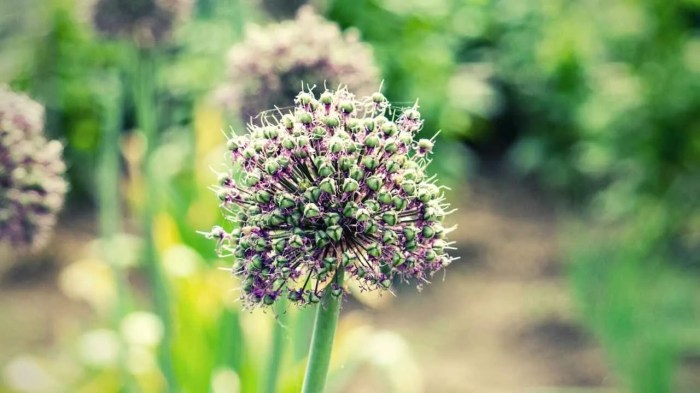
If you want to allow flowering, leave the scapes on your garlic plants and let them grow and curl into loops or coils. The scapes will eventually straighten up and produce a flower head or umbel at the top.

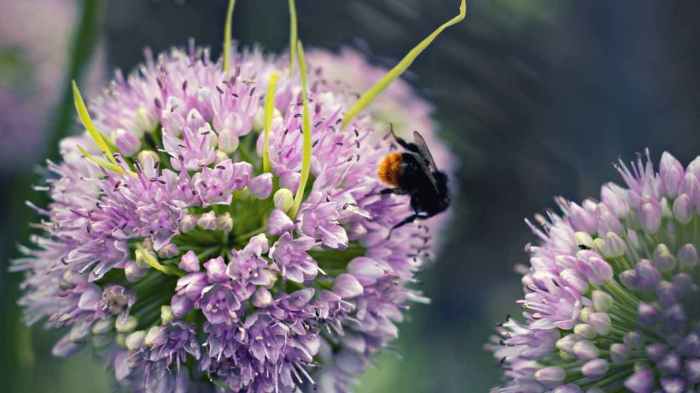
The flower head will contain hundreds of tiny flowers that can be white, pink, purple, or green. The flowers will attract bees, bumblebeeshoverflies, butterflies, and other pollinators that can transfer pollen from one flower to another.

Stage 7. Pollination

The seventh stage of garlic growth is pollination. This is when the garlic flowers receive pollen from other garlic plants or their own flowers. Pollination usually occurs shortly after flowering.

Pollination is a process that allows the garlic plant to exchange genetic material with other garlic plants and create new combinations of traits. Pollination can increase the genetic diversity and variability of garlic, which can help it adapt to different conditions and resist pests and diseases. However, pollination can also introduce unwanted or undesirable traits that can reduce the yield and quality of garlic.

Pro Tip: You can also manually pollinate your garlic plants by transferring pollen from one flower to another using a brush or just using your fingers. You can choose which plants to pollinate based on their characteristics, such as size, shape, color, flavor, or disease resistance.

The next garlic growth stage is seed formation. This is when the garlic flowers develop seeds inside their ovaries after being pollinated. Seed formation usually occurs in late summer or early fall, several weeks after pollination.

Seed formation is a process that allows the garlic plant to produce offspring that can grow into new plants. Seed formation can create new varieties and types of garlic that may have different or improved traits than their parents. However, seed formation can also take a long time and require much care and attention to produce viable seeds.

To harvest your seeds, wait until the flower heads turn brown and dry up completely. You should then cut off the flower heads from the plants and place them in a paper or mesh bag. Store the bag in a cool, dry, dark place until you are ready to extract the seeds.

To extract your seeds, you should break open the flower heads and separate the seeds from the chaff (the dried petals and other parts of the flower). Dry the seeds thoroughly before storing them in an airtight container in a cool, dark place. You can store garlic seeds for up to a year. After that, some seeds will become nonviable.

Pro Tip: While the idea of growing garlic from seeds might be intriguing, this process is considerably challenging and isn’t commonly undertaken by most gardeners. Garlic grown from seeds tends to exhibit more variability. It can take significantly longer to mature compared to garlic grown from cloves. Given the complex care and patience required, many gardeners select a more reliable and efficient method of planting cloves for a successful harvest.

The ninth stage of garlic growth is garlic harvest. This is when the garlic bulb reaches its full size and quality and is ready for harvest.

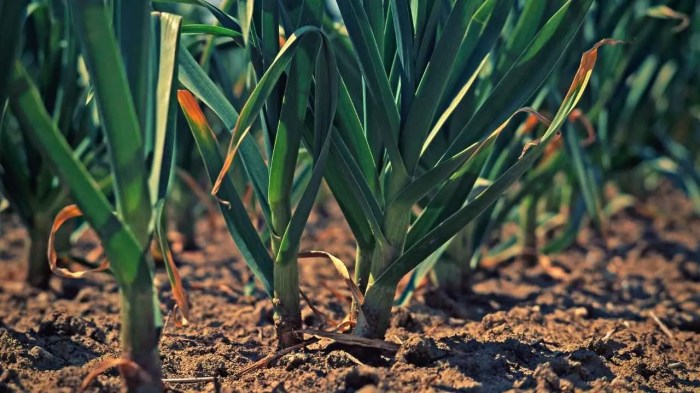
The main indicator of harvest readiness is the condition of the garlic leaves. When about half of the leaves have turned yellow or brown and started to dry up, it means that the bulb has stopped growing and is ready to be harvested.

Pro Tip: If you are unsure that your garlic is ready to be harvested, gently dig up one or two bulbs and examine them. The bulbs should be firm, plump, and well-formed, with distinct cloves and intact wrappers. The cloves should be easy to separate from each other and from the stem base.

Then, the moment comes when you dig up your garlic bulbs from the soil and prepare them for storage or use. Garlic harvest should be done on a dry and sunny day when the soil is not too wet.

To harvest your garlic, you need a spade, garden fork, or a garden knife to loosen the soil around each plant and lift it out gently. You should avoid pulling the plant by its stem or leaves, as this may damage the bulb or cause it to detach from the stem base. Also, avoid bruising or cutting the bulb, which may reduce its quality and shelf life.

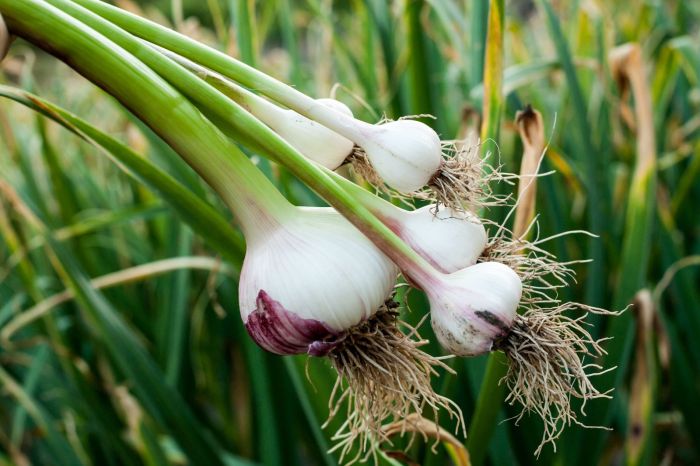
After removing your garlic from the ground, shake off any excess soil from the bulbs and roots. Do not wash your garlic if you intend to store it for a long time, as this may introduce moisture and bacteria that can cause rotting or molding. Also, remove any damaged, diseased, or infected bulbs and discard them.

Harvest is the last stage of garlic growth unless you leave a bulb or a clove in the soil. If so, the garlic growth stage continues the following year.

https://www.youtube.com/watch?v=w7tGlfJXkbI

https://www.youtube.com/watch?v=w7tGlfJXkbI


Final Words

Garlic growth stages unveil a fascinating tale of transformation from a single clove to a thriving plant. Remember, successful garlic cultivation blends science and care.

Whether you’re a cook, gardener, or curious learner, embracing these insights can elevate your connection to nature’s rhythms.

So, relish the journey from soil to plate, letting the stages of garlic growth inspire your future culinary and gardening adventures.

I hope this article was helpful in explaining garlic growth stages. 

Latest Update: 7th of July 2025. The website continues for the New and old Readers, Followers and Blogging Friends. Hope what I have written is useful that helps you to feel more Positive and Happier This is “The 278th Post” and with the “Introductory Page this will be all in Total up to date, 279 posts. On Top Right-Hand side, you are able to see: The word “Menu” when you click on it. You will see the word “Home” All the posts from “The Very Beginning comes ~ Under “Home”. Which is The Introductory Page about: Who I am & Why I am Writing!

The new Topics “On the Left-Hand side “Under the Recent Posts, with “The latest Topics adding up” Happy Reading ❤

The coloured Topics in Green, if you “Click” on them “Will take you to My other posts which you will be able to find more information”. I have another website with “My own little Poems and Pictures of some of My Hobbies” if you are interested on seeing, “What else I am doing” you can have a look at :https://deepanilamani.com/

As always, it is all free”. You can share and pass it on also for others who can benefit from this post. I hope All those who Read will be able to make the maximum use of all these facts and make, “Your Lives More Healthy and able to Lead Better lives in Happiness and Peace”. I wish it to be so as,” Peace which is our Ultimate Goal in Life ❤

This site has been doing good, and I am so Happy. I have been getting, 🎉 Congrats! I am My Path is getting noticed. Thanking the I net for the Picture Quotes I have shared from the I net ❤

Many Blessings for Good Health, Happiness and Prosperity! ❤

May God’s Blessings Be Upon You ❤

Deepa Nilamani 🙂

Flag Counter

Latest News ~ On My Health!

Hello To, All My Dear Readers followers and Blogging Friends ❤

Hello to you all this is from year 2020. Update: 1st March 2025: I am re- doing some of the articles as after so much of posts and even getting well and even being Fully Qualified I Have Qualified!as a Professional Psychologist Msc and PhD some Foolish People still trying to say I am not well! I am completely recovered from, “The low moods I was going through, and am completely in Good Health now. I have expanded my knowledge and gained more experiences in life. I have moved on tremendously from the past and am moving on and see The World in Full Colour 🙂


Sigmund Freud: If you’ve ever heard of the phrase, “a Freudian slip,” it’s actually named after this famous psychologist, Sigmund Freud. Often coined the Father of Psychology, Freud was the brain behind psychoanalysis, a treatment that taps into our unconscious following the belief that our current struggles are shaped by past traumas and experiences

Albert Einstein We can comfortably say that Albert Einstein is likely the most recognized scientist to have ever lived. His name is so well known that it’s used as a common nickname whenever someone does something smart. This German theoretical physicist is so much more than just a name though; he’s made several groundbreaking discoveries throughout his lifetime, including being the brain behind developing the theory of relativity. 

“Some of the old articles are my past”, and I want to write how I am, “Now” the Present time. In short, one can say I am “Editing All the Posts in a Positive way” I value my health very much, especially now as I am completely healthy. “I have a Healthy diet, Proper exercises, Rest and Relaxation so that I am fit and healthy, both in body and mind” 🙂


This is something that “Even some of the so called highly educated people think and say and do” IT IS TIME TO CHANGE” This is why I am writing and doing this blog. Not to earn money, But to make people aware and enlighten the foolish!!! Sorry I do NOT MEAN to OFFEND but these are real things that “I have gone through” and some are going through and I am writing on, “Behalf of whole of Humanity” ❤

“My Intentions are Purely to Help, to give Hope to Lead A Healthy Life” ~ To Give Faith and Hope that they too can lift their heads up and Be Healthy”. Sometimes the world, the society can be a very cruel and a vicious place!!!
Why people get sad or upset is because they are unable to be who they are and do the things that they really like. Yes we know we all have to abide by some form of discipline. We need to fit into family, work, society to some extent, we cannot just say and do things only how it suits us, but FREEDOM is Very Important. You can click this link to read this post: Freedom To Be You!

Erich Seligmann Fromm (March 23, 1900 – March 18, 1980) was a German-born American social psychologist,   psychoanalystsociologisthumanistic philosopher. Fromm believed that freedom was an aspect of human nature that we either embrace or escape. He observed that embracing our freedom of will was healthy,

Behavior – “If other people do not understand our behavior what we can do. We behave according to our personalities”.
Their request that, “We must only do what they understand, is an attempt to, ‘Dictate’ as mostly they ‘Resent’ our ‘Freedom’ and our ‘Courage’ to be ourselves.
We owe nobody an explanation or an accounting, as long as, ‘Our acts Do Not Hurt or Infringe them’.
How many lives have been ‘Affected’ by this need to explain, which usually implies that the explanation be, ‘Understood’ i.e. Approved.
“Let Your Deeds be Judged”. And ‘From Your Deeds ~ Your real Intentions’
But know that, “A Free Person Owes an Explanation Only to Himself or Herself” And to, “The Few” “Who may have Justified Claim for Explanation” ~ Erich Fromm ❤

But sometimes people are controlled too much. Instead of “adjusting” to fit in or live in harmony with another person or persons (it can be any life situation), sometimes people have to “completely change” from who they are. This is going completely against our natural way of life, our personality that we are born with. You can think of yourself wearing a dress or suit that is not to your colour style or eating foods that is not to your taste. How do you feel? Uncomfortable. No? Why? “BECAUSE ALL PEOPLE ARE BORN TO BE FREE, and ALWAYS HAS THE NEED TO FEEL FREE and at PEACE” When people are not “Allowed to be who they are, “ACCORDING TO EACH PERSON’S PERSONALITY” to be able to live the WAY THEY ARE BORN TO LIVE. You can go to this post if You click this link: Freedom ~ In Healing! ❤

Education is Very Important. So we can Learn so many things ourselves as, “We are the only people who know exactly what and how we want to act and do things, to be relaxed, comfortable and at ease, as “The term Dis-ease simply means lack of ease or harmony within the body”.


I hope you like what I wrote and learnt something new, or remembered things you already knew. I know it is sometimes not easy, but have Courage and try as much as do things for you to be relaxed and Happy 🙂

Latest Update: 1st of March 2025. The website continues for the New and old Readers, Followers and Blogging Friends. Hope what I have written is useful that helps you to feel more Positive and Happier This is “The 269th Post” and with the “Introductory Page this will be all in Total up to date, 270 posts. On Top Right-Hand side, you are able to see: The word “Menu” when you click on it. You will see the word “Home” All the posts from “The Very Beginning comes ~ Under “Home”. Which is The Introductory Page about: Who I am & Why I am Writing!

The new Topics “On the Left-Hand side “Under the Recent Posts, with “The The new Topics “On the Left-Hand side “Under the Recent Posts, with “The latest Topics adding up” Happy Reading ❤

The coloured Topics in Green, if you “Click” on them “Will take you to My other posts which you will be able to find more information”. I have another website with “My own little Poems and Pictures of some of My Hobbies” if you are interested on seeing, “What else I am doing” 🙂 you can have a look at :https://deepanilamani.com/

As always, it is all free”. You can share and pass it on also for others who can benefit from this post. I hope All those who Read will be able to make the maximum use of all these facts and make, “Your Lives More Healthy and able to Lead Better lives in Happiness and Peace”. I wish it to be so as,” Peace which is our Ultimate Goal in Life ❤

This site has been doing good, and I am so Happy. I have been getting, 🎉 Congrats! I am My Path is getting noticed. By 370 many other websites Thanking the I net for the Picture Quotes I have shared 🙂

Many Blessings for Good Health, Happiness and Prosperity! ❤

May God’s Blessings Be Upon You ❤

Deepa Nilamani ❤
Wishing Star ❤

Flag Counter