
Hello To, All My Readers Followers and Blogging Friends ❤
I hope all of you are keeping well. Today I thought of writing about Psychology of Singing. I hope you all will like what I am writing. It is both Western and Kirtan (Devotional) Singing ❤
Singing, the production of musical tones by means of the human voice. In its physical aspect, singing has a well-defined technique that depends on the use of the lungs, which act as an air supply,, which have the function of an amplifier, as the tube in a wind instrument; and on the tongue, which together with the palate, teeth, and lips articulate and impose consonants and vowels on the amplified sound. Though these four mechanisms function independently, they are nevertheless coordinated in the establishment of a vocal technique and are made to interact upon one another.
Singing versus speaking
Singing is distinguished from speaking by the manner in which the breath is expended to vibrate the vocal cords. Singing requires more breath the louder, higher, and longer one sings. It also requires that the emission of breath be more firmly controlled. A pertinent analogy is the function of the instrumentalist’s breath in playing a reed instrument—e.g., a clarinet, an oboe, or a saxophone. The technique of singing depends ultimately on the coordination of the various anatomical mechanisms in order to produce a propulsion of sound in a steady flow. A further distinction between singing and speaking is the control that is required, in singing, of the movement and reflexes of the larynx. As one sings higher, the larynx tends to rise sympathetically and at a certain point becomes an interference causing the voice to break, or crack. Not much movement of the larynx occurs within a singer’s normal range, which is usually about an octave and a third. Beyond that range, either above or below, an element of technical accomplishment sets the professional off from the unschooled amateur.
The character of Western singing
Western singing is distinguished above all by its volume. Singers of other cultures may have a wider range, particularly a greater upward extension; but it is doubtful that they have sung louder. Western singing is also distinguished by its concern with pure sound, with the tone quality, or timbre, and with colour, with what is felt to be the sheer beauty of the voice itself. Both singers and their listeners, in Western music more than any other, have tended to lose sight of song’s roots in language and to think of singing as a purely instrumental production. Modern Western styles of singing largely derive from the Italian bel canto, which had its origin in a style associated with the polyphonic music of the 16th century. Because this music expressed the significance or the moods of the text, a great range of expression was required from the singers, who, in these polyphonic works, assumed something of the function of a vocal orchestra. The art of singing accordingly evolved to allow the singers the maximum power and variety of expression.
THE CHARACTER OF DEVOTIONAL SINGING KIRTAN:
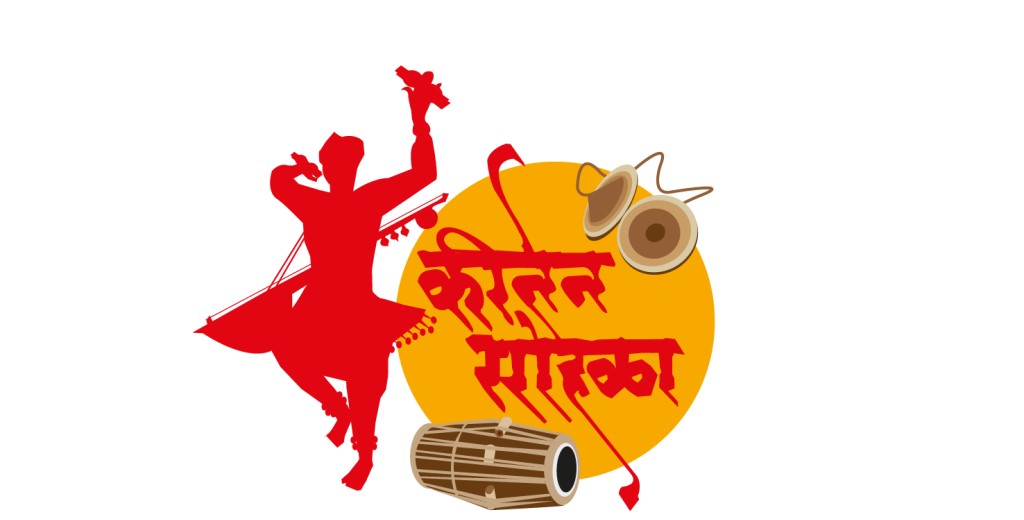
Kirtana (Sanskrit: कीर्तन; IAST: Kīrtana), also rendered as Kirtan or Keertan, is a Sanskrit word that means “narrating, reciting, telling, describing” of an idea or story, specifically in Indian religions. It also refers to a genre of religious performance arts, a musical form of narration or shared recitation, particularly of spiritual or religious ideas, native to the Indian subcontinent. A person performing kirtan is known as a kirtankara (or kirtankar, कीर्तनकार). With roots in the Vedic anukirtana tradition, a kirtan is a call-and-response or song or chant, set to music, wherein multiple singers recite the names of a deity, describe a legend, express loving devotion to a deity, or discuss spiritual ideas. It may include dancing or direct expression of bhavas (emotive states) by the singer. Many kirtan performances are structured to engage the audience where they either repeat the chant, or reply to the call of the singer.
A kirtan performance includes an accompaniment of regionally popular musical instruments, especially Indian instruments like the Indian harmonium, the veena, sitar, or ektara (strings), the tabla (one-sided drums), the mrdanga or pakhawaj (two-sided drum), flute (woodwinds), and karatalas or talas (cymbals). It is a major practice in Hinduism, Vaisnava devotionalism, Sikhism, the Sant traditions, and some forms of Buddhism, as well as other religious groups. Kirtan is sometimes accompanied by story-telling and acting. Texts typically cover religious, mythological or social subjects.
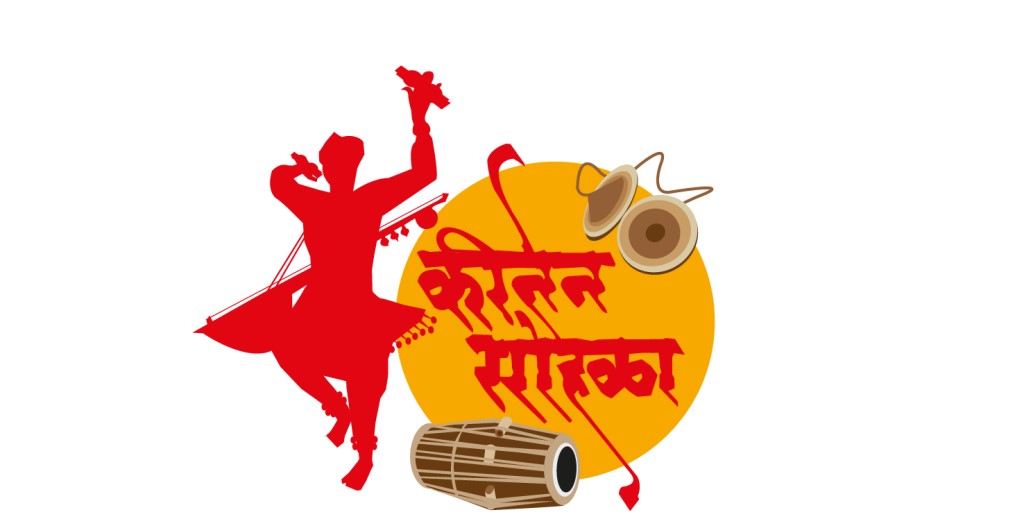
Traditionally Kirtan is a “Call and Response”” of chanting experience. The word Kirt is to name to Communicate, to Celebrate, to Praise, and is derived from the Bhakti Yoga. The path of union through Devotion that uses the Repetition of Sanskrit Mantras to invoke the Energy and Attributes of the Devine.
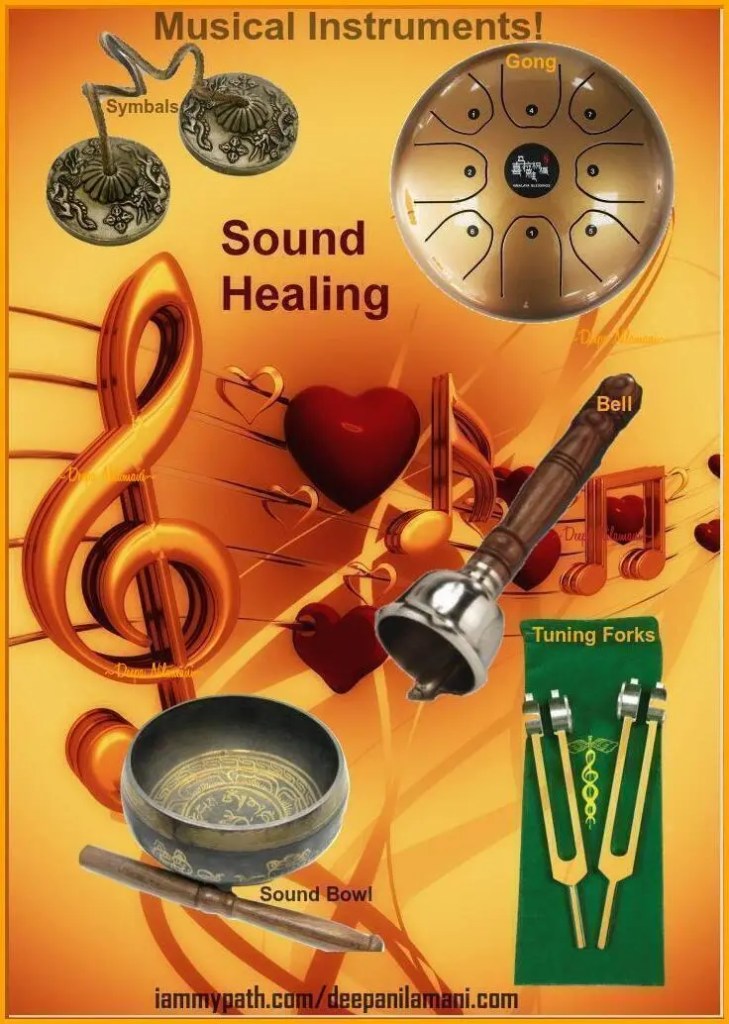
The singing of Bajans is also a part of Spiritual Music, Tradition of India and singing of songs in Prayers. Its Root Bhaj means to Worship with Deep Respect (Revere) and to Love. Both are Devotional music and have been practiced since ancient times. In more recent times Devotional music has been incorporated (To include) in to many modern musical styles so that they can like to so many around the world. and all voices are united (together) with others without needing and skill or practicing. It is wonderful way to play because it is free and is energized and takes us in a relaxing journey ❤

Happiness is needed and anything that gives us Happiness to the Heart need to be encouraged that raises the flow of Energy. In this increasing unnatural society with so much of stress singing is the medicine that help Relax and Energize us. Such a practice can help us face stress of modern life just by using ones own voice in song. Ah!! almost immediate relief of Healing to make Happy people and community 🙂

Latest Update: 6th February 2024. This is “The 231th Post” and with the “Introductory Page this will be all in Total up to date, 232 posts. On Top Right-Hand side, you are able to see: The word “Menu” when you click on it. You will see the word “Home” All the posts from “The Very Beginning comes ~ Under “Home”. Which is The Introductory Page about: Who I am & Why I am Writing!
I hope what I have written and The Knowledge will be Useful and You have learnt new facts. And also You will be able to Enjoy going through The Picture Quotes as I have done quite bit of Making them more colourful and Attractive ❤
I am in Good Health and as, “I have been able to, “Receive Healing Energy into My Hands” since “Beginning of 2016” All my Hard work and Praying has been rewarded. Healing Energy can go to others too, and wherever it is needed to be received with a Clear Mind and Lot of Loving Kindness ❤
I am Moving on as usual with “My Own Journey of Wellness, Encouraging and Healing” So that Everyone can have “Faith, Hope and to Heal” To Lead a Better Life of Good Health, Happiness and Joy”. If you click on the Link, you can Read This Post: The Therapists Voice Forward!
The Topics in Green, if you “Click” on them “Will take you to My other different posts which you will be able to find more information and even Pronunciation”. I have another website with “My own little Poems and Pictures of some of My Hobbies” if you are interested on seeing, “What else I am doing” during my spare time you can have a look at: https://deepanilamani.com/
Thank you for Reading and The I net for the picture quotes I have shared and to https://www.online-image-editor.com/ for the Quotes I have done Myself. ❤
As always, it is all free”. You can share and pass it on also for others who can benefit from this post. I hope All those who Read will be able to make the maximum use of all these facts and make, “Your Lives More Healthy and able to Lead Better lives in Happiness and Peace”. I wish it to be so as,” Peace which is our Ultimate Goal in life ❤
Sending Love, Light and Healing Energies to You ❤
May Gods Blessing Be Upon You ❤
Deepa Nilamani ❤








 I am My Path!
You must be logged in to post a comment.