Ikebana!

Hello To, All My Dear Readers, My Followers and My Blogging Friends

Hope all of you are in Good Health and getting on in your lives well. Year 2024 has zoomed past and almost coming on to 2026. Today I want to write about a topic most of you have not even heard its about Japanese Flower Arranging 🙂
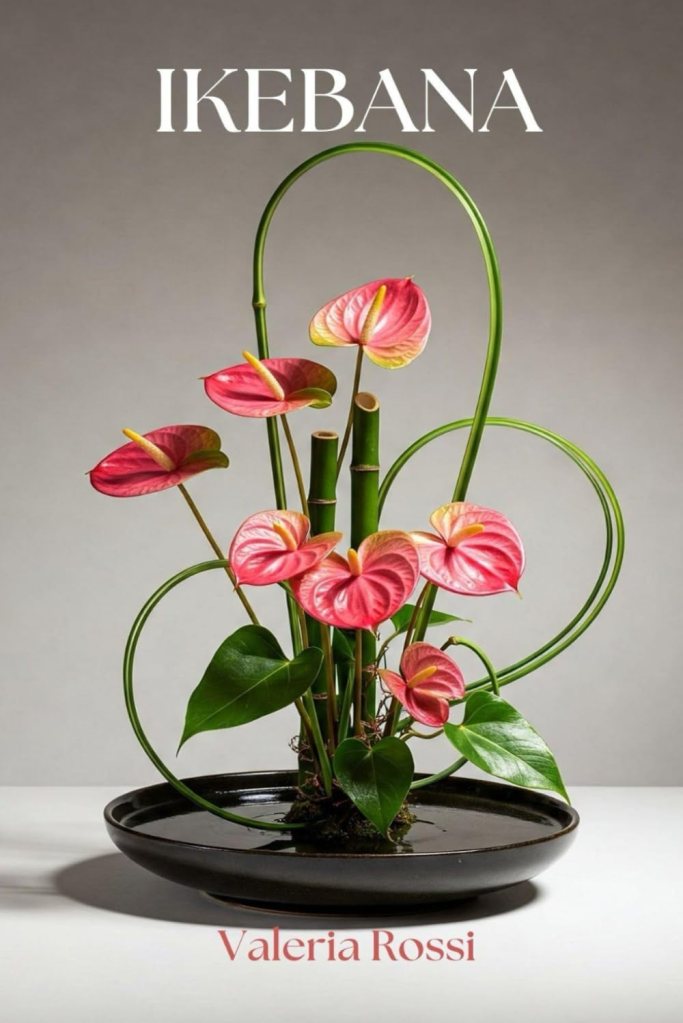
Traditional Japanese art of flower arrangement
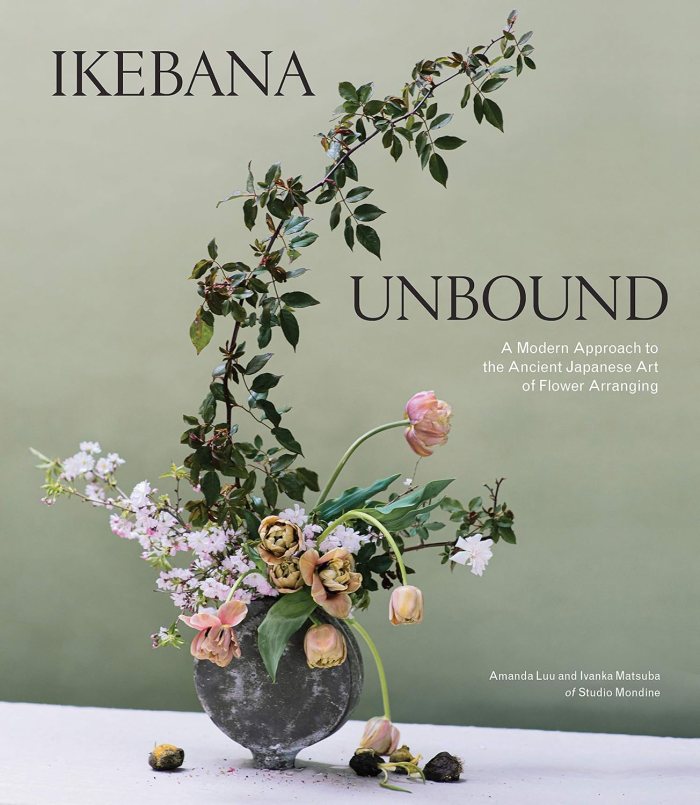
Ikebana is the traditional Japanese art of flower arrangement, meaning “making flowers come alive.” It originated in the Muromachi period and has evolved over centuries, connecting generations through creativity and a love for nature. Ikebana involves selecting flowers, greenery, and other plant materials to express specific emotions, similar to painting or sculpture. It is considered one of the three classical arts of Japan, alongside kōdō (incense appreciation) and chadō (tea ceremony). Ikebana is characterized by its use of asymmetrical forms, empty space, and a sense of harmony among materials and the setting. 

The term ikebana comes from the combination of the Japanese ikeru ‘to arrange (flowers), have life, be living’) and hana (, ‘flower’). Possible translations include ‘giving life to flowers’ and ‘arranging flowers’.

History

The pastime of viewing plants and appreciating flowers throughout the four seasons was established in Japan early on from the aristocracy. Waka poetry anthologies included many poems on the topic of flowers. With the introduction of Buddhism, offering flowers at Buddhist altars became common. Although the lotus is widely used in India where Buddhism originated, in Japan other native flowers for each season were selected for this purpose.

For a long time the art of flower arranging had no meaning, and functioned as merely the placing in vases the flowers to be used as temple offerings and before ancestral shrines, without system or meaningful structure. The first flower arrangements were composed using a system known as shin-no-hana, meaning ‘central flower arrangement’. A huge branch of pine stood in the middle, with three or five seasonable flowers placed around it. These branches and stems were put in vases in upright positions without attempting artificial curves. Generally symmetrical in form, these arrangements appeared in religious pictures in the 14th century, as the first attempt to represent natural scenery. The large tree in the centre represented distant scenery, plum or cherry blossoms middle distance, and little flowering plants the foreground. The lines of these arrangements were known as centre and sub-Centre.
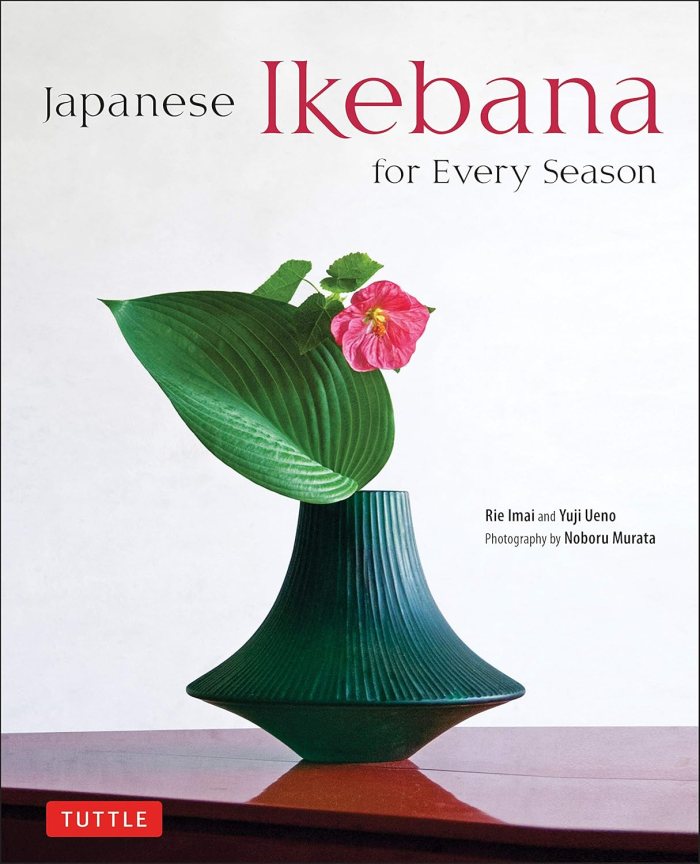
The art of flower arranging developed with many schools only coming into existence at the end of the 15th century and ikebana, flower arrangement. one of the most important being that flowers offered on all ceremonial occasions, and placed as offerings should not be offered loosely, but should represent time and thought.

Ikebana has always been considered a dignified accomplishment. All of Japan’s most celebrated generals notably practised flower arranging, finding that it calmed their minds and made their decisions on the field of action clearer.
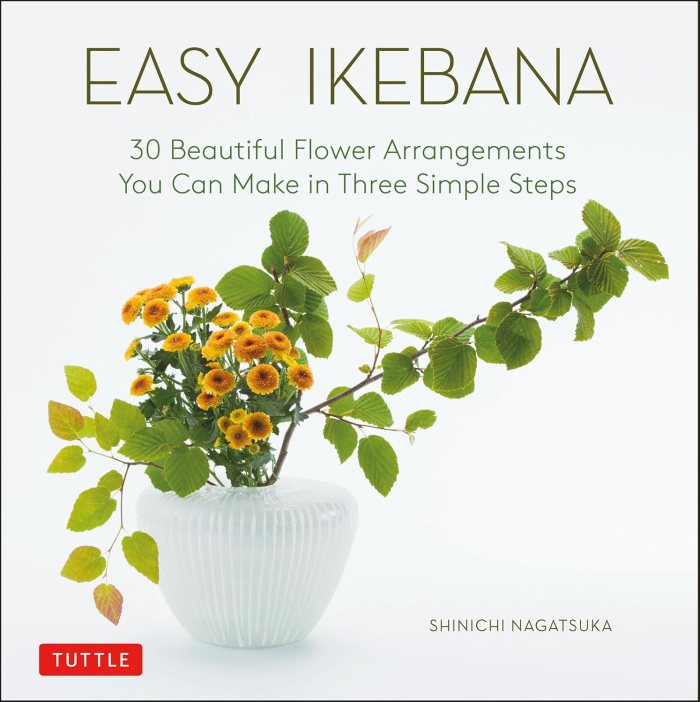
It was in the latter part of the 17th century that ikebana was most practiced and reached its highest degree of perfection as an art. only one branch of ikebana had been taught at a time,
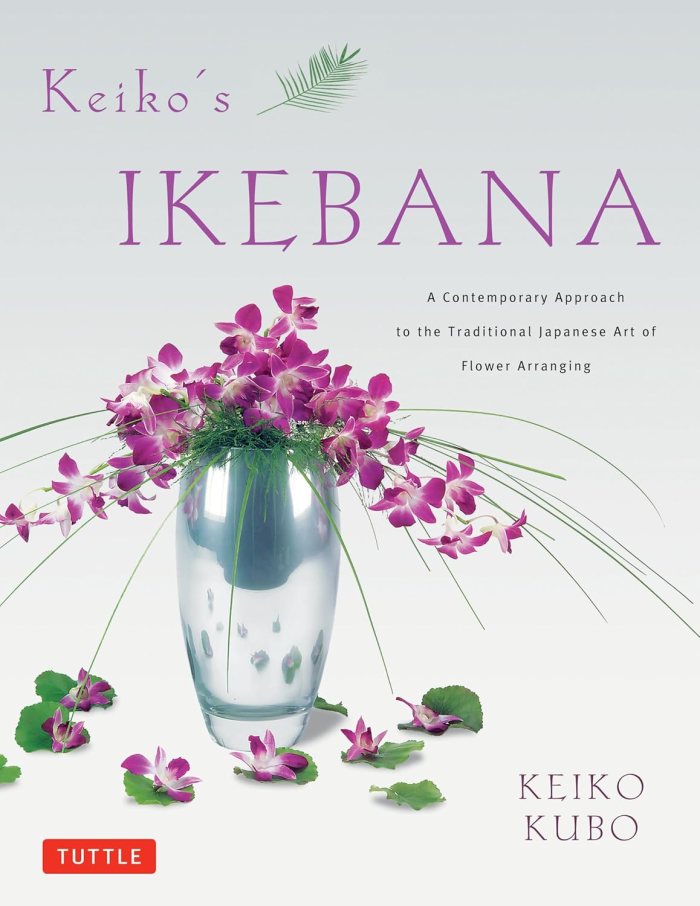
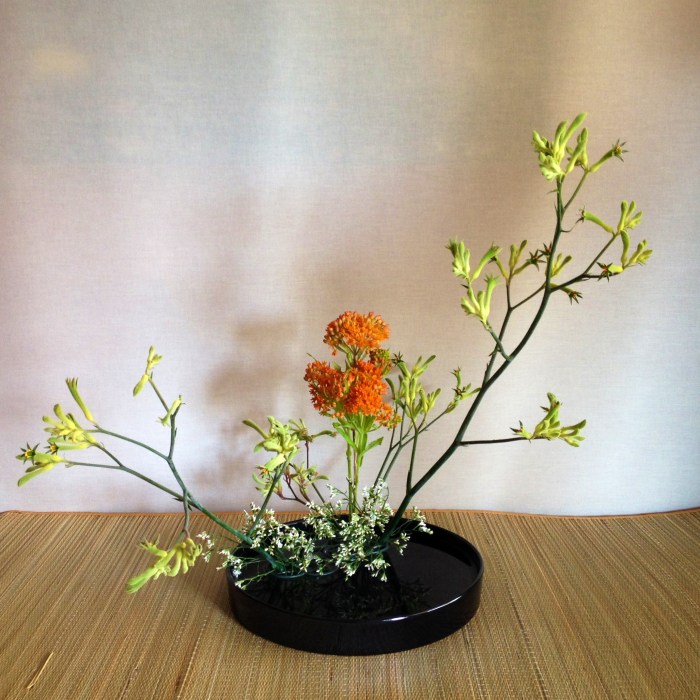
I hope you have learnt new information on this type of flower arranging. You can use any type of flowers dried or even with pieces of just from bushes according to your imagination ❤
Date 22 Nd NOVEMBER r 2025: I am in Very Good Health. This is “The 338 Post” and with the “Introductory Page this will be all in Total up to date, 339 articles https://iammypath.com/who-i-am-why-i-am-writing/

What I am doing is, “Taken the Therapists Voices with me and have been Moving forward Telling “My Own Journey in Good Health and Healing” in Helping Others to have “Faith, Hope and to Heal” and Lead a Life of Good Health, Happiness and Joy, and it is in this post if you click on the Link: The Therapists Voice Forwar

Take Home Message
We all have the capacity to adapt and to achieve our personal expectations. we raise the bar in relation to our own potential and push ourselves to achieve Higher things. The therapeutic alliance has been shown to affect treatment outcomes across a range of conditions, therapeutic modalities, and contexts. In other words, a greater sense of social connectedness rooted in caring for others, connecting with the community, and finding a sense of purpose is linked to improved mental health and well-being. Lots of picture Quotes about lot of things you can do. Happy Reading 

The coloured Topics in Green, if you “Click” on them “Will take you to other different posts of Mine which you will be able to find more information and even Pronunciation”. I have another website with “My own little Poems and Pictures of some of My Hobbies” if you are interested on seeing, “What else I am doing” you can have a look at: https://deepanilamani.com/

As always, it is all free”. You can share and pass it on also for others who can benefit from this post. I hope All those who Read will be able to make the maximum use of all these facts and make, “Your Lives More Healthy and able to Lead Better lives in Happiness and Peace”. I wish it to be so as,” Peace which is our Ultimate Goal 

May God’s Blessing Be Upon You ❤

Deepa Nilamani ❤
Flag Counter

 Person Centered Therapy!

Hello To, All My Readers Followers and Blogging Friends ❤

Hope All of You are keeping in Good Health as much as possible. And “Keeping yourself Positive and Motivated as Best as possible. I have been writing about Various ways of Therapies to Become Well” And today I am writing about The Existential Therapy: writing with more Positive feelings at this time of my Life with Healing Energies I am receiving 🙂


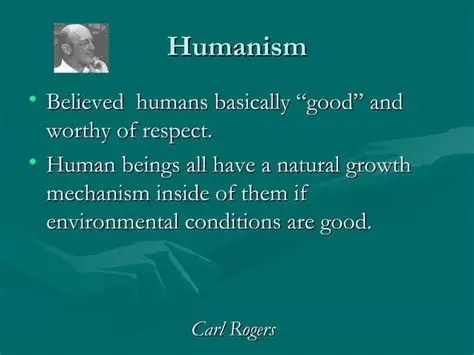
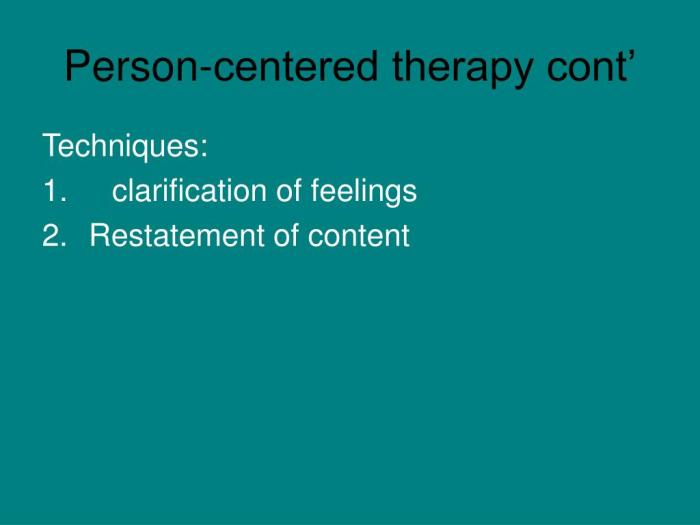
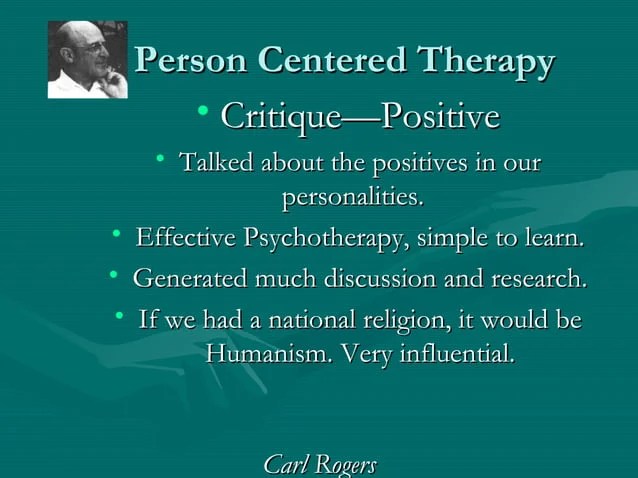
Person-centered therapy was developed by Carl Rogers in the 1940s and 1950s, and was brought to public awareness largely through his book Client-centered Therapy, published in 1951 It has been recognized as one of the major types of psychotherapy (theoretical orientations), along with psychodynamic psychotherapypsychoanalysisclassical Adlerian psychologycognitive behavioral therapyexistential therapy,, “the facts are always friendly”.

Person-centered therapy is often described as a humanistic therapy, but its main principles appear to have been established before those of humanistic psychology but, by the mid-1960s, Rogers accepted being categorized with other psychologists in contrast to behavioral and psychoanalytic psychologists. Despite the importance of the self to person-centered theory, the theory is fundamentally organismic and holistic in nature.

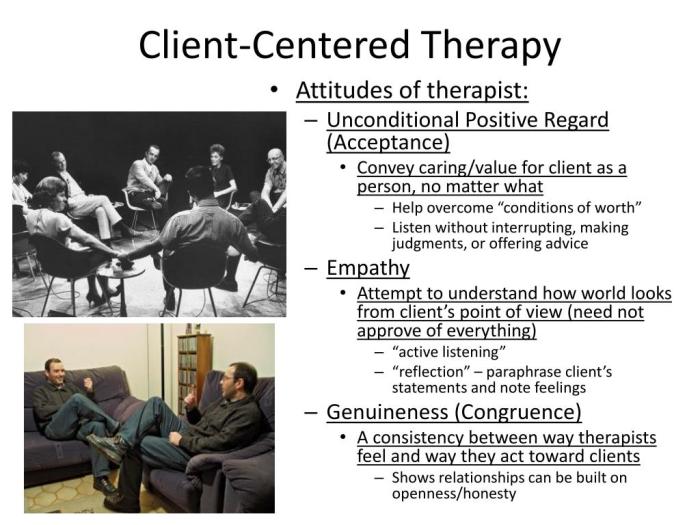
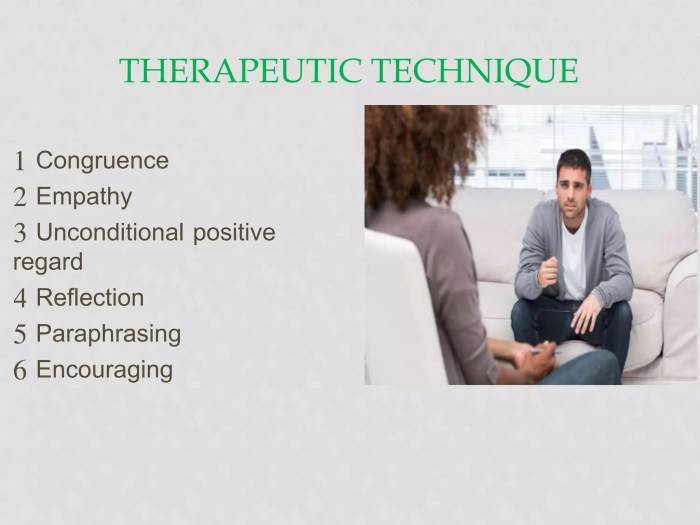
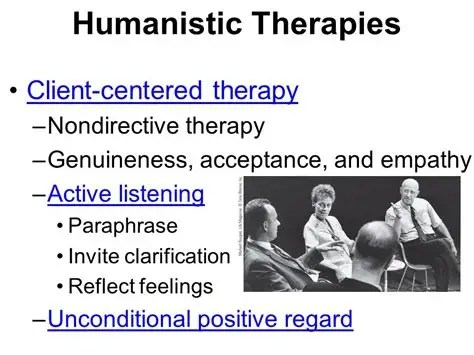
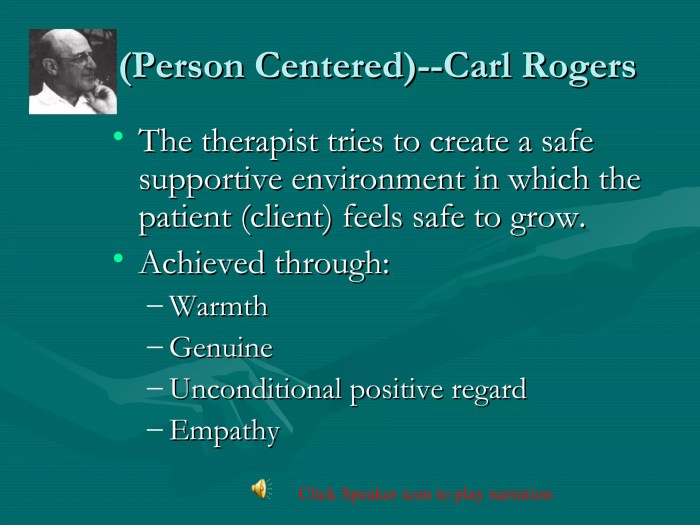
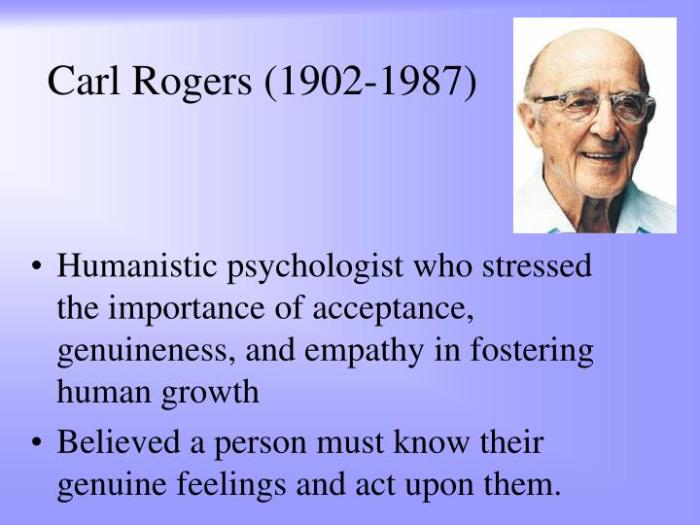
The Person-Centered Approach was developed from the work of the psychologist Dr. Carl Rogers (1902–1987). He advanced an approach to psychotherapy and counseling that, at the time (the 1940s–1960s), was considered extremely radical. The psychological environment described by Rogers was one where a person felt free from threat, both physically and psychologically. This environment could be achieved when being in a relationship with a person who was deeply understanding (empathic), accepting (having unconditional positive regard) and genuine (congruent).

Originally described as non-directive, this therapy moved away from the idea that the therapist was the expert and towards a theory that trusted the innate tendency (known as the actualizing tendency) of human beings to find fulfilment of their personal potentials. An important part of this theory is that in a particular psychological environment, the fulfilment of personal potentials includes sociability, the need to be with other human beings and a desire to know and be known by other people. It also includes being open to experience, being trusting and trustworthy, being curious about the world, being creative and compassionate.

The psychological environment described by Rogers was one where a person felt free from threat, both physically and psychologically. This environment could be achieved when being in a relationship with a person who was deeply understanding (empathic), accepting (having unconditional positive regard) and genuine (congruent).

Applications

Person-centered therapy has been adapted for a variety of populations and settings. For example, a randomized controlled trial in Portugal demonstrated that PCT significantly improved self-esteem in older adults by reducing the gap between their real and ideal selves. These improvements were maintained at a 12-month follow-up, suggesting long-term effectiveness in aging populations.[27]

PCT has also been applied in educational and youth counseling settings. Its emphasis on empathy, acceptance, and authentic communication makes it particularly effective for adolescents and young adults who are navigating identity development, interpersonal challenges, and emotional regulation. Additionally, the non-directive nature of PCT allows it to be used across cultural contexts where traditional therapist-led approaches may not align with community values or client expectations.

The adaptability of person-centered therapy stems from its core belief that the client is the expert in their own experience. This principle enables therapists to work effectively with diverse populations while maintaining a strong respect for individual autonomy and cultural differences.

Although initially developed as an approach to psychotherapy (eventually becoming known as client/person-centred therapy/counselling), Rogers and his colleagues came to believe that their ideas could be transferred to other areas where people were in relationships. For example teaching, management, childcare, patient care, conflict resolution. Today there are many people who, although not working as psychotherapists and counsellors, use the work of Rogers as guiding principles in their day-to-day work and relationships.

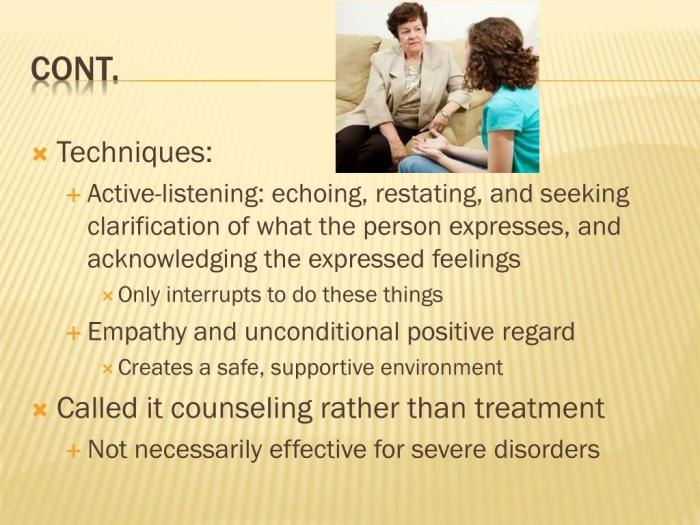
At one level, Rogers’ theory and work is very simple to describe. As many people would attest, both those using the approach and those working as person-therapists/counsellors, it can be very difficult to put into practice because the approach does not use techniques but relies on the personal qualities of the therapist/person to build a non-judgmental and empathic relationship.

Effectiveness

Research on the effectiveness of person-centered therapy (PCT) across various clinical conditions has produced mixed but encouraging results. While PCT has generally been found to yield positive outcomes for anxiety and depression, some studies suggest it may be less effective than structured approaches like cognitive-behavioral therapy (CBT) in certain contexts. For example, a 2013 meta-analysis found that experiential therapies, including PCT, showed improvement in clients with anxiety from pre- to post-treatment, although they often performed below CBT in direct comparisons.[25]

Even so, PCT offers distinct advantages. Its focus on emotional depth, client autonomy, and a non-directive therapeutic environment can be particularly helpful for individuals who prefer a more supportive and less structured approach to therapy.[25] These qualities may also make PCT a good fit for clients who have had negative experiences with more prescriptive or diagnosis-driven models.

Recent findings suggest that outcomes improve when therapy is matched to individual client needs. Their results showed that clients who received the therapy most aligned with their predicted treatment response experienced significantly better outcomes than those who received a non-matching therapy.] This supports the idea that while PCT may not be ideal for every individual, it can be highly effective when personalized to the client. PCT has also shown promise with specific populations. In a older adults who received person-centered therapy reported significant improvements in self-esteem. These gains were maintained for at least 12 months after the intervention, highlighting PCT’s potential for long-term impact and its adaptability across age groups.

A Take-Home Message
We all have the capacity to adapt and to achieve our personal expectations. we raise the bar in relation to our own potential and push ourselves to achieve Higher things. Effectiveness of Adlerian Theory Recent studies have also supported Adler’s belief in the importance of the therapeutic relationship. The therapeutic alliance has been shown to affect treatment outcomes across a range of conditions, therapeutic modalities, and contexts. In other words, a greater sense of social connectedness rooted in caring for others, connecting with the community, and finding a sense of purpose is linked to improved mental health and well-being. Lots of picture Quotes about lot of things you can do. Happy Reading

Latest Update: 3nd of September 2025. The website continues for the New and old Readers, Followers and Blogging Friends. This is “The 292 Post” and with the “Introductory Page this will be all in Total up to date, 293 posts. On Top Right-Hand side, you are able to see: The word “Menu” when you click on it. You will see the word “Home” All the posts from “The Very Beginning comes ~ Under “Home”. Which is The Introductory Page about: Who I am & Why I am Writing!

The new Topics “On the Left-Hand side “Under the Recent Posts, with “The latest Topics adding up”

The “COLOURED TOPICS IN GREEN”, if you “Click” on them “Will take you to other different posts of Mine which you will be able to find more information and even Pronunciation”. I have another website with “My own little Poems and Pictures of some of My Hobbies” if you are interested on seeing, “What else I am doing” you can have a look at: https://deepanilamani.com/

Sending Many Blessings of Good Health and Healing Energies your way ❤

Thanking the I Net for the pictures I have Shared<3

May Gods Blessings Be Upon You ❤

Deepa Nilamani ❤

Flag Counter

Chakra Dance ~ 2025!

Hello to All My Dear Readers Followers and Blogging Friends ❤

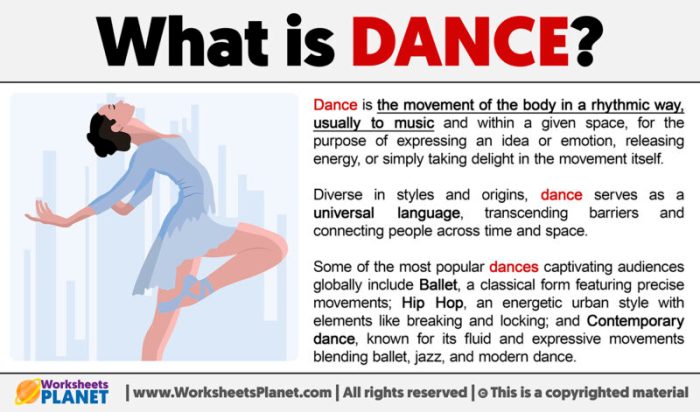
Hope All of you are keeping well. I am writing today to, “Thank You All” for supporting my blog, by liking and commenting. After I was being Congratulated from WordPress 🙂I thought of writing about “Chakra Dance a topic I had overlooked writing some time back. Chakra dance is a healing movement practice. It’s a form of nourishment for your true self – for your soul. Moving to music specifically created to resonate with each chakra, you are guided into your own inner dance of release and re-connection. It offers a kind of liberation.

Chakradance is a healing dance practice that uses spontaneous dance for the purpose of healing. It is a fusion of ancient wisdoms and modern music, and is a way to reconnect with our true selves and inner essence. Each chakra is explored through specific music, guided imagery and your own free, improvised dance, done with your eyes softly closed. Chakradance is a dance practice for the soul that will free and energize you

Chakradance is a healing dance practice. It’s unique because it uses spontaneous dance for the purpose of healing. There’s no right or wrong way to Chakra dance. It’s a journey of self-discovery.

Dance Health Benefits of Dancing ~ 1!Benefit of Dancing Benefits of Dancing ~ 2! Chakra Healing!

Dancing, ‘the hidden language of the soul’, is uplifting and health-giving, but can you engage with spiritual forces to heal psychological discomfort.

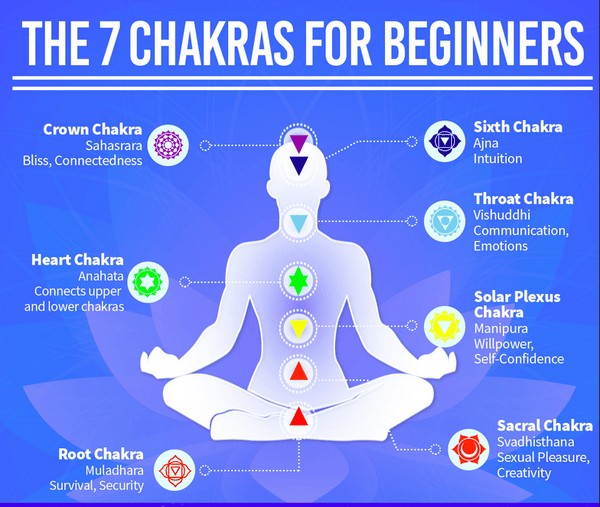
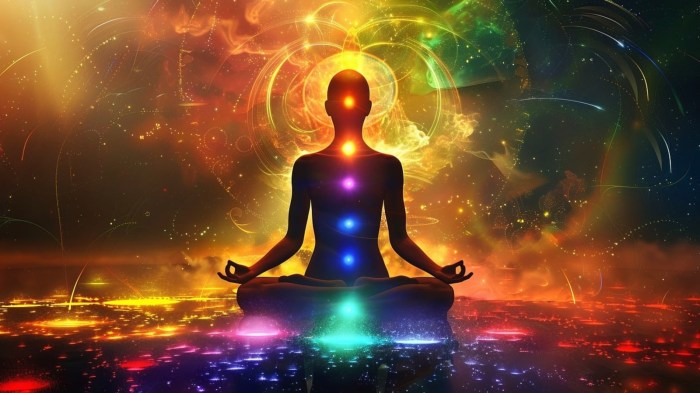
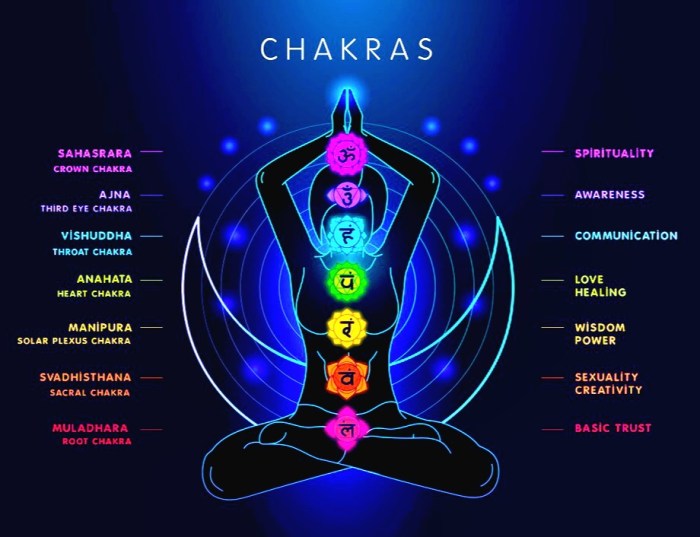
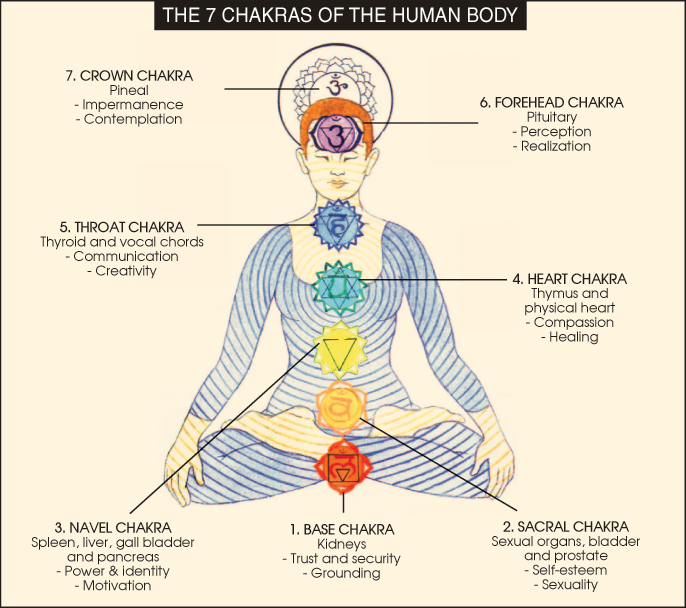
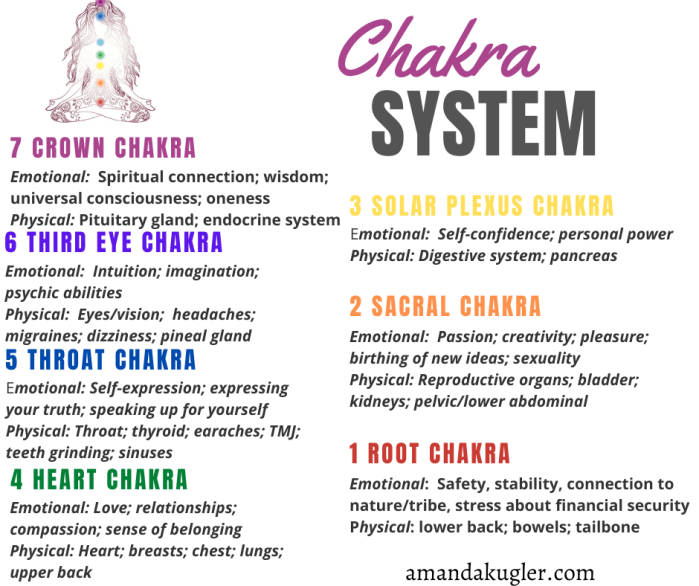
Blending spontaneous, free-flowing dance movements with specific frequencies of sound, and guided imagery – Chakra dance is a dynamic dance journey through the seven chakras. Every human being has seven major chakras and each one influences an aspect of our lives. From our instincts and personal power through to how we love, communicate, use our intuition and connect to our deepest source of spirituality.

Chakra Dance is a healing movement practice. It’s a form of nourishment for your true self – for your soul. Moving to music specifically created to resonate with each chakra, you are guided into your own inner dance of release and re-connection. It offers a kind of liberation.

Within the depths of your being and the expanse of the cosmos lies a profound connection waiting to be uncovered through CHAKRADANCE. This transformative experience is a soulful odyssey that leads you to the sacred realms dwelling within you and woven throughout existence itself. As you sway through the dance of the seven chakras, you step into realms brimming with wisdom, each chakra a gateway to its own realm of teachings, significance, and narratives. These dances, a tapestry of ancient rhythms from diverse cultures, resonate with shared echoes of humanity’s timeless expression through movement.

In the enchanting embrace of CHAKRADANCE, you arrive at the essence of your being, a homecoming of your true self and the vital energy that courses through you. This dance is the nourishment your soul craves, an ethereal banquet that harmonizes free-flowing movements with resonant frequencies of sound. A symphony of motion and vibration unlocks the dormant energy within, unfurling the tapestry of existence before you, inviting you to partake in a richer, more profound existence.

Enveloped by the soft glow of candlelight within a hushed sanctuary, you surrender to melodies meticulously attuned to the vibrations of your seven majestic chakras. With closed eyes and turned focus, CHAKRADANCE becomes a sacred passage into the inner sanctum of your imagination, emotions, intuition, and senses. Amidst this reverie, you traverse the landscapes of your being, reacquainting yourself with forgotten fragments, and liberating memories that have taken residence within your very muscles. In the rhythmic cadence of movement, your pains and sorrows whisper their tales, and the veils concealing your hidden apprehensions are tenderly lifted. These intimate revelations are uniquely yours, a mirror reflecting your personal history and nature, while simultaneously intertwining with the collective tapestry of human experience.

CHAKRADANCE is a dance of profound healing and self-discovery, imbued with the wisdom of Jungian Psychology. Each dance unfurls new insights and emotions, and through the creation of personal mandala art, the resonance of these encounters anchors them in the realm of conscious awareness. As you journey through each dance, you draw closer to the sublime essence that defines your true self. Welcome, seeker, to the realm of CHAKRADANCE. Embark upon this voyage, where joy intertwines with revelation, and where meaning is woven into the very fabric of movement. Release, explore, and unveil the depths of each chakra, for within the dance lies a revelation of the exquisite masterpiece that is uniquely you.

It feels like coming home.

Latest Update: 218th May 2025. The website continues for the New and old Readers, Followers and Blogging Friends. This is “The 269th Post” and with the “Introductory Page this will be all in Total up to date, 270 posts. On Top Right-Hand side, you are able to see: The word “Menu” when you click on it. You will see the word “Home” All the posts from “The Very Beginning comes ~ Under “Home”. Which is The Introductory Page about: Who I am & Why I am Writing!

The new Topics “On the Left-Hand side “Under the Recent Posts, with “The latest Topics adding up” Happy Reading ❤

The coloured Topics in Green, if you “Click” on them “Will take you to My other posts which you will be able to find more information”. I have another website with “My own little Poems and Pictures of some of My Hobbies” if you are interested on seeing, “What else I am doing” 🙂 you can have a look at :https://deepanilamani.com/

As always, it is all free”. You can share and pass it on also for others who can benefit from this post. I hope All those who Read will be able to make the maximum use of all these facts and make, “Your Lives More Healthy and able to Lead Better lives in Happiness and Peace”. I wish it to be so as,” Peace which is our Ultimate Goal in Life ❤

This site has been doing good, and I am so Happy. I have been getting, 🎉 Congrats! I am My Path is getting noticed. By 372 many other websites Thanking the I net for the Picture Quotes I have shared 🙂

Sending Love, Light and Healing Energies to All ❤

May God’s Blessings Be Upon You ❤

Deepa 100Deepa Nilamani 🙂

Flag Counter

Psychology ~Singing!

Hello To, All My Readers Followers and Blogging Friends ❤

I hope all of you are keeping well. Today I thought of writing about Psychology of Singing. I hope you all will like what I am writing. It is both Western and Kirtan (Devotional) Singing ❤

Singing, the production of musical tones by means of the human voice. In its physical aspect, singing has a well-defined technique that depends on the use of the lungs, which act as an air supply,, which have the function of an amplifier, as the tube in a wind instrument; and on the tongue, which together with the palate, teeth, and lips articulate and impose consonants and vowels on the amplified sound. Though these four mechanisms function independently, they are nevertheless coordinated in the establishment of a vocal technique and are made to interact upon one another.

Little boy singing with microphone in his hand.

Singing versus speaking

Singing is distinguished from speaking by the manner in which the breath is expended to vibrate the vocal cords. Singing requires more breath the louder, higher, and longer one sings. It also requires that the emission of breath be more firmly controlled. A pertinent analogy is the function of the instrumentalist’s breath in playing a reed instrument—e.g., a clarinet, an oboe, or a saxophone. The technique of singing depends ultimately on the coordination of the various anatomical mechanisms in order to produce a propulsion of sound in a steady flow. A further distinction between singing and speaking is the control that is required, in singing, of the movement and reflexes of the larynx. As one sings higher, the larynx tends to rise sympathetically and at a certain point becomes an interference causing the voice to break, or crack. Not much movement of the larynx occurs within a singer’s normal range, which is usually about an octave and a third. Beyond that range, either above or below, an element of technical accomplishment sets the professional off from the unschooled amateur.

young girl standing on stage holding microphone singing surrounded by musical notes

The character of Western singing

Western singing is distinguished above all by its volume. Singers of other cultures may have a wider range, particularly a greater upward extension; but it is doubtful that they have sung louder. Western singing is also distinguished by its concern with pure sound, with the tone quality, or timbre, and with colour, with what is felt to be the sheer beauty of the voice itself. Both singers and their listeners, in Western music more than any other, have tended to lose sight of song’s roots in language and to think of singing as a purely instrumental production. Modern Western styles of singing largely derive from the Italian bel canto, which had its origin in a style associated with the polyphonic music of the 16th century. Because this music expressed the significance or the moods of the text, a great range of expression was required from the singers, who, in these polyphonic works, assumed something of the function of a vocal orchestra. The art of singing accordingly evolved to allow the singers the maximum power and variety of expression.

THE CHARACTER OF DEVOTIONAL SINGING KIRTAN:

Kirtana (Sanskrit: कीर्तन; IASTKīrtana), also rendered as Kirtan or Keertan, is a Sanskrit word that means “narrating, reciting, telling, describing” of an idea or story, specifically in Indian religions. It also refers to a genre of religious performance arts, a musical form of narration or shared recitation, particularly of spiritual or religious ideas, native to the Indian subcontinent. A person performing kirtan is known as a kirtankara (or kirtankar, कीर्तनकार). With roots in the Vedic anukirtana tradition, a kirtan is a call-and-response or song or chant, set to music, wherein multiple singers recite the names of a deity, describe a legend, express loving devotion to a deity, or discuss spiritual ideas. It may include dancing or direct expression of bhavas (emotive states) by the singer. Many kirtan performances are structured to engage the audience where they either repeat the chant, or reply to the call of the singer.

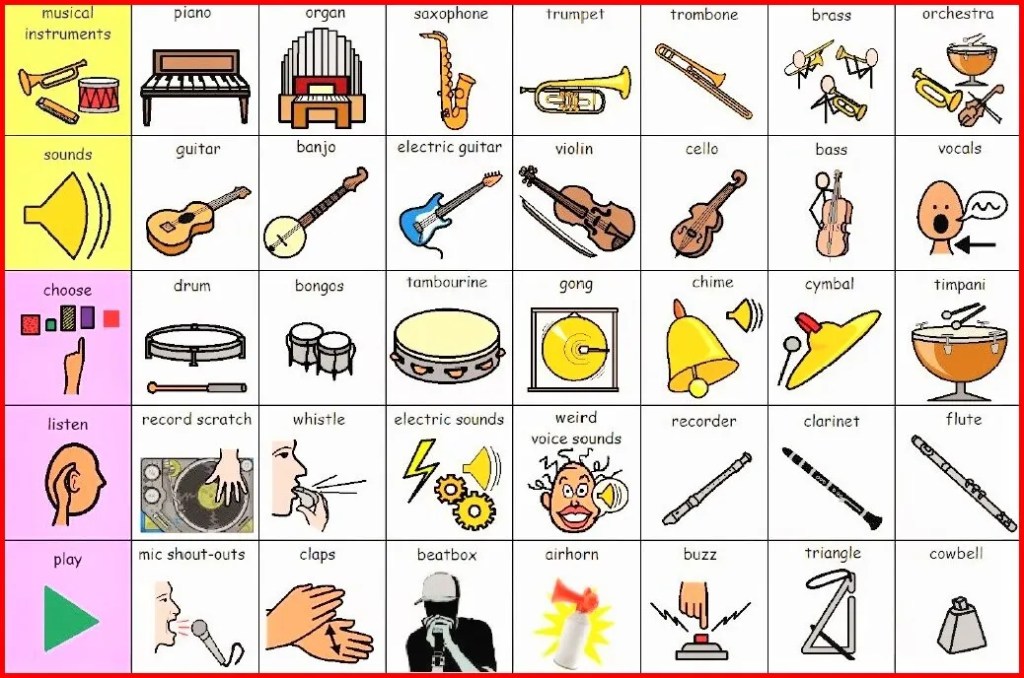
A kirtan performance includes an accompaniment of regionally popular musical instruments, especially Indian instruments like the Indian harmonium, the veenasitar, or ektara (strings), the tabla (one-sided drums), the mrdanga or pakhawaj (two-sided drum), flute (woodwinds), and karatalas or talas (cymbals). It is a major practice in Hinduism, Vaisnava devotionalism, Sikhism, the Sant traditions, and some forms of Buddhism, as well as other religious groups. Kirtan is sometimes accompanied by story-telling and acting. Texts typically cover religious, mythological or social subjects.

Traditionally Kirtan is a “Call and Response”” of chanting experience. The word Kirt is to name to Communicate, to Celebrate, to Praise, and is derived from the Bhakti Yoga. The path of union through Devotion that uses the Repetition of Sanskrit Mantras to invoke the Energy and Attributes of the Devine.

The singing of Bajans is also a part of Spiritual Music, Tradition of India and singing of songs in Prayers. Its Root Bhaj means to Worship with Deep Respect (Revere) and to Love. Both are Devotional music and have been practiced since ancient times. In more recent times Devotional music has been incorporated (To include) in to many modern musical styles so that they can like to so many around the world. and all voices are united (together) with others without needing and skill or practicing. It is wonderful way to play because it is free and is energized and takes us in a relaxing journey ❤

Happiness is needed and anything that gives us Happiness to the Heart need to be encouraged that raises the flow of Energy. In this increasing unnatural society with so much of stress singing is the medicine that help Relax and Energize us. Such a practice can help us face stress of modern life just by using ones own voice in song. Ah!! almost immediate relief of Healing to make Happy people and community 🙂

Latest Update: 6th February 2024. This is “The 231th Post” and with the “Introductory Page this will be all in Total up to date, 232 posts. On Top Right-Hand side, you are able to see: The word “Menu” when you click on it. You will see the word “Home” All the posts from “The Very Beginning comes ~ Under “Home”. Which is The Introductory Page about: Who I am & Why I am Writing!

I hope what I have written and The Knowledge will be Useful and You have learnt new facts. And also You will be able to Enjoy going through The Picture Quotes as I have done quite bit of Making them more colourful and Attractive ❤

I am in Good Health and as, “I have been able to, “Receive Healing Energy into My Hands” since “Beginning of 2016” All my Hard work and Praying has been rewarded. Healing Energy can go to others too, and wherever it is needed to be received with a Clear Mind and Lot of Loving Kindness ❤

 I am Moving on as usual with “My Own Journey of Wellness, Encouraging and Healing” So that Everyone can have “Faith, Hope and to Heal” To Lead a Better Life of Good Health, Happiness and Joy”. If you click on the Link, you can Read This Post: The Therapists Voice Forward!

The Topics in Green, if you “Click” on them “Will take you to My other different posts which you will be able to find more information and even Pronunciation”. I have another website with “My own little Poems and Pictures of some of My Hobbies” if you are interested on seeing, “What else I am doing” during my spare time you can have a look at: https://deepanilamani.com/

Thank you for Reading and The I net for the picture quotes I have shared and to https://www.online-image-editor.com/ for the Quotes I have done Myself. ❤

As always, it is all free”. You can share and pass it on also for others who can benefit from this post. I hope All those who Read will be able to make the maximum use of all these facts and make, “Your Lives More Healthy and able to Lead Better lives in Happiness and Peace”. I wish it to be so as,” Peace which is our Ultimate Goal in life ❤

Sending Love, Light and Healing Energies to You ❤

May Gods Blessing Be Upon You ❤

Deepa Nilamani ❤
Flag Counter