Hello to, All My Dear Readers, Followers and My Blogging Friends ❤
Hope All of You are keeping in Good Health as much as possible. And “Keeping yourself Positive and Motivated as Best as possible. I have been writing about Various ways of Therapies to Become Well” And today I am writing about The Gestalt Therapy! writing with more Positive feelings at this time of my Life with Healing Energies I am receiving writing with more Positive feelings at this time of my Life with Healing Energies I am receiving 🙂
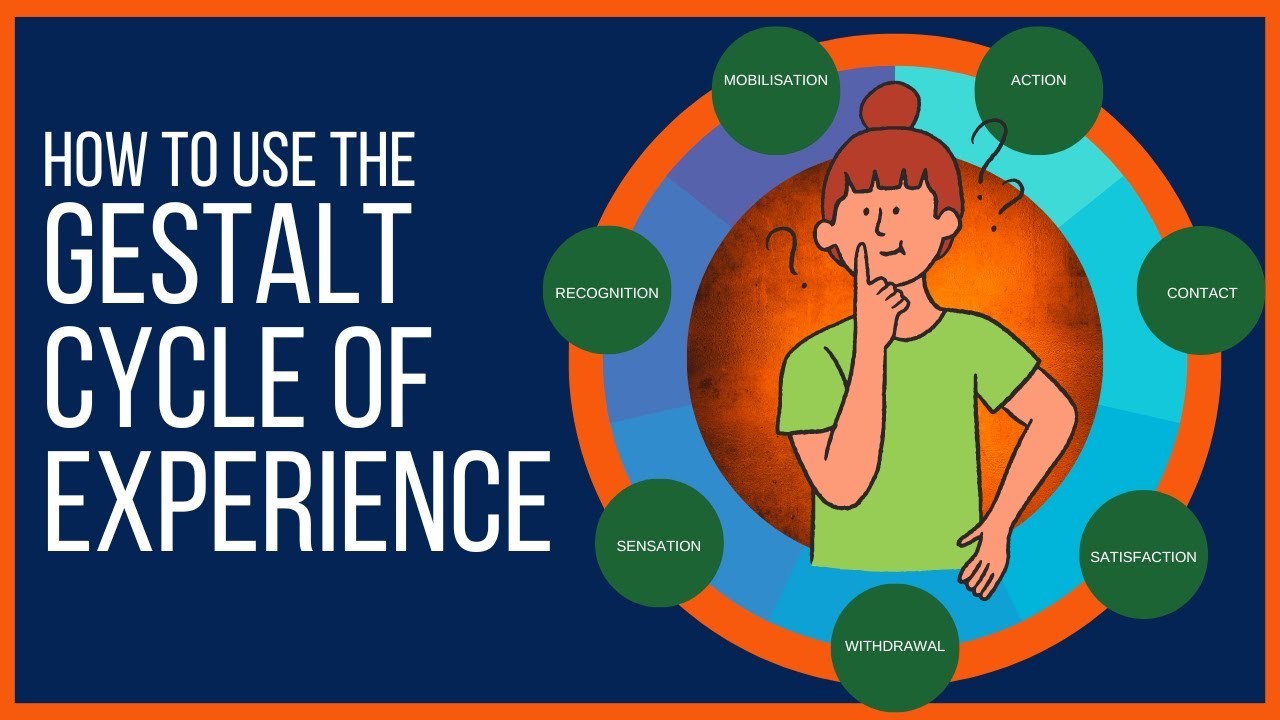
Gestalt therapy, developed by Fritz Perls in the 1940s, emphasizes personal responsibility and focuses on the present moment, helping individuals gain awareness of their experiences and interactions.
Phenomenological Method (the “how”)
Phenomenology in Gestalt therapy is not just a theory—it’s a way of being with the client. It means setting aside assumptions, deeply observing what is happening in the present moment, and exploring the client’s experience without trying to interpret or fix it. This approach invites clients to become curious observers of their own inner world.
Gestalt therapy is a form of psychotherapy that emphasizes personal responsibility and focuses on the individual’s experience in the present moment, the therapist–client relationship, the environmental and social contexts of a person’s life, and the self-regulating adjustments people make as a result of their overall situation. It was developed by Fritz Perls, Laura Perls and Paul Goodman in the 1940s and 1950s, and was first described in the 1951 book Gestalt Therapy.
Fritz Perls believed many psychological symptoms arise from a lack of awareness—of bodily sensations, emotions, and environmental cues. Gestalt therapy helps clients tune into their present experience through exercises that deepen awareness of how their choices impact health and relationships. By recognizing the connection between emotional and physical states, clients build self-trust, confidence, and the ability to face life’s challenges more fully.
Gestalt therapy is a humanistic and person-centered form of psychotherapy that focuses on a person’s present life and current challenges rather than on past experiences that many other therapies delve into.
Gestalt therapy emphasizes personal responsibility and focuses on the individual’s experience in the present moment, the therapist-client relationship, and the environmental and social contexts of a person’s life. It prioritizes holistic understanding and integration of thoughts, feelings, and actions.
There is an emphasis on perception in this therapy, specifically aiming to increase a person’s awareness of themselves at the moment, and through this awareness, personal growth becomes possible.
Here and Now
Rather than analyzing the past or future, Gestalt therapy centers on what the client is experiencing in the present. This doesn’t deny the past but invites clients to explore memories and emotions as they arise in the moment—especially unfinished conflicts or “incomplete Gestalts.” Working in the present tense allows clients to access insight and resolution where it’s most available: the here and now.
What does Gestalt mean?
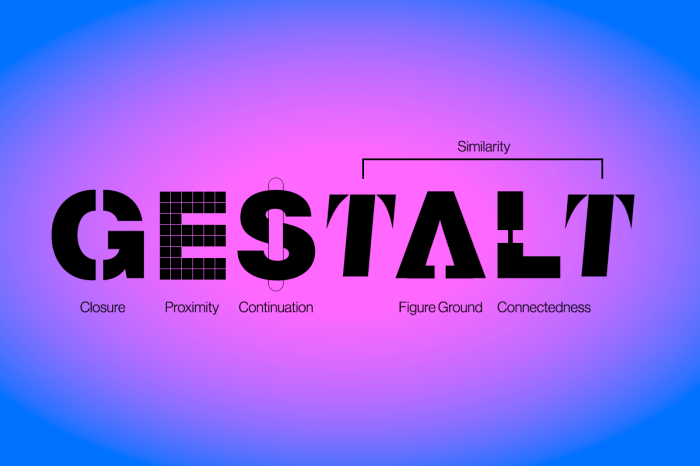
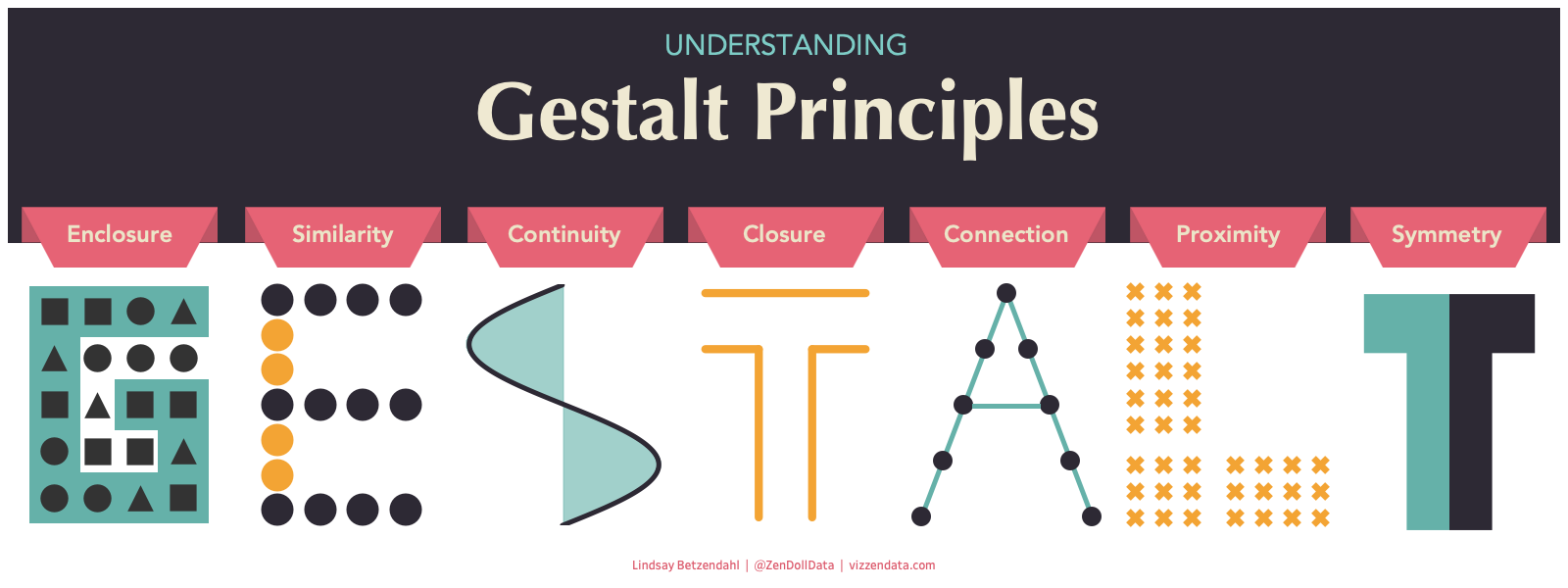
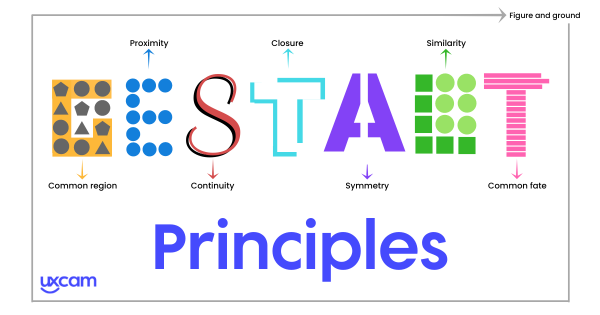
The word ‘Gestalt’ does not have a direct translation to English, but it is often interpreted in psychology as ‘pattern’ or ‘configuration.’ Gestalt psychology is a school of thought that looks at the human mind and behavior as a whole rather than as separate entities. When trying to make sense of the world around us, Gestalt psychology suggests that we do not simply focus on every small component; rather, we perceive the small pieces as elements of more complex systems. Essentially, Gestalt psychology suggests that the whole is greater than the sum of its parts.
Gestalt Therapy vs Other Major Therapies
Psychodynamic Therapy: Emphasizes exploring past experiences and unconscious conflicts, whereas Gestalt therapy stays in the here-and-now. Psychodynamic techniques are talk-based (free association and interpretation), in contrast to Gestalt’s experiential exercises in session. The therapist is less directive, acting as an interpreter rather than actively engaging the client as in Gestalt.
A Take-Home Message We all have the capacity to adapt and to achieve our personal expectations. we raise the bar in relation to our own potential and push ourselves to achieve Higher things. Effectiveness of Adlerian Theory Recent studies have also supported Adler’s belief in the importance of the therapeutic relationship. The therapeutic alliance has been shown to affect treatment outcomes across a range of conditions, therapeutic modalities, and contexts. In other words, a greater sense of social connectedness rooted in caring for others, connecting with the community, and finding a sense of purpose is linked to improved mental health and well-being. Lots of picture Quotes about lot of things you can do. Happy Reading 🙂
Meanwhile from WordPress I am being Congratulated: You’ve posted 3 days in a row on I am My Path!! Keep up the good work. 🙂
Latest Update: 5th of September 2025. The website continues for the New and old Readers, Followers and Blogging Friends. This is “The 293 Post” and with the “Introductory Page this will be all in Total up to date, 294 posts. On Top Right-Hand side, you are able to see: The word “Menu” when you click on it. You will see the word “Home” All the posts from “The Very Beginning comes ~ Under “Home”. Which is The Introductory Page about: Who I am & Why I am Writing!
The new Topics “On the Left-Hand side “Under the Recent Posts, with “The latest Topics adding up”
The “COLOURED TOPICS IN GREEN”, if you “Click” on them “Will take you to other different posts of Mine which you will be able to find more information and even Pronunciation”. I have another website with “My own little Poems and Pictures of some of My Hobbies” if you are interested on seeing, “What else I am doing” you can have a look at: https://deepanilamani.com/
Sending Many Blessings of Good Health and Healing Energies your way ❤
Thanking the I Net for the pictures I have Shared ❤
Hello To, All My Readers Followers and Blogging Friends ❤
Hope All of You are keeping in Good Health as much as possible. And “Keeping yourself Positive and Motivated as Best as possible. I have been writing about Various ways of Therapies to Become Well” And today I am writing about The Existential Therapy: writing with more Positive feelings at this time of my Life with Healing Energies I am receiving 🙂
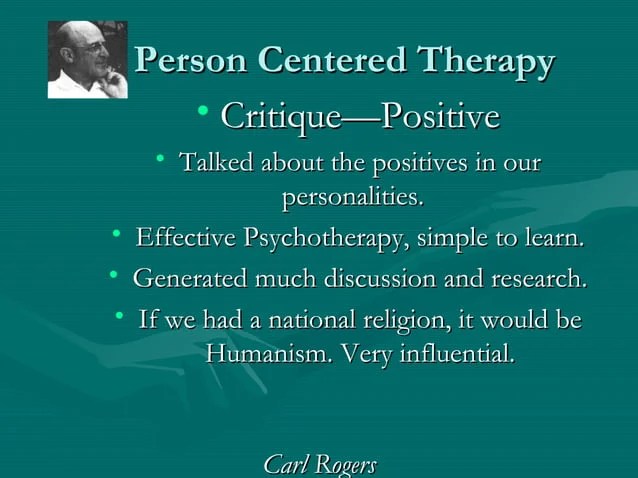
Person-centered therapy is often described as a humanistic therapy, but its main principles appear to have been established before those of humanistic psychology but, by the mid-1960s, Rogers accepted being categorized with other psychologists in contrast to behavioral and psychoanalytic psychologists. Despite the importance of the self to person-centered theory, the theory is fundamentally organismic and holistic in nature.
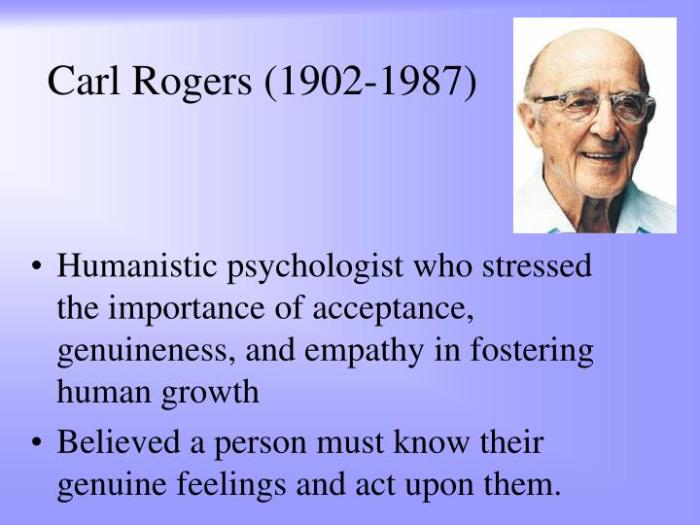
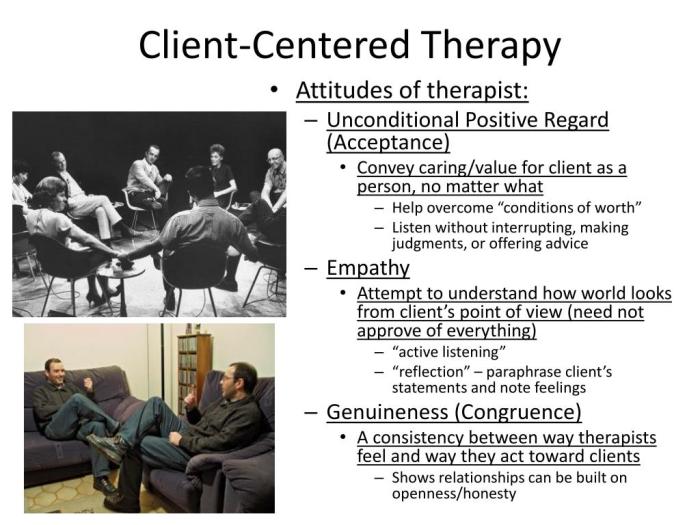
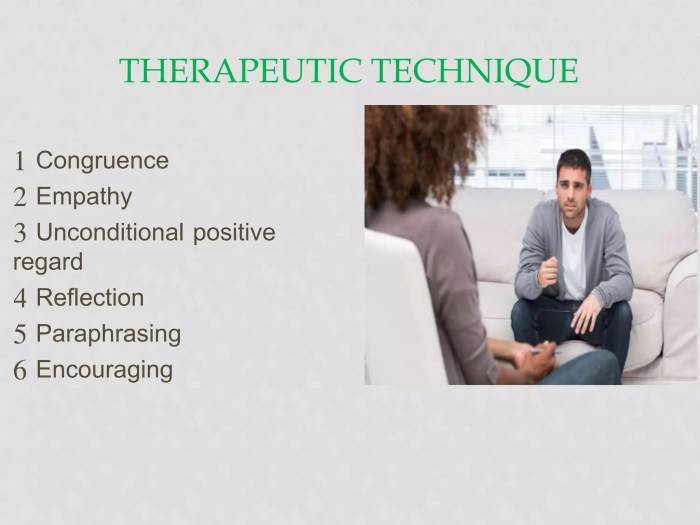
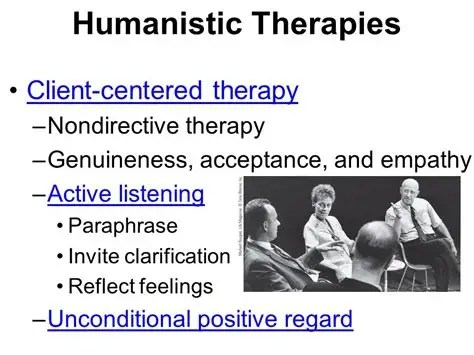
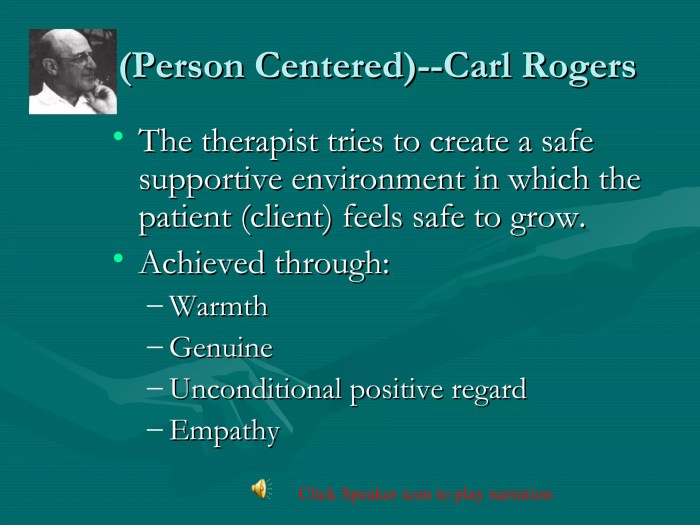
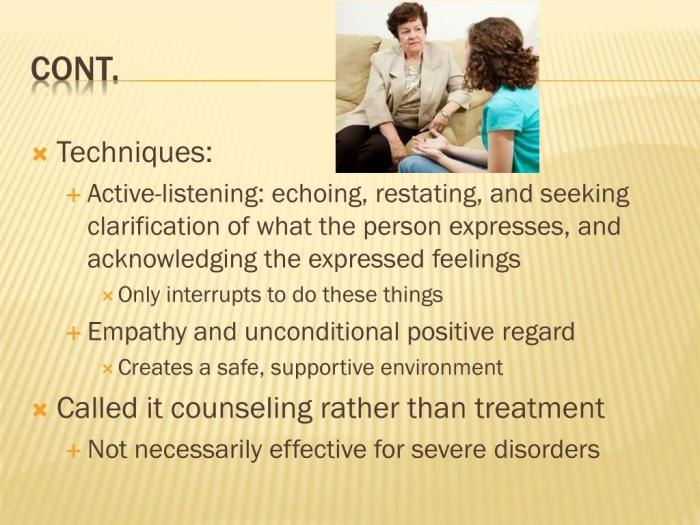
The Person-Centered Approach was developed from the work of the psychologist Dr. Carl Rogers (1902–1987). He advanced an approach to psychotherapy and counseling that, at the time (the 1940s–1960s), was considered extremely radical. The psychological environment described by Rogers was one where a person felt free from threat, both physically and psychologically. This environment could be achieved when being in a relationship with a person who was deeply understanding (empathic), accepting (having unconditional positive regard) and genuine (congruent).
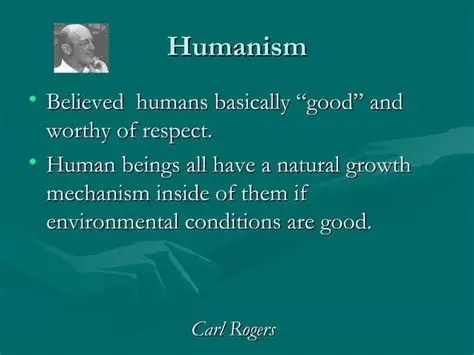
Originally described as non-directive, this therapy moved away from the idea that the therapist was the expert and towards a theory that trusted the innate tendency (known as the actualizing tendency) of human beings to find fulfilment of their personal potentials. An important part of this theory is that in a particular psychological environment, the fulfilment of personal potentials includes sociability, the need to be with other human beings and a desire to know and be known by other people. It also includes being open to experience, being trusting and trustworthy, being curious about the world, being creative and compassionate.
The psychological environment described by Rogers was one where a person felt free from threat, both physically and psychologically. This environment could be achieved when being in a relationship with a person who was deeply understanding (empathic), accepting (having unconditional positive regard) and genuine (congruent).
Applications
Person-centered therapy has been adapted for a variety of populations and settings. For example, a randomized controlled trial in Portugal demonstrated that PCT significantly improved self-esteem in older adults by reducing the gap between their real and ideal selves. These improvements were maintained at a 12-month follow-up, suggesting long-term effectiveness in aging populations.[27]
PCT has also been applied in educational and youth counseling settings. Its emphasis on empathy, acceptance, and authentic communication makes it particularly effective for adolescents and young adults who are navigating identity development, interpersonal challenges, and emotional regulation. Additionally, the non-directive nature of PCT allows it to be used across cultural contexts where traditional therapist-led approaches may not align with community values or client expectations.
The adaptability of person-centered therapy stems from its core belief that the client is the expert in their own experience. This principle enables therapists to work effectively with diverse populations while maintaining a strong respect for individual autonomy and cultural differences.
Although initially developed as an approach to psychotherapy (eventually becoming known as client/person-centred therapy/counselling), Rogers and his colleagues came to believe that their ideas could be transferred to other areas where people were in relationships. For example teaching, management, childcare, patient care, conflict resolution. Today there are many people who, although not working as psychotherapists and counsellors, use the work of Rogers as guiding principles in their day-to-day work and relationships.
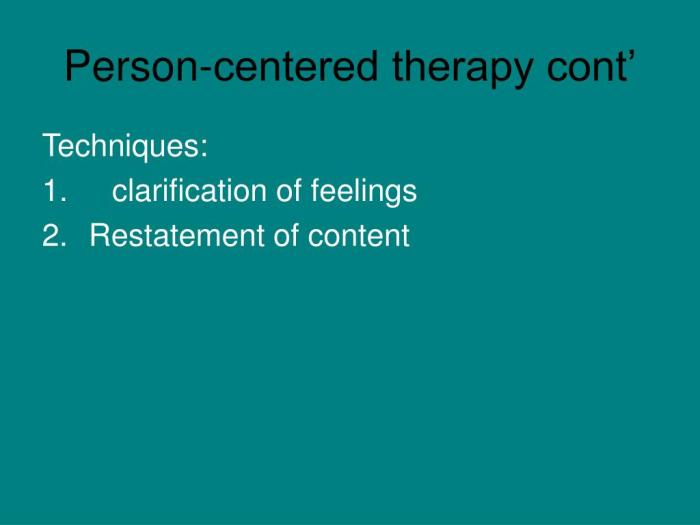
At one level, Rogers’ theory and work is very simple to describe. As many people would attest, both those using the approach and those working as person-therapists/counsellors, it can be very difficult to put into practice because the approach does not use techniques but relies on the personal qualities of the therapist/person to build a non-judgmental and empathic relationship.
Effectiveness
Research on the effectiveness of person-centered therapy (PCT) across various clinical conditions has produced mixed but encouraging results. While PCT has generally been found to yield positive outcomes for anxiety and depression, some studies suggest it may be less effective than structured approaches like cognitive-behavioral therapy (CBT) in certain contexts. For example, a 2013 meta-analysis found that experiential therapies, including PCT, showed improvement in clients with anxiety from pre- to post-treatment, although they often performed below CBT in direct comparisons.[25]
Even so, PCT offers distinct advantages. Its focus on emotional depth, client autonomy, and a non-directive therapeutic environment can be particularly helpful for individuals who prefer a more supportive and less structured approach to therapy.[25] These qualities may also make PCT a good fit for clients who have had negative experiences with more prescriptive or diagnosis-driven models.
Recent findings suggest that outcomes improve when therapy is matched to individual client needs. Their results showed that clients who received the therapy most aligned with their predicted treatment response experienced significantly better outcomes than those who received a non-matching therapy.] This supports the idea that while PCT may not be ideal for every individual, it can be highly effective when personalized to the client. PCT has also shown promise with specific populations. In a older adults who received person-centered therapy reported significant improvements in self-esteem. These gains were maintained for at least 12 months after the intervention, highlighting PCT’s potential for long-term impact and its adaptability across age groups.
A Take-Home Message We all have the capacity to adapt and to achieve our personal expectations. we raise the bar in relation to our own potential and push ourselves to achieve Higher things. Effectiveness of Adlerian Theory Recent studies have also supported Adler’s belief in the importance of the therapeutic relationship. The therapeutic alliance has been shown to affect treatment outcomes across a range of conditions, therapeutic modalities, and contexts. In other words, a greater sense of social connectedness rooted in caring for others, connecting with the community, and finding a sense of purpose is linked to improved mental health and well-being. Lots of picture Quotes about lot of things you can do. Happy Reading
Latest Update: 3nd of September 2025. The website continues for the New and old Readers, Followers and Blogging Friends. This is “The 292 Post” and with the “Introductory Page this will be all in Total up to date, 293 posts. On Top Right-Hand side, you are able to see: The word “Menu” when you click on it. You will see the word “Home” All the posts from “The Very Beginning comes ~ Under “Home”. Which is The Introductory Page about: Who I am & Why I am Writing!
The new Topics “On the Left-Hand side “Under the Recent Posts, with “The latest Topics adding up”
The “COLOURED TOPICS IN GREEN”, if you “Click” on them “Will take you to other different posts of Mine which you will be able to find more information and even Pronunciation”. I have another website with “My own little Poems and Pictures of some of My Hobbies” if you are interested on seeing, “What else I am doing” you can have a look at: https://deepanilamani.com/
Sending Many Blessings of Good Health and Healing Energies your way ❤
Thanking the I Net for the pictures I have Shared<3
Hello to, All My Dear Readers, Followers and My Blogging Friends ❤
Hope All of You are keeping in Good Health as much as possible. And “Keeping yourself Positive and Motivated as Best as possible. I have been writing about Various ways of Therapies to Become Well” And today I am writing about The Therapies itself, just for some who likes pictures that is relaxing on what I will be writing about and with much more Positive feelings at this time of my Life with “Healing Energies I am receiving” 🙂
Main Therapies:
1. Psychoanalytic Therapy:
2. Adlerian Therapy:
3. Existential Therapy:
4. Person Centered Therapy:
5. Gestalt Therapy:
6. Behavior Therapy:
7. Cognitive Behavior Therapy:
Cognitive Behavioral Therapy (CBT): A present-focused, structured approach to changing thoughts and behaviors. Unlike Gestalt’s free-flowing style, CBT sessions follow a set agenda (often with homework tasks). The CBT therapist is more directive and coach-like, whereas a Gestalt therapist guides awareness through creative exercises (e.g. the empty-chair roleplay technique).
Person-Centered Therapy:Focuses on the client’s current feelings and personal growth, similar to Gestalt’s present focus. However, person-centered therapy is completely non-directive and technique-free, relying on empathy and unconditional positive regard. This contrasts with Gestalt’s use of active interventions and guided self-exploration.
Behavior Therapy: Centers on changing behavior through conditioning techniques like exposure or reinforcement. It is more directive and goal-oriented than Gestalt, prioritizing observable behavior change over self-awareness. The therapist in behavior therapy functions like a trainer, in contrast to Gestalt’s experiential, awareness-focused approach.
A Take-Home Message We all have the capacity to adapt and to achieve our personal expectations. we raise the bar in relation to our own potential and push ourselves to achieve Higher things. Effectiveness of Adlerian Theory Recent studies have also supported Adler’s belief in the importance of the therapeutic relationship. The therapeutic alliance has been shown to affect treatment outcomes across a range of conditions, therapeutic modalities, and contexts. In other words, a greater sense of social connectedness rooted in caring for others, connecting with the community, and finding a sense of purpose is linked to improved mental health and well-being. Lots of picture Quotes about lot of things you can do. Happy Reading 🙂
Latest Update: 2nd of September 2025. The website continues for the New and old Readers, Followers and Blogging Friends. This is “The 289th Post” and with the “Introductory Page this will be all in Total up to date, 290 posts. On Top Right-Hand side, you are able to see: The word “Menu” when you click on it. You will see the word “Home” All the posts from “The Very Beginning comes ~ Under “Home”. Which is The Introductory Page about: Who I am & Why I am Writing!
The new Topics “On the Left-Hand side “Under the Recent Posts, with “The latest Topics adding up”
The “COLOURED TOPICS IN GREEN”, if you “Click” on them “Will take you to other different posts of Mine which you will be able to find more information and even Pronunciation”. I have another website with “My own little Poems and Pictures of some of My Hobbies” if you are interested on seeing, “What else I am doing” you can have a look at: https://deepanilamani.com/
As always, it is all free”. You can share and pass it on also for others who can benefit from this post. I hope All those who Read will be able to make the maximum use of all these facts and make, “Your Lives More Healthy and able to Lead Better lives in Happiness and Peace”. I wish it to be so as,” Peace which is our Ultimate Goal in Life ❤
Sending Many Blessings of Good Health and Healing Energies your way ❤
Thanking the I Net for the pictures I have Shared ❤
Hello to, All My Dear Readers, Followers and My Blogging Friends ❤
Hope as usual all of you are keeping well some of you must be having Summer or warm weather. But here in Aussie it is still very cold, soon it will be warmer, and Spring waiting for warmer times. I want to continue writing under Professional Counselling have thought of writing on Goal Setting!
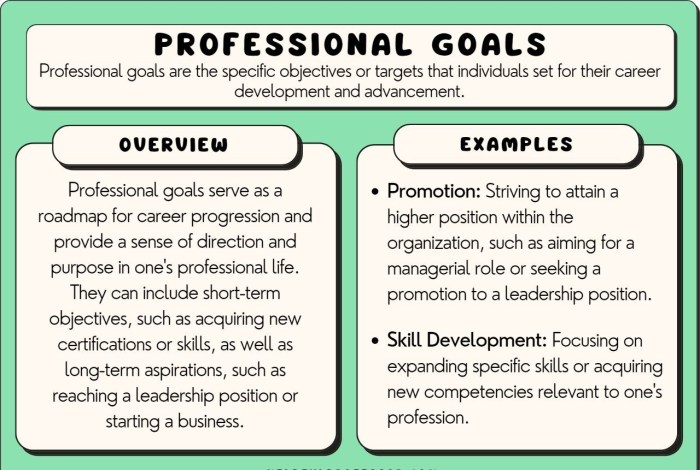
What is Goal Setting? Goal setting is a powerful motivator, the value of which has been recognized in an abundance of clinical and real-world settings for over 35 years. Goals,’ are “the object or aim of an action, for example, to attain a specific standard of proficiency, usually within a specified time limit.” They are the level of competence that we wish to achieve and create a useful lens through which we assess our current performance.
Goal setting is the process by which we achieve these goals. The importance of the goal-setting process should not go unappreciated. Every person’s life depends on the process of choosing goals to pursue.
Why Is Goal Setting Important?
Initially, research into goal setting attempted to ascertain how the level of intended achievement (goal) is related to the actual level of achievement (performance) in an organizational setting
Goal setting increases employee motivation and organizational commitment Additionally, goals affect the intensity of our actions and our emotions. The more difficult and valued a goal is, the more intense our efforts will be in order to attain it, and the more success we experience following achievement Through the experience of success and the positive emotions that accompany it, confidence and belief in our own abilities grow. Participation in goal setting encourages a search for new strategies to aid success. Finding novel ways to utilize our skills and push our abilities increases task-relevant knowledge while enhancing self-efficacy and self-confidence.
Goal setting involves planning for the future. and goal setting and skill-oriented planning significantly improved subjective wellbeing in those who took part in a goal-setting intervention program. Thinking positively about the future bolsters our ability to create goals and consider the actions required to achieve them.
The capacity to plan positively impacts our perceived control over goal outcomes and our future Furthermore, goal setting and achievement can promote the development of control.
While individuals with an external locus of control believe that both positive and negative outcomes are the result of external influences, those with an internal locus of control believe that success is determined by their own actions and skills.
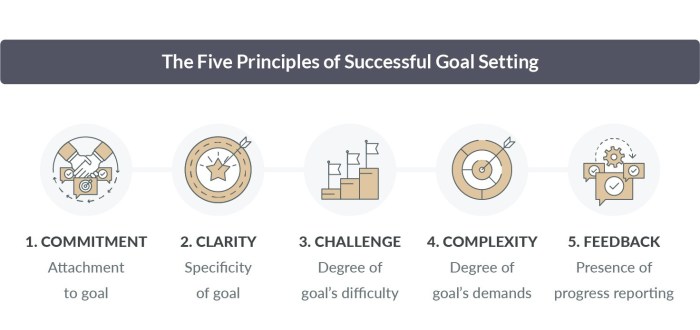
Key Principles of Goal Setting
1. Commitment
Commitment refers to the degree to which an individual is attached to the goal and their determination to reach it – even when faced with obstacles. Goal performance is strongest when people are committed, and even more so when said goals are difficult.
Once they’re committed, if an individual discovers their performance is inadequate, they are likely to increase their effort or change their strategy in order to attain it. When we are less committed to goals – particularly more challenging goals – we increase the likelihood of giving up.
A number of factors can influence our commitment levels of Namely, the perceived desirability of a goal and the perceived ability of achieving it. To be successful, you must possess the desire and a comprehensive understanding of what is required to achieve your goal.
2. Clarity
Specific goals put you on a direct course. When a goal is vague, it has limited motivational value. Goal clarity is positively related to overall motivation and satisfaction in the workplace.
Set clear, precise and unambiguous goals that are implicit and can be measured. When a goal is clear in your mind, you have an improved understanding of the task at hand. You know exactly what is required and the resulting success is a further source of motivation.
3. Challenging
Goals must be challenging yet attainable. Challenging goals can improve performance through increased self-satisfaction, and the motivation to find suitable strategies to push our skills to the limit (Locke & Latham, 1990). Conversely, goals that are not within our ability level may not be achieved, leading to feelings of dissatisfaction and frustration.
We are motivated by achievement and the anticipation of achievement. If we know a goal is challenging yet believe it is within our abilities to accomplish, we are more likely to be motivated to complete a task.
4. Task complexity
Overly complex tasks introduce demands that may mute goal-setting effects. Overly complex goals that lie out of our skill level may become overwhelming and negatively impact morale, productivity, and motivation.
The timescale for such goals should be realistic. Allowing sufficient time to work toward a goal allows opportunities to reassess the goal complexity, while reviewing and improving performance. Even the most motivated of people can become disillusioned if the task’s complexity is too great for their skills.
5. Feedback
Goal setting is more effective in the presence of immediate Feedback – including internal feedback – helps to determine the degree to which a goal is being met and how you are progressing.
Unambiguous feedback ensures that action can be taken if necessary. If performance falls below the standard required to achieve a goal, feedback allows us to reflect upon our ability and set new, more attainable, goals. When such feedback is delayed, we cannot evaluate the effectiveness of our strategies promptly, leading to a potential reduction in the rate of progress.
When we perceive our progress towards a goal as adequate, we feel capable of learning new skills and setting more challenging future goals. I Have Qualified!
8 Interesting Facts on Goal Setting
Setting goals and reflecting upon them improves academic success. Around 25% of students who enroll in 4-year university courses do not complete their studies – common explanations for this include a lack of clear goals and motivation. Goal-setting intervention programs have been shown to significantly improve academic performance.
Goals are good for motivation and vice versa. Most definitions of motivation incorporate goals and goal setting as an essential factor. For example, “Motivation is the desire or want that energizes and directs goal-oriented behavior.”
Goal setting is associated with achieving the optimal conditions for flow state. Setting clear goals that are both challenging yet within your skill level is a powerful contributor to finding yourself in ‘the zone’.
An optimistic approach to goal setting can aid success. Research into goal-setting among students indicates that factors such as hope and optimism have a significant impact on how we manage our goals.
Goals that are both specific and difficult lead to overall improved performance. Comparisons between the effect of non-specific goals such as “I will try to do my best” and specific, challenging goals suggest that people do not tend to perform well when trying to ‘do their best’. A vague goal is compatible with multiple outcomes, including those lower than one’s capabilities.
People with high efficacy are more likely to set challenging goals and commit to them. Individuals who sustain belief in their abilities under the pressure of challenging goals tend to maintain or even increase their subsequent goals, thereby making improvements to ensuing performances. Conversely, individuals who lack this confidence have a tendency to lower their goals (making them easier to achieve) and decrease their future efforts.
Social influences are a strong determinant in goal choice. While the impact of social influences on goal achievement may diminish with increased task-specific knowledge, social influences remain a strong determinant of goal choice.
Goal setting is a more powerful motivator than monetary incentives alone. goal setting to be the major mechanism by which other incentives affect motivation. Within the workplace, money was found most effective as a motivator when the rewards offered were contingent on achieving specific objectives.
Research and Studies
A multitude of studies has shown that setting challenging yet attainable goals increases the prospect of pursuing and fulfilling ambitions.
The setting of clear goals is more likely to close the gap between current ability and the desired objectives. With this in mind, let’s look at some of the research related to goal setting.
Goal setting in physical therapy
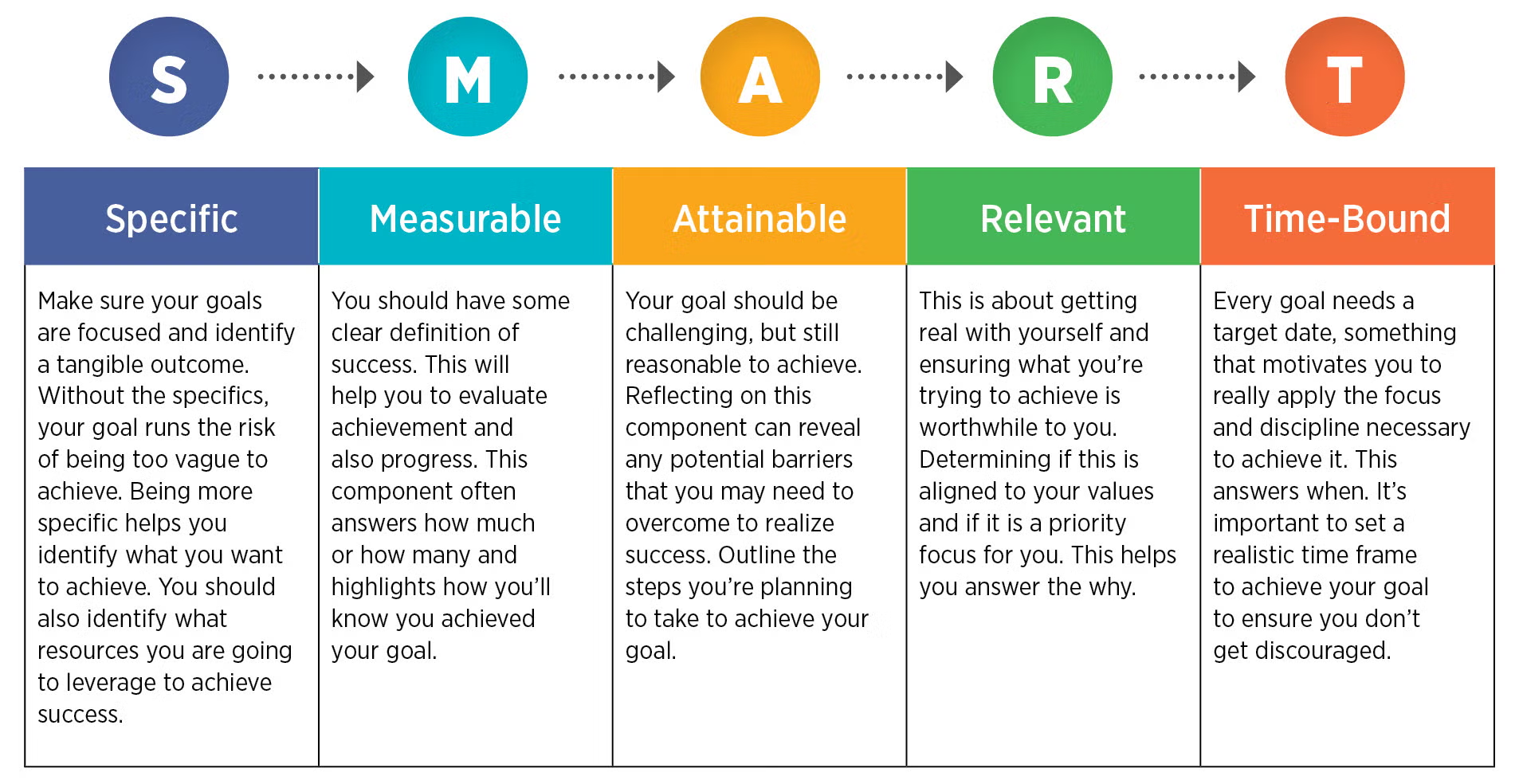
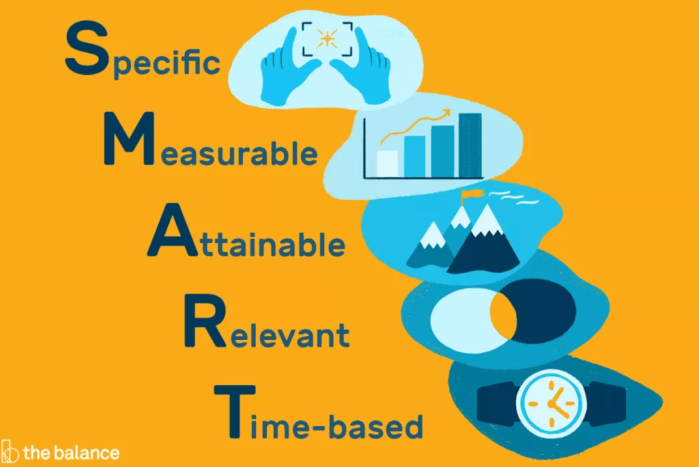
SMART goal setting is a traditional method used within the practice of physical therapy. use of goal setting in improving and measuring physical therapy effectiveness. The study suggested that active participation by the patient in the goal-setting therapy process is of primary importance to the attainment of goals.
How and Why Goal Setting Works
When done correctly, goal setting is effective and often critical to success. Goals give us direction by focusing attention on goal-relevant behavior and away from irrelevant tasks goal setting works through three basic propositions:
Goals energize performance through the motivation to expend the required effort in line with the difficulty of the task.
Goals motivate people to persist in activities over time.
Goals direct people’s attention to relevant behaviors and away from behaviors which are irrelevant or detrimental to the achievement of the task.
As previously discussed, goals that are specific and challenging lead to higher levels of performance. suggested that these types of goal strategies work more effectively for the following reasons:
Specific and challenging goals are associated with higher self-efficacy (the belief in our own skills and abilities).
They require higher performance and more effort to elicit a sense of satisfaction.
Specific goals are less ambiguous in terms of what constitutes good performance.
Challenging goals are more likely to result in outcomes that are valued by the individual.
They encourage a tendency to persist with a task for longer.
The more specific and challenging the goal is, the more attention an individual will dedicate to it, often utilizing skills that have previously gone unused.
They motivate individuals to search for better strategies and to plan ahead.
Another fantastic tool in Goal Setting is to create a Visual Plan that you look almost every day is to make a Vision board. You can find whatever that you can paste, even from an old cardboard box or a cork board. Find some old magazines and a pair of scissors and gum to paste. And find what pictures of what your goal is. I have done this before. This is what I have done when I wanted to start writing. See how far I have come and become I didn’t win that was the very beginning picture 🙂 How To Make A Collage!
This also I did to post and show 🙂
If you can sew or like to make some sort of sewing like dresses or toys or whatever you can find just some leftover pieces. Even from someone who sews or from some old magazines 🙂
A Take-Home Message We all have the capacity to adapt and to achieve our personal expectations. we raise the bar in relation to our own potential and push ourselves to achieve Higher things. Effectiveness of Adlerian Theory Recent studies have also supported Adler’s belief in the importance of the therapeutic relationship. The therapeutic alliance has been shown to affect treatment outcomes across a range of conditions, therapeutic modalities, and contexts. In other words, a greater sense of social connectedness rooted in caring for others, connecting with the community, and finding a sense of purpose is linked to improved mental health and well-being.
I hope what I have written, and The Knowledge will be Useful and You have learnt new facts. And also, You will be able to Enjoy going through The Picture Quotes as I have done quite bit of Making them more colourful and Attractive I am in Good Health and as, “I have been able to, “Receive Healing Energy into My Hands” since “Beginning of 2016” All my Hard work and Praying has been rewarded. Healing Energy can go to others too, and wherever it is needed to be received with a Clear Mind and Lot of Loving Kindness
Have you incorporated any goal-setting techniques to help you on your way to success? Or maybe you are tempted to make a start on your own plan? How are you going to turn your goal setting into goal getting? Let Me know in the comments below.
Latest Update: 29th of August 2025. The website continues for the New and old Readers, Followers and Blogging Friends. This is “The 286th Post” and with the “Introductory Page this will be all in Total up to date, 287 posts. On Top Right-Hand side, you are able to see: The word “Menu” when you click on it. You will see the word “Home” All the posts from “The Very Beginning comes ~ Under “Home”. Which is The Introductory Page about: Who I am & Why I am Writing!
The new Topics “On the Left-Hand side “Under the Recent Posts, with “The latest Topics adding up”
The “COLOURED TOPICS IN GREEN”, if you “Click” on them “Will take you to other different posts of Mine which you will be able to find more information and even Pronunciation”. I have another website with “My own little Poems and Pictures of some of My Hobbies” if you are interested on seeing, “What else I am doing” you can have a look at: https://deepanilamani.com/
As always, it is all free”. You can share and pass it on also for others who can benefit from this post. I hope All those who Read will be able to make the maximum use of all these facts and make, “Your Lives More Healthy and able to Lead Better lives in Happiness and Peace”. I wish it to be so as,” Peace which is our Ultimate Goal in Life ❤
Sending Many Blessings of Good Health and Healing Energies your way ❤
Thanking the I net for the pictures I have shared ❤












 I am My Path!
You must be logged in to post a comment.